
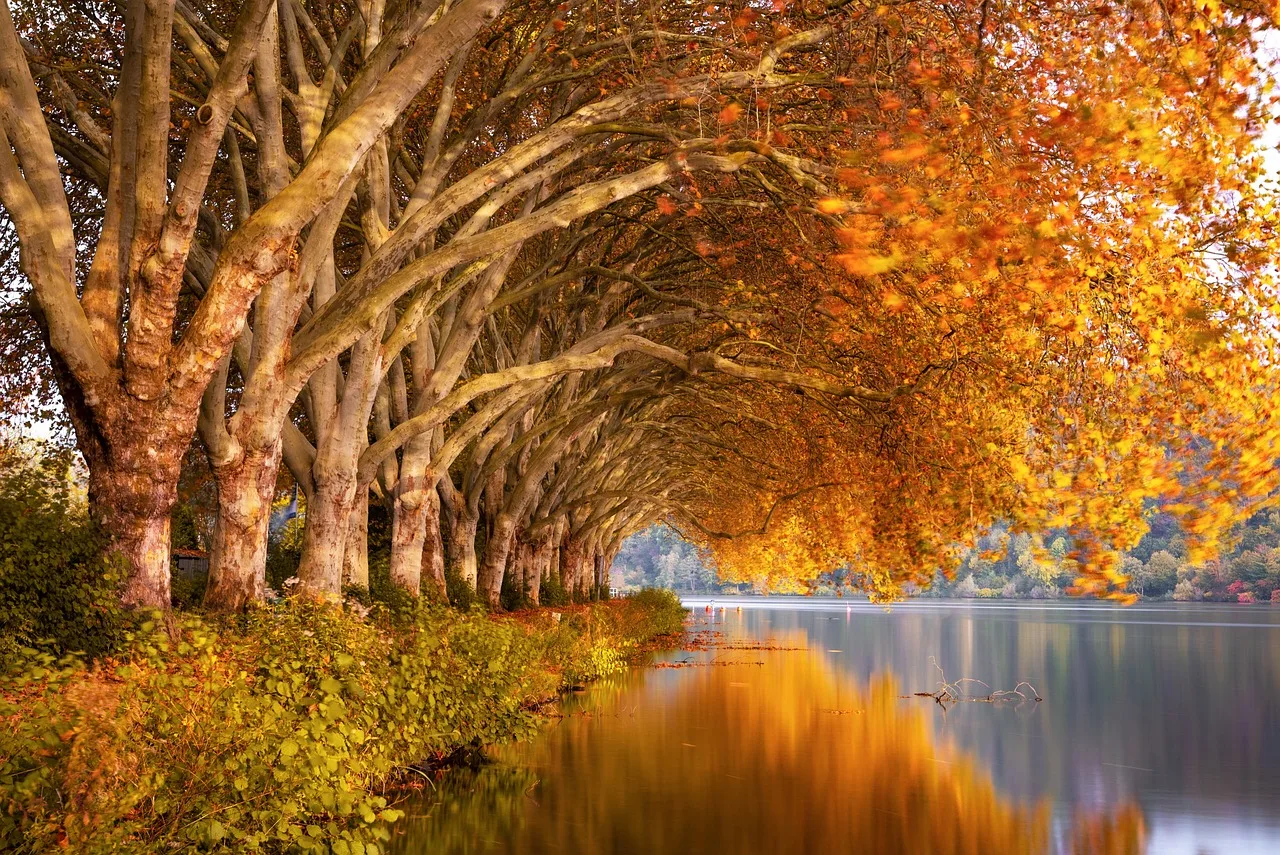
Kashmir's chinar trees (Platanus orientalis) reach their peak autumn colour in October -- typically the second and third week. The leaves move from green through yellow, amber, burnt orange, and deep crimson before dropping in November. The best places to see them in Srinagar are Nishat Bagh, Shalimar Bagh, and Naseem Bagh on the Dal Lake shore, plus the old chinar groves at Harwan and Cheshmashahi. The trees are over 400 years old in some groves and reach 30m in height with canopies spanning 15-20m. J&K Tourism records from 2025 note that the Mughal Garden corridor along the Zabarwan foothills receives approximately 180,000 October visitors, largely for the chinar colour.
Planning a Kashmir trip for the chinar season?
Via Kashmir plans October itineraries timed to the chinar peak, with verified Srinagar hotels and lakeside houseboats. Enquire at viakashmir.in/enquire/general or browse packages at viakashmir.in/packages.
In This Article
- At a Glance: Chinar Autumn in Srinagar
- What Are Chinar Trees and Why Do Kashmiris Value Them?
- Is Pahalgam Worth Visiting in October vs Srinagar Chinars?
- Where Exactly to See the Best Chinar Colour in Srinagar
- How to Plan the October Chinar Day in Srinagar
- Frequently Asked Questions: Chinar Trees Srinagar
Quick Answer: Kashmir's chinar trees (Platanus orientalis, locally Boon) reach their peak autumn colour in October -- typically the second and third week. The leaves move from green through yellow, amber, burnt orange, and deep crimson before dropping in November. The best places to see them in Srinagar are Nishat Bagh, Shalimar Bagh, and Naseem Bagh on the Dal Lake shore, plus the old chinar groves at Harwan and Cheshmashahi. The trees are over 400 years old in some groves. J&K Tourism records from 2025 note that the Mughal Garden corridor receives approximately 180,000 October visitors, largely for the chinar colour.
At a Glance: Chinar Autumn in Srinagar
| Detail | Information |
|---|---|
| Peak colour window | Second and third week of October (varies by year) |
| Best locations | Nishat Bagh, Shalimar Bagh, Naseem Bagh, Harwan, Cheshmashahi |
| Tree species | Platanus orientalis (Oriental Plane, locally 'Boon') |
| Age of oldest groves | 400+ years (planted during Mughal period, 1586 onwards) |
| Entry fee (Mughal Gardens) | Rs 24 per person (ASI rate) |
| Best time of day | Early morning (7-9am) or late afternoon (4-6pm) for low-angle light |
| October temperatures | 8-20 degrees Celsius in Srinagar |
| ViaKashmir link | viakashmir.in/packages, viakashmir.in/cabs |
What Are Chinar Trees and Why Do Kashmiris Value Them?
The chinar (Platanus orientalis) is not native to Kashmir -- it was introduced during the reign of Zain-ul-Abidin (1420-1470) and then spread systematically through the Mughal garden programme under Akbar and Jahangir from 1586. Emperor Jahangir planted chinars across Kashmir, writing about the tree repeatedly in the Jahangirnama. The groves in Nishat Bagh were planted by Asif Khan (Nur Jahan's brother) in 1633 and most of those original trees still stand.
A mature chinar can live 700+ years. Srinagar has approximately 46,000 registered chinar trees. The tree is the official state tree of Jammu and Kashmir. The chinar leaf pattern appears in Kashmiri embroidery, carpets, and papier-mache. Kashmir Pulse is Via Kashmir's editorial channel -- the chinar is central to Kashmiri identity in a way that the standard 'autumn foliage' framing does not fully capture.
Related reading: Kashmir in December: What the Valley Looks Like When Winter Arrives
Is Pahalgam Worth Visiting in October vs Srinagar Chinars?
The chinar groves are a Srinagar-centred experience. Pahalgam's October offer is the Lidder river valley turning amber and the high meadows at Baisaran and Aru showing late autumn grass. The chinars in Srinagar's gardens are a different visual entirely: architectural, old-growth trees in formal Mughal garden settings with the Zabarwan hills and Dal Lake as backdrop. For October in Kashmir, both are worth including: a morning at Nishat/Shalimar for chinars and an afternoon or overnight in Pahalgam for the valley. Via Kashmir organises combined itineraries at viakashmir.in/packages.
Where Exactly to See the Best Chinar Colour in Srinagar
Nishat Bagh: The Terrace Garden
Nishat Bagh ('Garden of Joy') is the largest Mughal garden in Kashmir, on the eastern shore of Dal Lake. Its 12 terraces rise from the lake to the Zabarwan foothills, and the chinar trees are planted at the outer edges of each terrace. The sight of the lake in the foreground and the tiered garden behind, with 30m chinar canopies in October amber on the upper terraces, is the visual most associated with Kashmir autumn. Early morning (before 9am) is best -- visitor load in October is significant by mid-morning.
Shalimar Bagh: The Oldest Garden
Shalimar Bagh was laid out by Jahangir for Nur Jahan in 1619 and is the oldest of the Mughal gardens in Kashmir. Its chinar trees are 400 years old and include some of the largest specimens in the valley. The garden's central canal, the reflection of the chinars in the water, and the northern pavilion framed by colour are the photographic elements. Shalimar is slightly less visited than Nishat in October -- the reduced crowd and the age of the trees make it the better of the two for the actual chinar experience.
Naseem Bagh: The Chinar Grove (Free Entry)
Naseem Bagh is the oldest garden in Srinagar and is now part of the University of Kashmir campus. Its main feature is a grove of approximately 1,200 chinar trees planted under Akbar around 1586. There is no formal entry charge. In October the grove is a tunnel of colour -- the canopy closes overhead and the ground is covered in fallen leaves. Most visitors go to Nishat and Shalimar and miss Naseem Bagh entirely. This is the most genuinely local of the three.
Related reading: Srinagar Old City Walking Tour: Khanqah Shah Hamdan, Jamia Masjid, and the Lanes Between
Book for this trip



How to Plan the October Chinar Day in Srinagar
- ✓6:30am start from your hotel/houseboat. The Boulevard and Mughal Garden road carries tourist traffic from 9am onwards.
- ✓Naseem Bagh first (7-8am). Free entry. Early morning light from the east comes through the grove.
- ✓Shalimar Bagh (8-10am). The canal reflection in morning light. The 400-year-old trees are at their best in low light.
- ✓Nishat Bagh (10am-12pm). By now the visitor numbers are rising but manageable on weekdays.
- ✓Afternoon: Harwan and Cheshmashahi if time permits. Or return to the Dal Lake shore for a shikara on the water with the colour behind.
Via Kashmir covers Srinagar cab hire for full-day itineraries like this at viakashmir.in/cabs.
Frequently Asked Questions: Chinar Trees Srinagar
When do chinar trees turn colour in Kashmir?
The colour change begins in late September at higher elevations and reaches the gardens of Srinagar's lakeside by the second week of October. Peak colour is typically the second or third week of October. By early November most leaves have fallen.
Which Mughal Garden has the best chinar trees in Srinagar?
Shalimar Bagh has the oldest chinars (400 years, planted in 1619) and the most impressive individual specimens. Nishat Bagh has the best composition -- the terraced garden with Dal Lake below and Zabarwan above. Naseem Bagh has the largest grove (approximately 1,200 trees) with the most immersive canopy experience. Visit all three if you have a full day.
Is Nishat Bagh or Shalimar Bagh better for October?
For sheer autumn colour experience, Shalimar Bagh: older trees, longer history, slightly fewer tourists in October. For the iconic Kashmir photograph (terraced garden, lake, hills), Nishat Bagh. Both are within 5km of each other on the Boulevard; seeing both takes half a day.
How long is the chinar season in Srinagar?
Approximately four to five weeks, from late September to late October or early November. The exact peak depends on the year. A late monsoon pushes the peak into late October. Via Kashmir's team at viakashmir.in/enquire/general can advise on current conditions for your travel dates.
Is there a chinar festival in Srinagar?
J&K Tourism organises an annual Chinar Festival at Shalimar Bagh, usually in mid-October. The 2025 edition ran over a weekend with cultural performances in the garden. Dates for 2026 have not been confirmed at print but the pattern suggests the second or third weekend of October.
Kashmir Pulse is Via Kashmir's editorial channel -- written by locals, not agencies.
Planning a trip to Kashmir?
Plan with Via Kashmir →Ready to Experience Kashmir?
Let our local experts craft a personalised trip for you - hotels, houseboats, cabs, and experiences handpicked for your travel style.