
Quick Answer
A trip to Kashmir typically costs from ₹15,072 per person for 5 nights and 6 days on a double-sharing basis, covering Srinagar, Gulmarg, and Pahalgam. The best months are April to June and September to October for stable weather, and December to February for snow. Five to seven nights is the ideal length. ViaKashmir plans and books complete trips - hotels, transport, sightseeing, and shikara rides - through a local Srinagar team.
People do not remember Kashmir the way they remember other holidays. They remember the smell of woodsmoke and chinar leaves, the exact shade of green the Lidder river turns near Pahalgam, the silence at the top of the Gulmarg gondola. A trip to Kashmir works on you slowly. Getting the planning right is what lets that happen without the friction of missed connections, overpriced cabs, and hotels that looked nothing like the photos.
This guide is written by a team that lives and operates in Srinagar. It covers everything a first-time visitor actually needs to decide: the real cost, the right season, how long to stay, a proven route, and the practical questions that decide whether a trip feels effortless or exhausting.
How much does a trip to Kashmir cost in 2026-27?
The honest answer is that a Kashmir trip scales with how you like to travel, but the floor is lower than most people expect. Below is what a per-person, double-sharing budget looks like across the three common styles, excluding flights.
| Style | Duration | Per person | What it covers |
|---|---|---|---|
| Budget | 5N / 6D | ₹15,072 onwards | 2-star hotels, shared transfers, shikara ride, Srinagar-Gulmarg-Pahalgam |
| Mid-range | 7N / 8D | ₹25,540 onwards | 3-star hotels, private cab throughout, 2 nights each in Gulmarg and Pahalgam, 3 in Srinagar |
| Premium / Honeymoon | 5N / 6D | ₹21,970 onwards | 4-star stays, private cab, candlelight dinner; houseboat-night honeymoons cost more |
Live Via Kashmir package prices, per person on double sharing. Airfare not included.
The biggest variable is the season. Peak weeks in May-June and the December snow window push hotel rates up sharply. Travelling in the shoulder months of March, September, or October can cut accommodation costs by 20 to 30 percent for near-identical weather.
What actually adds up
The line items travellers underestimate are the Gulmarg gondola tickets (paid separately, in two phases), pony and sledge rates at Pahalgam and Gulmarg, and entry to Mughal gardens. A good operator lists these upfront so your ground budget is not a series of surprises.
When is the best time to visit Kashmir?
There is no single best time, only the best time for the Kashmir you want to see. The valley reinvents itself four times a year.
- Spring (March to early May): Almond and tulip blossom, Asia's largest tulip garden in bloom for a few weeks in late March and April, fewer crowds, mild days.
- Summer (May to August): The classic postcard season. Green meadows, full access to Gulmarg, Pahalgam, and Sonamarg, warm days and cool nights. Also the busiest and priciest.
- Autumn (September to November): The chinar leaves turn crimson and gold. Arguably the most photogenic season, stable weather, and lower rates. A quiet favourite of returning travellers.
- Winter (December to February): Snow blankets Gulmarg, which becomes a genuine ski destination. Some high roads to Sonamarg close, but Srinagar and Gulmarg are magical under snow.
If you want the widest access with the most reliable weather, aim for the second half of April, or late September into October.
How many days do you need in Kashmir?
Five nights is the practical minimum, seven is the sweet spot. Anything shorter and the mountain drives start eating your days rather than the destinations.
- 5 nights / 6 days: Srinagar (2), Gulmarg (1), Pahalgam (2). Covers the headline sights without rushing.
- 7 nights / 8 days: Adds Sonamarg and a slower pace, with time for Doodhpathri or the old city of Srinagar.
- 9 nights / 10 days: Adds offbeat valleys such as Gurez or Yusmarg, or the drive toward Kargil and Ladakh.
A proven 6-day Kashmir itinerary
This is the route most first-time visitors book, refined over hundreds of trips. It minimises backtracking and keeps drives under three hours a day.
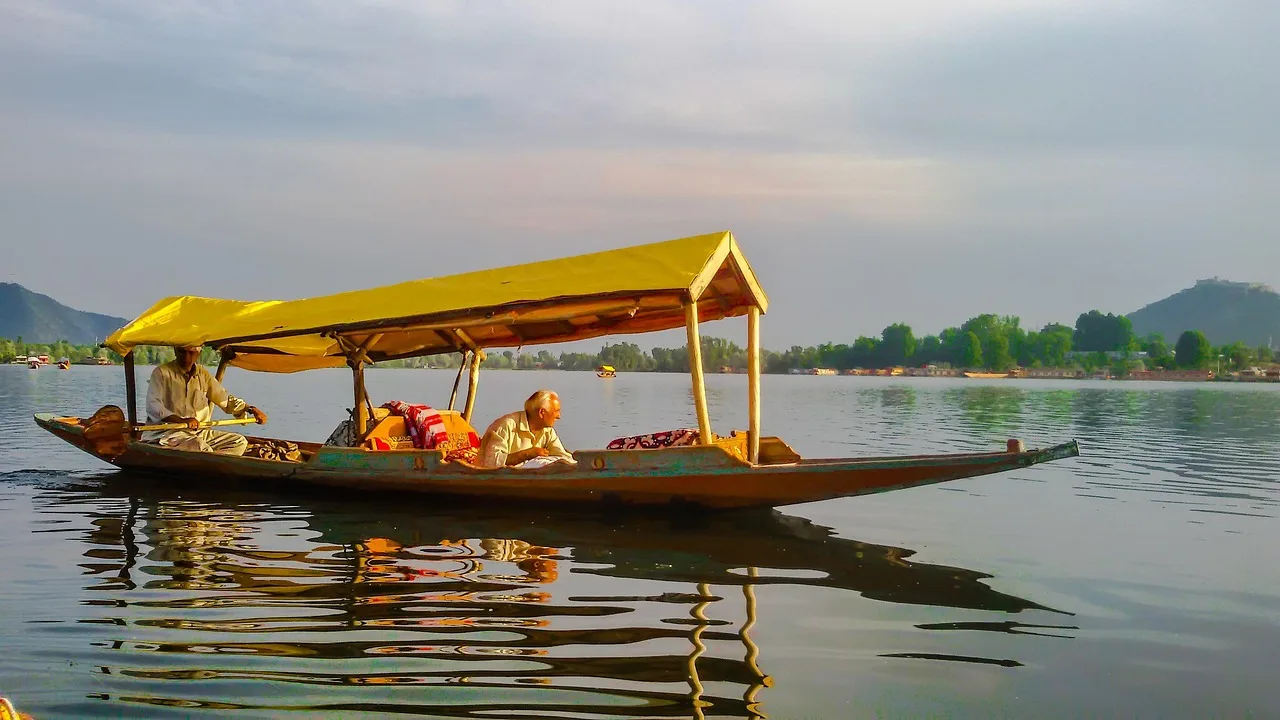
- 1Day 1 - Arrive Srinagar: Airport pickup, check in near Dal Lake, evening shikara ride at golden hour, dinner by the lake.
- 2Day 2 - Srinagar sightseeing: Mughal gardens (Nishat, Shalimar), Hazratbal, Shankaracharya viewpoint, and the old city bazaars.
- 3Day 3 - Gulmarg day trip: The gondola in two phases up to Apharwat, meadows, and pony rides. Overnight in Gulmarg or back in Srinagar.
- 4Day 4 - Drive to Pahalgam: Stop at Awantipora ruins and saffron fields en route. Evening by the Lidder river.
- 5Day 5 - Pahalgam valleys: Betaab Valley, Aru, and Chandanwari by local cab. Optional short treks and rafting.
- 6Day 6 - Return and depart: Drive back to Srinagar for your flight, with a last stop for handicrafts.
How to book a trip to Kashmir
You can assemble a Kashmir trip yourself - book flights, then hotels, then a cab, then activities - and many people do. The reason most first-timers use a local operator is not price. It is that Kashmir rewards on-ground knowledge: which road is open after snow, which houseboat is actually clean, which driver will not detour you into a commission-paying emporium.
ViaKashmir plans the whole trip as one booking. You share your dates and group size, we send a transparent quote within 30 minutes (9am to 9pm), and a single Srinagar-based coordinator stays with you from arrival to departure over WhatsApp. Hotels and houseboats are personally verified, pricing is all-inclusive, and most bookings carry free cancellation.
Booking checklist
Confirm what is included in writing (meals, gondola, entry fees), check the cancellation window, ask for the exact hotel names rather than a star rating, and keep your coordinator's direct number. A trustworthy operator will happily give all four.
Ready to plan your Kashmir trip?
Share your dates and group size. We send a personalised, all-inclusive quote within 30 minutes (9am to 9pm). Trips from ₹15,072/person.
Popular Kashmir trips with live prices
| Trip | Days | Route | From, per person |
|---|---|---|---|
| Kashmir Weekend Escape - Srinagar & Gulmarg in 3 Days | 2N/3D | Srinagar, Gulmarg | ₹6,499 |
| Srinagar 2N3D Short Break - A Houseboat Night & Gulmarg Day Trip | 2N/3D | Srinagar, Gulmarg | ₹9,019 |
| Kashmir 3N4D Trip - Srinagar, Gulmarg & Pahalgam | 3N/4D | Srinagar, Gulmarg, Pahalgam | ₹9,799 |
| Quick Kashmir Getaway - Srinagar & Gulmarg | 3N/4D | Srinagar, Gulmarg | ₹9,899 |
| Srinagar 3N4D Value Break - Gulmarg & Sonamarg Day Trips | 3N/4D | Srinagar, Gulmarg, Sonamarg | ₹11,556 |
| Srinagar, Gulmarg & Sonamarg 4N5D | 4N/5D | Srinagar, Gulmarg, Sonamarg | ₹13,072 |
| Kashmir Group Getaway - 4N5D | 4N/5D | Srinagar, Gulmarg, Pahalgam, Sonamarg | ₹13,199 |
| Kashmir Family Vacation - Kids Special | 4N/5D | Srinagar, Gulmarg, Pahalgam | ₹13,199 |
Live prices with hotels, a private cab and sightseeing included; flights extra. Compare all Kashmir tour packages
Further reading from Kashmir Pulse
- Kashmir in December: What the Valley Looks Like When Winter Arrives
Kashmir in December means Gulmarg under first heavy snow, Srinagar cold but not yet frozen (0-8 degrees Celsius), and Dal Lake steaming in...
- Kangri and Pheran: How Kashmir Stays Warm in Winter Without Central Heating
A kangri is a clay fire pot encased in wicker, filled with charcoal, and carried under a pheran (Kashmir's traditional floor-length wool...
- Pahalgam in November: The Off-Season Guide to Kashmir's Valley Town
Pahalgam in November is the beginning of off-season. Temperatures range from 0-12 degrees Celsius in the valley; higher meadows like...
- Chinar Trees Srinagar: Where to See Kashmir's Autumn Colour in October 2026
Kashmir's chinar trees (Platanus orientalis) reach their peak autumn colour in October -- typically the second and third week. The leaves...
- Manasbal Lake Kashmir: The Cleanest Lake in the Valley That Nobody Talks About
Manasbal Lake is a freshwater lake in Ganderbal district, 28km north of Srinagar, at approximately 1,583m elevation. It is the deepest lake...
- Doodhpathri Kashmir: How to Do the Valley's Most Underrated Meadow in a Day
Doodhpathri ('Valley of Milk') is a high-altitude meadow in Budgam district, 42km from Srinagar at approximately 2,730m elevation. It is a...
Frequently Asked Questions
What is the cheapest way to do a trip to Kashmir?
The cheapest complete trip starts around ₹15,072 per person for 5 nights and 6 days on double sharing, using 2-star hotels and shared transfers. Travelling in shoulder months (March, September, October) rather than peak May-June lowers hotel costs further. Booking flights 4 to 6 weeks ahead is usually the single biggest saving.
Is Kashmir safe for a family or honeymoon trip?
Yes. Kashmir has recorded record tourist numbers in recent years with enhanced security across Srinagar, Gulmarg, Pahalgam, and Sonamarg. Families, couples, and solo travellers visit routinely. As anywhere, use verified operators and hotels and keep to established tourist areas.
Do I need a permit for a trip to Kashmir?
No permit is needed for Indian citizens to visit the main tourist areas of the Kashmir Valley (Srinagar, Gulmarg, Pahalgam, Sonamarg). Foreign nationals do not need a permit for these areas either, though some border regions near Ladakh require an Inner Line Permit.
How do I get to Kashmir?
The fastest route is a direct flight to Srinagar (SXR) from Delhi, Mumbai, Bengaluru, and other metros. By road, Kashmir is reached via the Jammu-Srinagar highway (NH 44). Most visitors fly into Srinagar and start the trip from there.
What should I pack for Kashmir?
Even in summer, carry a light jacket for Gulmarg and Sonamarg, comfortable walking shoes, sunscreen, and sunglasses. In winter, pack heavy woollens, waterproof boots, and gloves. Modest, comfortable clothing works best across seasons.
Written by Via Kashmir Editorial Team
Last checked July 2026
Via Kashmir is a Srinagar-based travel company built around one goal: giving travellers the best possible Kashmir experience. Our team puts together the best-priced hotels, cabs, Kashmir tour packages, and adventure packages with real sports activities, drawing on daily, on-the-ground knowledge of Kashmir's roads, weather, and seasons. Every guide on this site is written and checked by our local Srinagar team.