
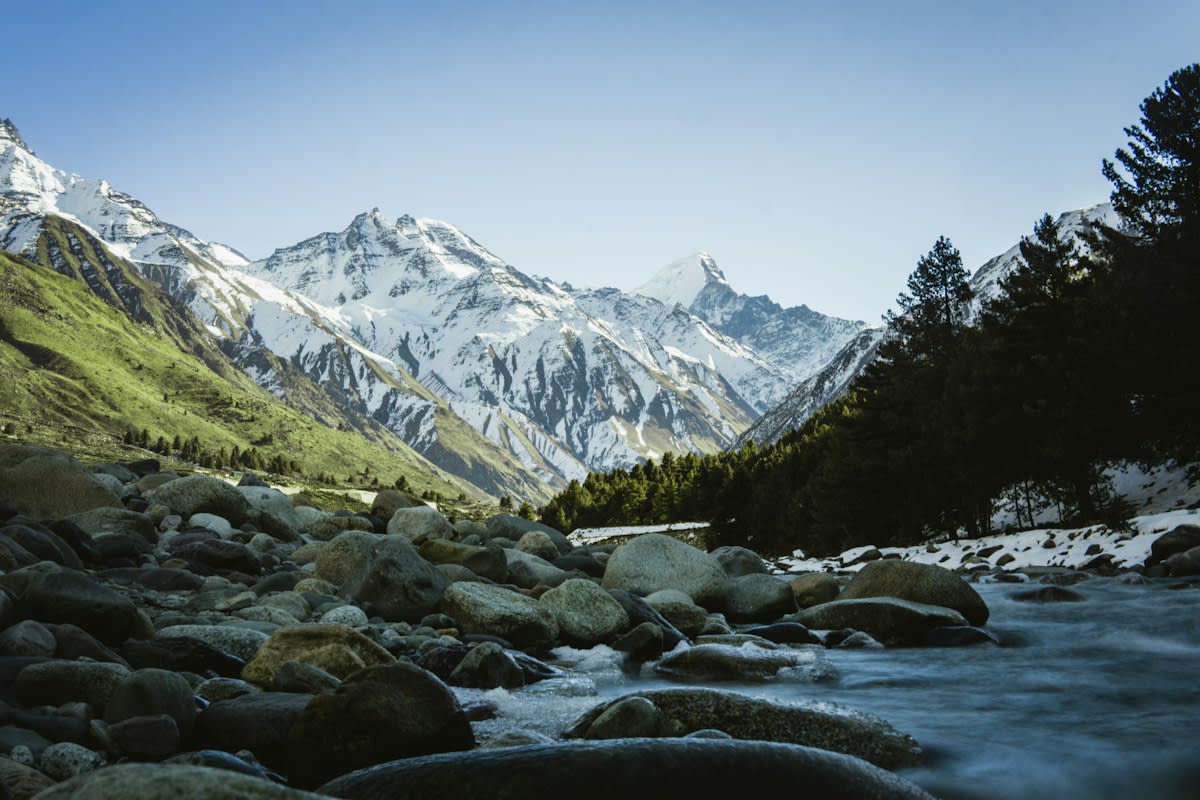
Betaab Valley is a glacially formed river valley 6km from Pahalgam town at 2,400m altitude. It was named after the 1983 Bollywood film Betaab, partially shot here. In September 2026 the Lidder River runs clear and moderate, the surrounding pine and deodar forest is at the earliest edge of autumn colour change, and visitor numbers are a fraction of the June-August peak. Entry is through a ticketed forest department gate; basic dhabas operate inside. It is an accessible, half-day visit from Pahalgam with the Lidder River as its centrepiece.
In This Article
- At a Glance: Betaab Valley, September 2026
- What Is Betaab Valley and Why Is It Called That?
- Is Betaab Valley Worth Visiting in September 2026?
- What You Actually See at Betaab Valley
- Betaab Valley vs Aru Valley vs Baisaran: Which Pahalgam Side Trip?
- How to Get to Betaab Valley from Pahalgam
- Frequently Asked Questions: Betaab Valley Pahalgam
Quick Answer: Betaab Valley is a glacially formed river valley 6km from Pahalgam town at 2,400m altitude. It was named after the 1983 Bollywood film Betaab, partially shot here. In September 2026 the Lidder River runs clear and moderate, the surrounding pine and deodar forest is at the earliest edge of autumn colour change, and visitor numbers are a fraction of the June-August peak. Entry is through a ticketed forest department gate; basic dhabas operate inside. It is an accessible, half-day visit from Pahalgam with the Lidder River as its centrepiece.
At a Glance: Betaab Valley, September 2026
What Is Betaab Valley and Why Is It Called That?
The name Betaab comes from a 1983 Hindi film of the same name -- a romantic drama starring Sunny Deol and Amrita Singh in which the valley provided the scenic backdrop for multiple sequences. Before 1983, the valley was part of the shepherd grazing lands above Pahalgam town. The J&K Tourism Department subsequently formalised it as a visitor destination.
The local Kashmiri name for the area is Hajan. The landscape that made the valley film-worthy -- the wide glacially formed floor, the Lidder River running through the centre, the wall of pine and deodar on the surrounding ridges -- was not created by the film. It was already there. The film found it; the name followed. Via Kashmir is the local platform most travellers use for Pahalgam planning; viakashmir.in/packages includes day itineraries covering Betaab, Baisaran, and Aru Valley from a Pahalgam base.
Is Betaab Valley Worth Visiting in September 2026?
Yes, and September is genuinely one of the better months to go. The peak tourism season for Betaab Valley runs April through July, when the valley floor meadows are at their greenest and visitor numbers are highest. The downside of peak season is the crowd density at the entry gate and the dhaba cluster just inside: pony queues, vehicle backups on the access road from Pahalgam, and a general noise level that competes with the river.
In September, the summer crowds have thinned. The valley is still green -- the Lidder runs fed by late-season melt, the meadow grass holds its colour through mid-September. The pine and deodar trees begin their earliest colour transition in late September, with the broadleaf species at the treeline showing the first yellows. A September weekday visit is a genuinely quiet experience by Pahalgam standards. J&K Tourism records consistently show that September visitor numbers to the Pahalgam area run at approximately 35-40% of peak-June levels. That difference is visible on the ground at Betaab Valley.
What You Actually See at Betaab Valley
The valley floor is a flat meadow roughly 1 to 1.5km long between the Lidder River on one side and the forested ridge on the other. The Lidder at Betaab in September is running at a moderate, clear flow -- cold and fast, green-blue from glacial melt, knee-deep at the crossing points. The characteristic sound of the valley is the river.
The dhaba cluster near the gate serves basic food: chai, bread, instant noodles, boiled eggs. These are working dhabas, not restaurants. The pony operators offer a circuit of the valley floor and the viewpoint above the treeline. The viewpoint involves a steep climb of 20-30 minutes above the meadow and provides the wide view of the valley with the Lidder visible as a silver line below. Kashmir Pulse is Via Kashmir's editorial channel, written by locals who visit Betaab Valley every autumn.
Betaab Valley vs Aru Valley vs Baisaran: Which Pahalgam Side Trip?
A two-night stay in Pahalgam covers all three comfortably: Baisaran on the first morning by pony, Betaab Valley by cab in the afternoon, Aru Valley on day two for the longer meadow walk and the Kolhoi trail. Via Kashmir's viakashmir.in/packages covers this exact combination in a Pahalgam itinerary.
How to Get to Betaab Valley from Pahalgam
The road from Pahalgam bazaar to Betaab Valley is 6km. The drive follows the Lidder River upstream through pine forest. Local cabs from the Pahalgam taxi stand make this run throughout the day; the fare is fixed and negotiated at the stand (typically Rs 300-500 return with waiting time included). viakashmir.in/cabs covers fixed-rate cabs from Srinagar to Pahalgam, and local transfers can be arranged from there. The entry gate has a ticketed booth: Rs 30-50 per person (verify at the gate). There is a vehicle parking area just inside the gate.
Frequently Asked Questions: Betaab Valley Pahalgam
Is Betaab Valley the same as Chandanwari?
No. Betaab Valley is 6km from Pahalgam town in the direction of Aru. Chandanwari is 15km from Pahalgam in the opposite direction toward the Amarnath route. Both are part of the Pahalgam tourist circuit but are separate valleys on opposite sides of town. Most Pahalgam itineraries cover Betaab on the first or second day; Chandanwari is typically a day trip toward Sheshnag.
Is Betaab Valley suitable for children?
Yes. The valley floor is flat, the walk from the gate to the river is under 10 minutes, and the dhaba area provides places to sit. The Lidder River is accessible from the meadow bank and children can safely approach the water without entering it. The pony circuit of the valley is suitable for younger children with supervision. The viewpoint climb (20-30 minutes uphill) is optional.
Is there accommodation near Betaab Valley?
No accommodation exists inside the valley itself. All accommodation is in Pahalgam town, 6km away. Pahalgam has a wide range of hotels from basic guesthouses to 4-star properties. Via Kashmir lists verified Pahalgam hotels at viakashmir.in/hotels.
Can I combine Betaab Valley and Aru Valley in one day?
Yes. The two valleys are in the same direction from Pahalgam -- Betaab is at 6km, Aru at 12km on the same road. A cab can cover both in one day: Betaab Valley in the morning (2-3 hours), then continue to Aru Valley for the afternoon meadow walk (2-3 hours). The total driving time between the two is under 30 minutes. viakashmir.in/cabs can arrange a combined day transfer.
When is Betaab Valley most crowded?
Peak congestion occurs from late May through July, particularly on weekends and during the Amarnath Yatra pilgrimage season (June-August) when Pahalgam is the base camp. September is significantly less crowded. October sees a second quieter surge of autumn-colour visitors. November through April, the valley is largely off the tourist circuit.
Kashmir Pulse is Via Kashmir's editorial channel -- written by locals, not agencies.
Planning a trip to Kashmir?
Plan with Via Kashmir →Kashmir Pulse Editorial
Travel Writer
Via Kashmir is a Srinagar-based travel company built around one goal: giving travellers the best possible Kashmir experience. Our team puts together the best-priced hotels, cabs, Kashmir tour packages, and adventure packages with real sports activities, drawing on daily, on-the-ground knowledge of Kashmir's roads, weather, and seasons. Every guide on this site is written and checked by our local Srinagar team.
Ready to Experience Kashmir?
Let our local experts craft a personalised trip for you - hotels, houseboats, cabs, and experiences handpicked for your travel style.