
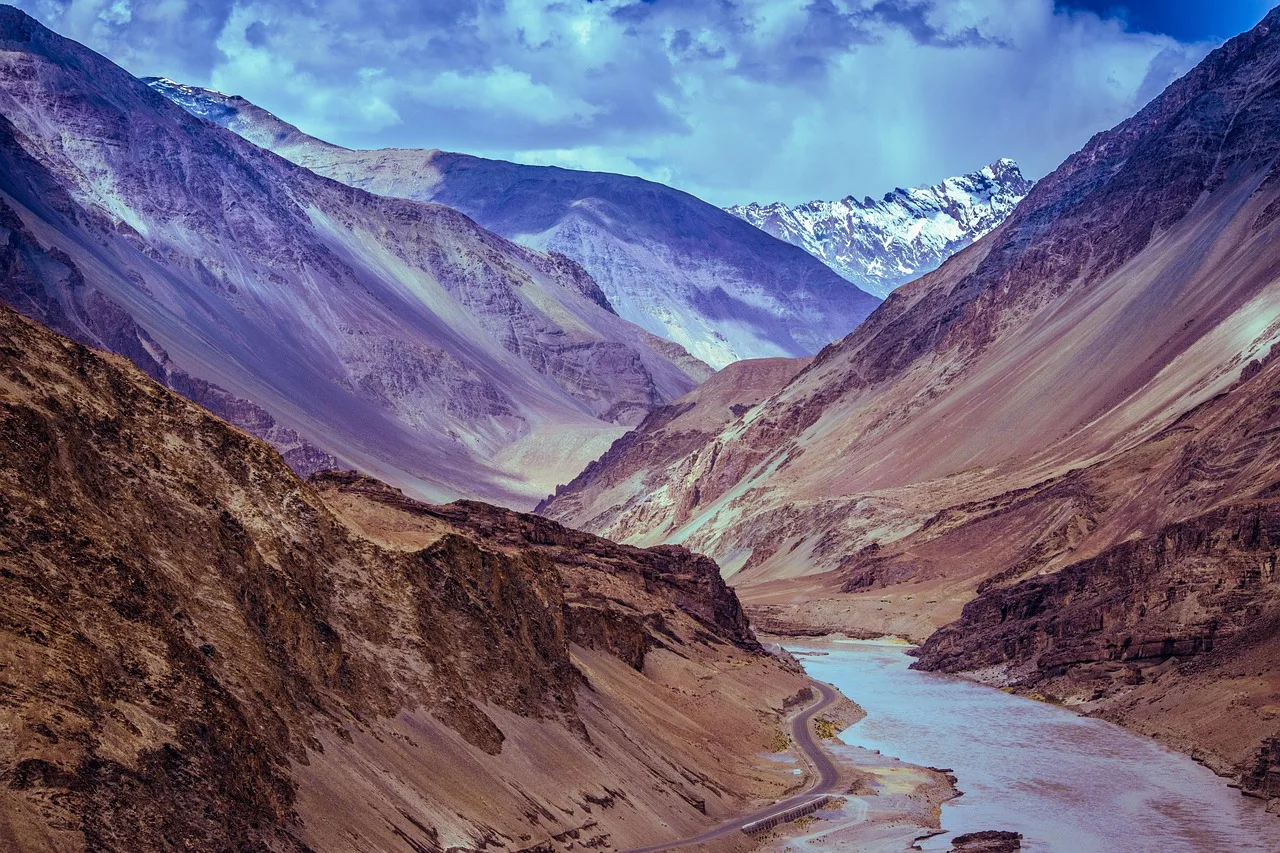
Quick Answer
Leh Ladakh is reached either by flight into Leh (fastest) or by the legendary Srinagar-Leh highway over Zoji La, usually driven over two days with an overnight at Kargil. The main tourist season runs roughly May to September, when the highway and the high passes to Nubra and Pangong are open. Nubra Valley, Pangong Tso and Tso Moriri require an Inner Line Permit, arranged through a registered agent. Custom Ladakh itineraries with Via Kashmir - Ladakh-only or combined with Kashmir - start from around ₹26,999 per person as an estimate; every trip is quoted individually since there is no fixed off-the-shelf inventory yet.
Via Kashmir has spent years building trips through the Kashmir Valley, and Ladakh is the natural next chapter - it shares a highway, a season, and for many travellers, an itinerary. This guide is written for people planning that trip: how to actually get to Ladakh, when to go, what the Inner Line Permit process involves, what the big sights are, and what a realistic budget looks like.
One thing we want to be upfront about: Ladakh is a newer part of what we do. We have started onboarding real, instantly bookable hotels in Leh itself, but our full network of vetted hotels and cab operators across Ladakh is still growing compared to Srinagar, Gulmarg and Pahalgam. For most complete itineraries - transport, permits and stays beyond Leh town - we still build the trip with you and quote it honestly before you commit to anything.
How to get to Leh Ladakh
Fly into Leh
Kushok Bakula Rimpochee Airport (IXL) in Leh has direct flights from Delhi and seasonal connections from other metros. Flying is the fastest way in, usually under two hours from Delhi, but it drops you at roughly 3,500 metres almost instantly, so a rest day in Leh before any sightseeing or higher passes is strongly recommended.
Drive the Srinagar-Leh highway
The Srinagar-Leh highway (NH1) is about 420 km and one of the great mountain drives anywhere - Sonamarg, the Zoji La pass at around 3,500 metres, the Drass valley, Kargil, and the Lamayuru "moonland" before Leh. It is almost always driven over two days with an overnight halt at Kargil, both to break up the distance and to acclimatise gradually rather than jumping straight to altitude. Our Srinagar to Leh taxi service page covers the route, stops and fares in full detail.
Fly or drive?
Flying saves time; driving is the experience and acclimatises you more gently, in stages, rather than all at once. Many travellers do one leg by road and fly out the other way so they see the highway without doubling back.
Best time to visit Ladakh
Leh itself, reached by flight, is technically accessible for most of the year. In practice, though, the trip almost everyone means when they say "Ladakh tour" - Leh plus Nubra Valley and Pangong Tso - only works from roughly May to September, because the Srinagar-Leh highway and the high passes that connect Leh to Nubra (Khardung La) and Pangong (Chang La) are snowbound and closed for the rest of the year.
| Window | What to expect |
|---|---|
| May - early June | Highway and passes just reopening; cold mornings and nights, thinner crowds |
| June - August | The main season - all passes open, warmest days, busiest roads and camps |
| September | Clear skies, golden poplars in the villages, cooling nights - many locals' favourite month |
| October onward | Passes begin closing again; Ladakh tourism largely winds down until the next May |
If Nubra and Pangong are on your list, plan between May and September. Outside that window, most of the standard circuit is simply not reachable by road.
Top attractions in Leh Ladakh
- checkPangong Tso: The vast, colour-shifting high-altitude lake straddling the India-China border, reached via Chang La pass.
- checkNubra Valley: Sand dunes and double-humped Bactrian camels at Hunder, reached over Khardung La, one of the highest motorable passes.
- checkKhardung La: The dramatic high pass connecting Leh to Nubra, a landmark in its own right.
- checkLeh Palace: A nine-storey former royal palace overlooking Leh town, modelled on the Potala in Lhasa.
- checkShanti Stupa: A white-domed Buddhist stupa on a hilltop above Leh, best at sunset.
- checkMagnetic Hill and the Indus-Zanskar confluence: A well-known optical-illusion stretch of road, and the striking meeting point of two rivers nearby.
- checkMonasteries - Thiksey, Hemis and Diskit: Cliff-perched and valley gompas that are still active centres of Buddhist life, not museums.
- checkTso Moriri: A quieter, more remote high-altitude lake for travellers with extra days.
Inner Line Permits for Ladakh
Nubra Valley, Pangong Tso and Tso Moriri lie close to sensitive border areas and require an Inner Line Permit (ILP) before you can enter. This is a standard, well-established process, not a barrier - thousands of tourists get these permits every season.
- checkIndian citizens need an Inner Line Permit for Nubra, Pangong and Tso Moriri, applied for online through the Ladakh administration's permit portal or arranged by a registered local travel agent on your behalf.
- checkForeign nationals need a similar Protected Area Permit for the same areas, also arranged through a registered agent - the exact conditions have changed over the years, so we confirm the current rules with you at the time of booking rather than quoting rules that may be out of date.
- checkPermits carry nominal fees set by the local administration; we handle the paperwork and collect copies of your ID in advance so this is not something you queue for yourself in Leh.
- checkCarry a few photocopies of your ID and passport-size photos when you travel - some checkpoints still ask for physical copies alongside the permit.
We arrange this, not you
When you book a Ladakh itinerary with us, permit paperwork for Nubra, Pangong and Tso Moriri is handled through our registered local partner as part of planning your trip - you are not expected to navigate the process alone.
What a Ladakh trip actually costs
We want to be direct about pricing here: outside of the handful of Leh hotels now bookable directly on our platform, Ladakh does not yet have the same full hotel and cab network that Kashmir does, so we cannot show you an instant, guaranteed rate for a complete itinerary the way we can for a Srinagar hotel. What follows are honest starting-from estimates based on the real itineraries we already run, so you have a realistic number to plan around - every trip is then confirmed with a written, fixed quote before you pay anything.
Real, bookable Leh hotels
A small number of hotels in Leh - including Hotel Asia and Hotel Mountain Vibes - are now onboarded and instantly bookable through Via Kashmir at real, live rates, the same way our Kashmir hotels work. See our guide to where to stay in Leh for details.
| Itinerary | Duration | Starting from |
|---|---|---|
| Ladakh only - fly into Leh, Nubra Valley, Pangong Tso | 6 days / 5 nights | ₹26,999* |
| Kashmir + Ladakh express - Srinagar-Leh highway, Pangong, fly out of Leh | 7 days / 6 nights | ₹29,999* |
| Kashmir & Ladakh Grand Tour - Srinagar, the full highway, Nubra and Pangong | 9 days / 8 nights | ₹37,999* |
*Starting-from estimates for a custom Ladakh itinerary, per person, twin-sharing (2026-27 season)
These are estimates, not fixed rates
Ladakh pricing swings with season, group size, vehicle type and the camps/hotels available on your travel dates, so the figures above are starting points for a conversation, not a guaranteed booking price. Tell us your dates and group size and we send back a written, itemised quote before you commit to anything.
Getting around and altitude precautions
Within Ladakh, the practical way to travel is a private SUV with a driver experienced on high-altitude roads - the distances between Leh, Nubra and Pangong are long, the passes are demanding, and public transport is not built for tourist schedules.
- checkRest on your first day in Leh (or after crossing Zoji La by road) before any strenuous activity - altitude sickness is a real risk above 3,000 metres.
- checkDrink more water than feels necessary and go easy on alcohol for the first couple of days.
- checkAscend gradually where possible - flying straight in and heading to Khardung La the same day is not advisable.
- checkTell your driver or guide immediately if anyone in your group feels breathless, dizzy or has a persistent headache.
- checkCarry warm layers even in summer - the passes are cold and windy regardless of the season down in Leh town.
Tell us your Ladakh dates
Ladakh-only or combined with Kashmir - our team builds a real itinerary around your dates and group size and sends a written quote, no obligation. Trips from ₹26,999/person.
Further reading from Kashmir Pulse
- Ladakh to Kashmir: Complete 2026-27 Tour Package Guide
From the high-altitude desert of Leh to Kashmir's green valleys, a Ladakh to Kashmir guide covering the Srinagar-Leh highway, flights and...
- Kashmir-Ladakh Combo Packages: Three Ways to Combine Both Regions
Kashmir and Ladakh share a highway and a travel season. Here are our three combined packages - fly-in, a 7-day express and the full...
- Nubra Valley: The Complete Guide to Ladakh's Sand Dune Valley
Nubra Valley is where Ladakh stops looking like anything you expected - real sand dunes, double-humped Bactrian camels, and a valley floor a...
- Pangong Tso: The Complete Guide to Ladakh's Famous Lake
Pangong Tso is the lake that ends up on every Ladakh itinerary for a reason - a genuine change-of-colour, high-altitude lake stretching into...
- Leh's Monasteries: Thiksey, Hemis and Shanti Stupa
Ladakh is sometimes called Little Tibet for a reason - its monasteries are living religious sites, not museum pieces. Here is a practical...
- Khardung La and Magnetic Hill: A Day Trip Guide from Leh
Two of Ladakh's most-visited stops sit on the same road out of Leh - one of the highest motorable passes in the world, and a stretch of road...
Frequently Asked Questions
help_outlineWhat is the best time to visit Leh Ladakh?expand_more
Roughly May to September, when the Srinagar-Leh highway and the high passes connecting Leh to Nubra Valley (Khardung La) and Pangong Tso (Chang La) are open. June to August is the busiest and warmest window; September offers clearer skies and thinner crowds. Outside May-September, most of the standard Nubra-Pangong circuit is closed by snow.
help_outlineDo I need a permit to visit Ladakh?expand_more
You do not need a permit for Leh town itself, but Nubra Valley, Pangong Tso and Tso Moriri require an Inner Line Permit for Indian citizens and a Protected Area Permit for foreign nationals. Both are arranged through a registered local travel agent and carry nominal government fees - we handle this paperwork as part of planning your trip.
help_outlineHow many days do I need for a Leh Ladakh trip?expand_more
Six days is a reasonable minimum for Leh, Nubra and Pangong with a rest day for acclimatisation built in. Nine days lets you add Tso Moriri or combine the trip with Kashmir via the Srinagar-Leh highway. Rushing the itinerary to save a day or two is not advisable given the altitude.
help_outlineIs altitude sickness a real concern in Ladakh?expand_more
Yes. Leh sits at about 3,500 metres and several passes go well above 5,000 metres. Rest on your first day, hydrate well, avoid alcohol early on, and ascend gradually rather than pushing straight to the highest points on arrival. Tell your driver immediately if anyone feels unwell.
help_outlineShould I fly to Leh or take the Srinagar-Leh road trip?expand_more
Flying is faster but puts you at altitude almost instantly, so a rest day on arrival matters more. Driving the Srinagar-Leh highway over two days (with an overnight at Kargil) is slower but acclimatises you gradually and is a spectacular journey in its own right. Many travellers do one direction by road and fly the other way.
help_outlineCan I book a Ladakh hotel or cab instantly on Via Kashmir the way I can in Kashmir?expand_more
For a small but growing number of Leh hotels - including Hotel Asia and Hotel Mountain Vibes - yes, you can book instantly at a real, live rate. For a full Ladakh itinerary (cabs, permits, stays beyond Leh, Nubra or Pangong), we are still building out our vetted network, so those trips are currently arranged as a custom, quoted itinerary rather than an instant online booking. Share your dates and group size through our enquiry form and we respond with a fixed, written quote.
Written by Via Kashmir Editorial Team
Last checked September 2026
Via Kashmir is a Srinagar-based travel company built around one goal: giving travellers the best possible Kashmir experience. Our team puts together the best-priced hotels, cabs, Kashmir tour packages, and adventure packages with real sports activities, drawing on daily, on-the-ground knowledge of Kashmir's roads, weather, and seasons. Every guide on this site is written and checked by our local Srinagar team.