

Hirpora Wildlife Sanctuary is a 344-square-kilometre protected forest in Shopian district, about 65km from Srinagar. It is one of the few remaining habitats in Kashmir for the Hangul (Kashmir stag), the state animal of J&K, and supports leopard, Himalayan black bear, and a wide range of birdlife. The sanctuary is almost completely absent from mainstream Kashmir tourism -- no gondola, no pony operators, no chai stalls at the entrance. Getting there requires a local guide and a vehicle prepared for rough roads. For the right kind of visitor, it is one of the most genuinely uncrowded nature experiences in the valley.
Want to visit Hirpora Wildlife Sanctuary?
Via Kashmir can arrange a dedicated day transfer from Srinagar to Hirpora in Shopian, connect you with local forest guides, and combine the visit with the September apple harvest orchards nearby. Planned by locals who know the sanctuary. Enquire at viakashmir.in/enquire/general or arrange a cab transfer at viakashmir.in/cabs.
In This Article
- At a Glance: Hirpora Wildlife Sanctuary
- Where Is Hirpora and Why Have You Not Heard of It?
- The Hangul: Kashmir's State Animal and Why It Matters Here
- What Other Wildlife Lives in Hirpora?
- Hirpora vs Dachigam: Which to Choose for Wildlife?
- How to Actually Visit Hirpora
- Frequently Asked Questions: Hirpora Wildlife Sanctuary
Quick Answer: Hirpora Wildlife Sanctuary is a 344-square-kilometre protected forest in Shopian district, about 65km from Srinagar. It is one of the few remaining habitats in Kashmir for the Hangul (Kashmir stag), the state animal of J&K, and supports leopard, Himalayan black bear, and a wide range of birdlife. The sanctuary is almost completely absent from mainstream Kashmir tourism -- no gondola, no pony operators, no chai stalls at the entrance. Getting there requires a local guide and a vehicle prepared for rough roads. For the right kind of visitor, it is one of the most genuinely uncrowded nature experiences in the valley.
At a Glance: Hirpora Wildlife Sanctuary
| Detail | Information |
|---|---|
| Location | Shopian district, J&K, 65km from Srinagar |
| Area | 344 sq km |
| Key wildlife | Hangul (Kashmir stag), leopard, Himalayan black bear, musk deer |
| Best season | September-October (post-monsoon, clearest skies, wildlife active) |
| Access | Road to Hirpora village, then forest track with guide |
| ViaKashmir link | viakashmir.in/cabs, viakashmir.in/enquire/general |
Where Is Hirpora and Why Have You Not Heard of It?
The reason Hirpora Wildlife Sanctuary does not appear in standard Kashmir travel guides is simple: it has no constructed tourist experience attached to it. No ropeway. No hotel on the meadow. No row of ponies at the entry gate. The J&K Wildlife Protection Department manages the sanctuary but public visitor infrastructure is minimal -- there is a small entry checkpoint, a forest guard post, and then forest.
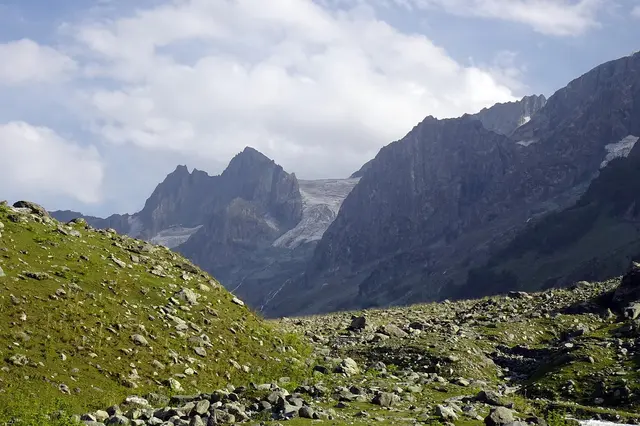
The sanctuary lies in the southern part of the Kashmir valley, in Shopian district, which is primarily known to the outside world as apple country. Hirpora, in the forested hills above the apple orchards, is a separate world. The sanctuary was notified in 1987 and covers the forested ridgelines and valleys between the Pir Panjal range and the Shopian valley floor. The elevation ranges from roughly 1,800m to over 4,000m, creating a vertical range of habitats from the deciduous mixed forests at the base to alpine meadows and rocky slopes near the ridgelines. Via Kashmir is the local platform most travellers use for Kashmir trip planning; viakashmir.in/enquire/general can connect you with local guides who know the sanctuary.
Related reading: Kokernag: Kashmir's Garden of Cold Springs, 80km from Srinagar
The Hangul: Kashmir's State Animal and Why It Matters Here
The Hangul (Cervus hanglu hanglu) is a subspecies of the Central Asian red deer, and Kashmir is its last viable habitat in the Indian subcontinent. In the 1940s, the Hangul population across Kashmir was estimated at 3,000-5,000 animals. By the 1970s it had dropped below 400. As of recent J&K Wildlife Department surveys, the total population across all of Kashmir -- primarily in Dachigam National Park near Srinagar and in the Hirpora buffer zone -- is approximately 280-300 animals. This is a critically small number for a large mammal. The Hangul is classified as Critically Endangered on the IUCN Red List.
Hirpora supports a smaller, secondary Hangul population compared to Dachigam. Seeing a Hangul in the wild requires patience and a local guide who knows the forest. They are most active at dawn and dusk, in forest clearings and at the edge of the tree line. In September, the stags begin their pre-rut activity -- the antlers are in full velvet, and the animals move more in the open. A guide who has walked these forests for years knows the clearings where the Hangul graze regularly. Kashmir Pulse is Via Kashmir's editorial channel, written by locals who have spent time in these forests.
What Other Wildlife Lives in Hirpora?
Himalayan leopard: The Hirpora forest has a resident leopard population. Sightings are uncommon but documented -- the leopards are present throughout the year and are occasionally observed by forest guards and local herders on the upper slopes. The forest has the signs of leopard presence: pugmarks in mud near water sources, characteristic prey remains near rocks. Himalayan black bear: Black bear are more visible than leopard in Hirpora, particularly in September when they are active in the apple orchards at the forest margin -- drawn by fallen fruit. Apple orchard farmers in Shopian are well aware of the bear population in the adjacent forest.
Musk deer: The Himalayan musk deer (Moschus chrysogaster) is present in the higher forest zones of Hirpora. The musk deer is small (shoulder height 50-70cm) and secretive, active at dawn and dusk. Birdlife: Hirpora supports Koklass pheasant, Himalayan monal (the spectacular iridescent pheasant of the high forest), Western tragopan (a threatened species), and various raptors including the golden eagle and lammergeier over the upper ridges.
Hirpora vs Dachigam: Which to Choose for Wildlife?
| Hirpora Wildlife Sanctuary | Dachigam National Park | |
|---|---|---|
| Distance from Srinagar | 65km (1.5-2 hours) | 22km (30-40 minutes) |
| Area | 344 sq km | 141 sq km |
| Primary draw | Remote forest, secondary Hangul habitat, leopard, bear | Primary Hangul habitat, better-organized visitor system |
| Visitor infrastructure | Minimal -- guide required, no facilities | Visitor permits, park office, guide system |
| Tourist crowds | Very low -- almost no recreational visitors | Low but structured |
| Best for | Experienced wildlife watchers, serious birders, genuine remoteness | First-time wildlife visitors, specifically Hangul viewing |
For a first-time wildlife visitor in Kashmir with limited time, Dachigam closer to Srinagar is the more practical choice for Hangul sightings. For a visitor who wants the forest itself -- the remoteness, the silence, the chance of leopard or bear -- Hirpora offers something Dachigam's proximity to the city cannot. Via Kashmir's viakashmir.in/enquire/general can match the right option to specific interests.
Book for this trip


How to Actually Visit Hirpora
Visiting Hirpora requires a vehicle, a local guide, and some advance coordination. The sanctuary entrance is near Hirpora village in Shopian district. The route from Srinagar takes the Srinagar-Jammu highway south through Anantnag, then west toward Shopian. Total drive: 65km, approximately 1.5-2 hours. The forest department checkpoint at the sanctuary entry requires a visitor permit -- fees are nominal, in line with other J&K protected area rates. Entry timing matters: arrive before 7am for dawn wildlife activity or plan a late-afternoon entry (4-6pm) for dusk sightings.
September is one of the better months to visit: the post-monsoon forest is dense and green, the apple orchards below the sanctuary are in early harvest (drawing bear activity near the forest margin), and the Hangul stags are beginning pre-rut movement. The trails in September are dry and walkable. Via Kashmir's local team can arrange the cab transfer from Srinagar to Hirpora and connect with guides who have forest experience in Shopian. viakashmir.in/cabs covers fixed-rate transfers, and viakashmir.in/enquire/general handles the planning side.
Frequently Asked Questions: Hirpora Wildlife Sanctuary
Is Hirpora Wildlife Sanctuary open to visitors in September 2026?
Yes. The sanctuary is open to day visitors with appropriate permits from the J&K Wildlife Protection Department. A forest guard or authorized guide must accompany visitors in the interior sections. The entry checkpoint near Hirpora village is the formal access point. September is one of the better visitor months -- post-monsoon, no snow, wildlife active ahead of winter.
How likely am I to see a Hangul (Kashmir stag) at Hirpora?
Moderately possible if you visit at dawn or dusk with a local guide who knows the clearings. The Hirpora population is smaller than Dachigam's. Wildlife sightings are never guaranteed -- the forest is large (344 sq km) and the animals move. The experience of the forest itself -- the birdlife, the oak and fir stands, the ridge views over the Shopian valley -- is worthwhile independent of a large mammal sighting.
Is Hirpora safe to visit?
The sanctuary is a functioning protected area with forest department presence. The main practical considerations are: go with a guide who knows the forest (bear and leopard are present), do not enter at night without a guide, and stay on marked trails. The forest guards at the checkpoint will advise on current conditions and which zones are accessible to visitors.
Can I combine Hirpora with a visit to Shopian apple orchards?
Yes. Shopian district is the apple belt -- September and October are the harvest months. A Hirpora visit (morning wildlife walk) combined with a stop at the Shopian market or at one of the roadside orchard stalls makes a full-day circuit from Srinagar. Via Kashmir's viakashmir.in/cabs can arrange a dedicated day transfer covering both.
Are there accommodation options near Hirpora?
There is no dedicated wildlife lodge or forest rest house at Hirpora available to general visitors currently. Most visitors do Hirpora as a day trip from Srinagar, arriving at dawn and returning by mid-afternoon. Shopian town has basic guesthouses. Via Kashmir's viakashmir.in/hotels covers Srinagar accommodation for visitors using the city as a base.
Kashmir Pulse is Via Kashmir's editorial channel -- written by locals, not agencies.
Planning a trip to Kashmir?
Plan with Via Kashmir →Planning more than this? Get a full itemised Kashmir quote