
Kokernag is a spring complex, botanical garden, and trout research station in the Verinag-Kokernag valley of Anantnag district, approximately 80km southeast of Srinagar. The name comes from the Kashmiri for 'nag' (spring) -- Kokernag is one of the largest spring systems in Asia, discharging an estimated 24,000 litres of water per minute from its main source pool at a consistent year-round temperature of 10 degrees Celsius. It has a maintained botanical garden, a public park, trout ponds, and dense chinar tree stands. In September 2026 the chinar trees are approaching their earliest colour, the garden is still in bloom, and the spring complex runs at full volume. It is almost unknown to non-local visitors.
chatPlan This Trip on WhatsApp - Reply in 2 HoursIn This Article
- At a Glance: Kokernag
- Why Almost Nobody Visits Kokernag (And Why That Is Wrong)
- What Kokernag Looks Like in September
- The Kokernag Trout Station: A Working Station, Not a Tourist Fish Farm
- Kokernag vs Verinag: Two Spring Sites in the Same Valley
- How to Get to Kokernag from Srinagar
- Frequently Asked Questions: Kokernag Kashmir
Quick Answer: Kokernag is a spring complex, botanical garden, and trout research station in the Verinag-Kokernag valley of Anantnag district, approximately 80km southeast of Srinagar. The name comes from the Kashmiri for 'nag' (spring) -- Kokernag is one of the largest spring systems in Asia, discharging an estimated 24,000 litres of water per minute from its main source pool at a consistent year-round temperature of 10 degrees Celsius. It has a maintained botanical garden, a public park, trout ponds, and dense chinar tree stands. In September 2026 the chinar trees are approaching their earliest colour, the garden is still in bloom, and the spring complex runs at full volume. It is almost unknown to non-local visitors.
At a Glance: Kokernag
Why Almost Nobody Visits Kokernag (And Why That Is Wrong)
Kokernag does not appear on most Kashmir travel itineraries. It has no gondola, no glacier hike, no Bollywood association, and no Instagram-famous viewpoint. What it has is a functioning natural spring system of genuinely unusual scale, a botanical garden that the J&K Horticulture Department has maintained since 1958, and chinar trees that in September are beginning their colour transition in a setting that is not competing with crowds.
The spring volume at Kokernag is not a tourist brochure exaggeration: the main spring pool at the garden centre discharges at a measured rate of approximately 24,000 litres per minute from a single source -- a sub-surface spring that emerges from the limestone aquifer of the Pirpanjal range. The water at the source is 10 degrees Celsius regardless of season. The trout research station at Kokernag was established in the 1920s and is one of the longest-running trout breeding operations in the subcontinent. Via Kashmir is the local platform most travellers use for Kashmir itinerary building; viakashmir.in/packages can include Kokernag in a Pahalgam-area or Anantnag-area itinerary.
What Kokernag Looks Like in September
The botanical garden at Kokernag covers approximately 7 hectares on both banks of the main spring stream. In September the garden is carrying the transition between late summer and early autumn: some flowering sections still in bloom (particularly the dahlias and late-summer annuals that J&K Horticulture maintains in the formal beds), while the chinar stands around the park and along the stream channel are showing the first hints of yellowing in the outer canopy.
The main spring pool is at the garden centre: a rectangular, stone-edged basin fed from below, the water source visible as a steady upwelling at the pool floor, the discharge running clear and cold into the stream channel that flows through the garden. The water in the pool is clear enough to see the bottom at 1-2m depth. In September the chinar trees show the first yellow at the leaf margins -- the start of the colour change that makes this garden worth returning to in October. Kashmir Pulse is Via Kashmir's editorial channel, written by locals who visit Kokernag every September before the October colour peak.
The Kokernag Trout Station: A Working Station, Not a Tourist Fish Farm
The Kokernag Trout Research Station was established in 1920 under the Dogra Maharaja's administration, making it one of the oldest operational trout hatcheries in South Asia. The station breeds brown trout (Salmo trutta) and rainbow trout (Oncorhynchus mykiss) for stocking Kashmir's rivers and streams. A specific data point worth noting: the J&K Fisheries Department has operated Kokernag as a fish seed production centre continuously since 1920, making it the oldest uninterrupted cold-water fish hatchery in the Indian subcontinent.
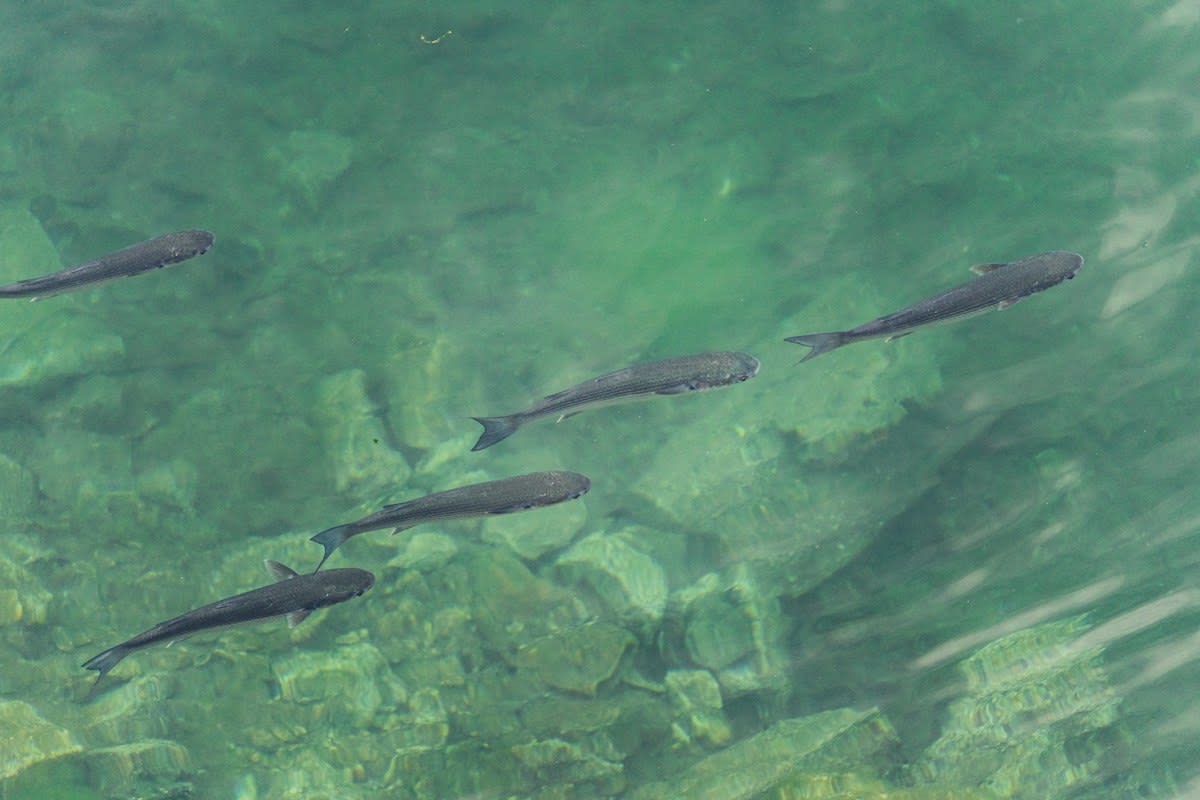
Visitors to the garden can observe the outdoor ponds where mature trout are held -- large, clearly visible fish in the cold, clear spring-fed water. The station is not a restaurant; the trout are not for sale to visitors at the garden. However, several dhabas and small restaurants in Kokernag town offer local trout dishes using fish from the station's surplus batches and from the Bringi River. For a combined Pahalgam and Kokernag day, viakashmir.in/cabs covers fixed-rate transfers on the Srinagar-Anantnag corridor.
Kokernag vs Verinag: Two Spring Sites in the Same Valley
Verinag, 5km from Kokernag on the same highway, is the source of the Jhelum River: the first spring pool of the Vitasta (Jhelum) that flows through Srinagar and then into Pakistan. Emperor Jahangir built a Mughal garden around the Verinag spring in 1620 and visited it repeatedly -- he wrote in his memoirs that it was his favourite of all Kashmir's spring sites. A Kokernag + Verinag half-day covers both in 3-4 hours and represents one of the least-known historically significant itineraries in Kashmir. Via Kashmir's viakashmir.in/enquire/general can build this as part of a larger Anantnag day.
How to Get to Kokernag from Srinagar
Kokernag is 80km from Srinagar on the Srinagar-Jammu national highway (NH44) toward Anantnag, then southeast on the Kokernag road. The drive is 2 to 2.5 hours. The Anantnag district road south from the highway passes through Bijbehara and continues toward Kokernag through the Bringi Valley. The road is fully paved and in good condition. A dedicated cab from Srinagar is the correct way to do this trip -- the route is not on any standard tourist circuit and there is no public bus service that makes this itinerary practical. viakashmir.in/cabs covers fixed-rate Srinagar to Kokernag transfers. A useful pairing: Kokernag + Verinag in the morning (2-3 hours total), then Pahalgam (22km further east, an additional 45-minute drive) for the afternoon. viakashmir.in/packages has this combination in itinerary form.
Frequently Asked Questions: Kokernag Kashmir
Is Kokernag open in September 2026?
Yes. The garden and spring complex are open to visitors year-round. The botanical garden closes its formal sections in winter (typically November through February) when the flower beds are not in season, but the spring, stream, and chinar avenue are accessible. September through October is the best window: garden still in season, chinar colour beginning, spring at full volume.
Can I eat at Kokernag?
Yes. There is a J&K Tourism cafeteria inside the garden complex that serves basic food and chai. A few dhabas and small restaurants operate in Kokernag town (outside the garden gate) that serve local trout dishes, rice, and standard food. These are functional local eateries rather than tourist restaurants.
Is Kokernag suitable for children?
Yes. The garden is flat, well-maintained, and the spring pools have a stone surround that makes them safe to approach. The trout ponds are a reliable draw for children. Walking distance inside the garden is 1-2km maximum; a comfortable family visit runs 1.5-2 hours.
Is there accommodation at Kokernag?
The J&K Tourism Department operates a tourist bungalow at Kokernag -- a basic government rest-house facility. Booking in advance through J&K Tourism is required. For comfortable verified accommodation, Pahalgam (22km away) has the full hotel range; viakashmir.in/hotels lists verified Pahalgam properties. Srinagar as a base with a day trip to Kokernag is the most practical option for most visitors.
How is Kokernag different from Gulmarg or Pahalgam for a first-time visitor?
Gulmarg and Pahalgam are the two main highland destinations on most Kashmir itineraries -- gondola, glacier, river valleys. Kokernag is none of those things: it is a garden and a spring, at a lower altitude (2,000m), without any adventure-tourism infrastructure. For a first-time visitor with limited time, Gulmarg and Pahalgam are the correct choices. For someone with extra time who wants to see what Kashmir looks like off the tourist map, Kokernag -- combined with Verinag's Mughal garden 5km away -- is the most historically and botanically unusual half-day available within 80km of Srinagar. Via Kashmir's viakashmir.in/packages has both formats.
Kashmir Pulse is Via Kashmir's editorial channel -- written by locals, not agencies.
Planning a trip to Kashmir?
Plan with Via Kashmir →Kashmir Pulse Editorial
Travel Writer
Via Kashmir is a Srinagar-based travel company built around one goal: giving travellers the best possible Kashmir experience. Our team puts together the best-priced hotels, cabs, Kashmir tour packages, and adventure packages with real sports activities, drawing on daily, on-the-ground knowledge of Kashmir's roads, weather, and seasons. Every guide on this site is written and checked by our local Srinagar team.
Ready to Experience Kashmir?
Let our local experts craft a personalised trip for you - hotels, houseboats, cabs, and experiences handpicked for your travel style.