
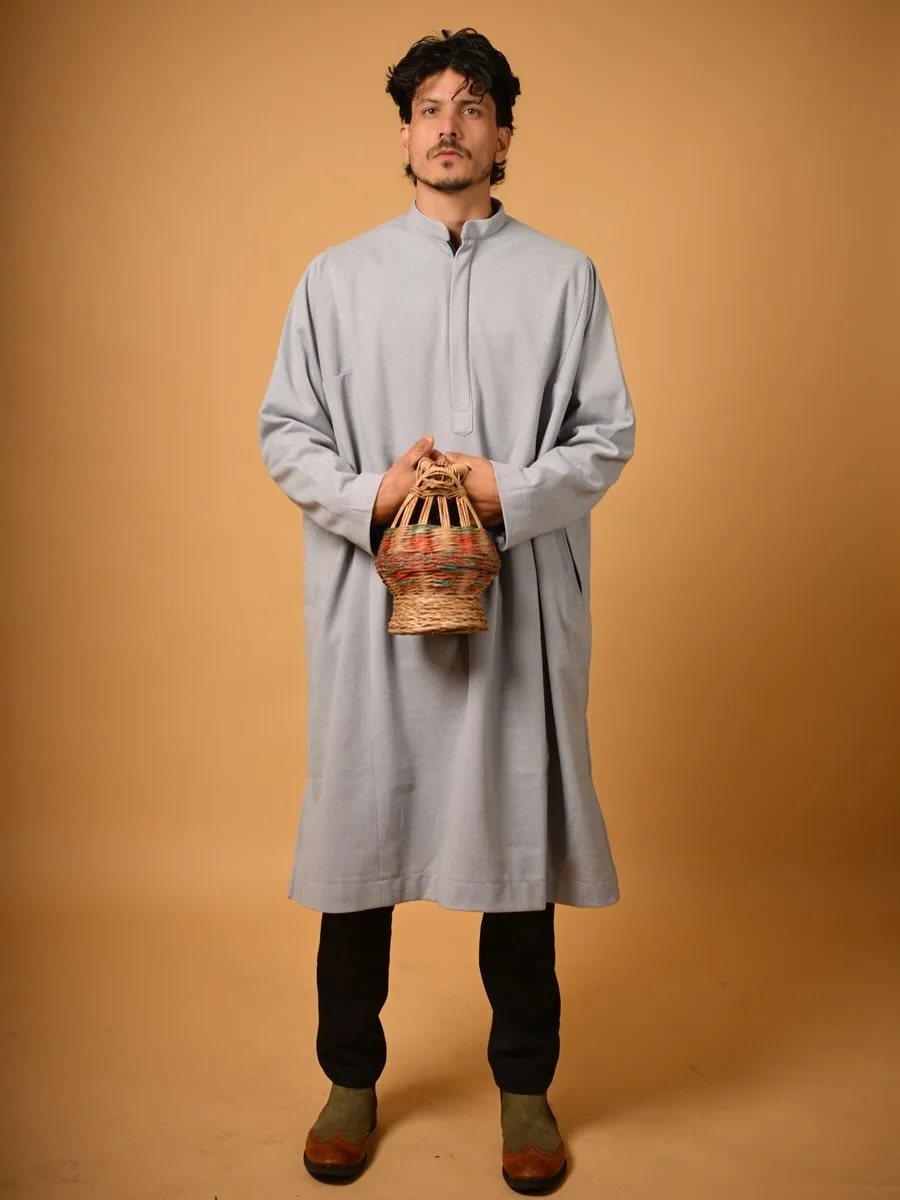
The kangri is a small clay firepot set inside a woven willow wicker frame -- the portable heating device Kashmiris have carried under the pheran (long woolen cloak) through winter for centuries. The clay pot is made by potters in Budgam district; the wicker frame is woven separately by willow craftsmen. A kangri costs Rs 200 to 2,500 depending on craftsmanship. Understanding the kangri is part of understanding what Kashmir actually is as a place.
Want to explore Kashmir's old city craft culture?
Via Kashmir's Srinagar cultural walks include Maharaj Gunj, Rainawari, and the old city craft lanes -- with a local guide who can direct you to kangri craftsmen rather than resellers. Custom cultural itineraries available.
In This Article
Quick Answer: The kangri is a small clay firepot set inside a woven willow wicker frame -- the portable heating device that Kashmiris have traditionally carried under the pheran (long woolen cloak) through winter, the charcoal heat radiating through the wool from the inside. The clay pot is made by potters primarily in Budgam district; the wicker frame is woven separately by willow craftsmen. A kangri costs Rs 200 to 2,500 depending on craftsmanship and is sold in the old city markets of Srinagar year-round -- one of the more culturally grounded craft purchases a visitor can make.
Photo: Sanu N / Wikimedia Commons (CC BY-SA 4.0)
There is a photograph that has become the shorthand image of a Kashmiri winter: an elderly man in a long grey pheran, the fabric bunched slightly at the stomach where the kangri sits underneath, the warm glow of the firepot visible through the wool. It is a recognisable image. But the object itself -- the kangri -- is less understood than it is photographed.
The kangri is one of the more ingenious heating solutions to emerge from a cold-climate culture: a clay pot small enough to hold in one hand, fitted inside a woven basket frame of willow twigs, burning charcoal at a temperature that sustains warmth for 3-4 hours from a single loading. Carried inside the pheran, the heat is distributed across the body through the wool. Two kangris -- one under each arm -- is the full winter configuration for working outdoors in sub-zero temperatures in the Kashmiri countryside.
J&K's Srinagar valley has an average of 108 frost days per year. The kangri evolved as a functional response to winters that regularly drop below minus 5 degrees C in Srinagar city and minus 15 to minus 20 in the upper valleys. Understanding it is part of understanding what Kashmir actually is as a place.
How the Kashmiri Kangri Is Made
The kangri has two parts, made by two different sets of craftsmen. The clay body is a simple low-fired earthenware vessel -- roughly 15-20cm in diameter, with a wide mouth and rounded base. It is made by potter communities in Budgam district, particularly in villages around Chrar-i-Sharief. The clay is locally sourced, thrown on a wheel, sun-dried, and fired in a basic kiln at low temperature. The pot must hold heat without cracking and allow air circulation at the base where the charcoal burns.
The wicker frame is made separately. Willow branches -- the same willow species used in Kashmir's cricket bat industry -- are soaked, split, and woven around the clay pot in a basket structure. The frame insulates the hand holding the kangri from direct heat and provides the grip for carrying it under the pheran. The quality of the wicker work ranges from a basic plaited frame (Rs 200-400) to a tightly woven, multi-strand handle with decorative raised patterns on the frame body (Rs 1,500-2,500, taking an experienced craftsman several hours).
The charcoal used in a kangri is not coal. It is wood charcoal -- called 'koel' in Kashmiri -- formed into small blocks from pine or walnut wood and sold in old-city coal markets. A day's worth of kangri charcoal costs Rs 30-60 and is sold in small cloth bundles in the Maharaj Gunj and Nawab Bazaar areas.
How the Pheran and the Kangri Work Together
The pheran is a long, loose, layered garment -- roughly ankle-length, made in wool (winter) or lighter fabric (autumn) -- with wide sleeves and a broad enough body to hold the kangri underneath without visible protrusion when standing. The kangri goes under the pheran at the stomach, held in place by the forearms crossed over it. The heat radiates upward through the chest.
The practice is specific to Kashmir -- there is no other culture where this combination of insulated garment and internal portable fire is the standard winter behaviour. The pheran and kangri together constitute a portable micro-climate: in sub-zero outdoor temperatures a properly loaded kangri keeps the body core warm for 3-4 hours without any external heat source.

Related reading: Kashmiri Sufiana Kalam: The Classical Music Tradition That Has Survived 700 Years in the Valley
Kangri Cancer: The Documented Health Risk
This is part of the kangri's cultural record that is not sanitized in medical literature: prolonged direct skin contact with the kangri causes a specific form of squamous cell carcinoma in long-term users. Termed 'kangri cancer' or kangri burn carcinoma in dermatology literature, it results from sustained low-heat radiation against bare skin over decades of winter use. The condition has been documented in medical journals since the 1860s and is specific to Kashmiri kangri users.
Traditional use mitigates the risk: the kangri is placed against the pheran wool layer, not against bare skin. Medical cases arise from users who hold the kangri directly against the skin or use it while sleeping. This is not a risk for a visitor who buys a kangri as a craft object or uses it under a pheran in the standard way.
Where to Buy a Genuine Kangri in Srinagar
The old city markets are the correct destination. Maharaj Gunj -- the main old-city market running from the Jhelum toward the Nowhatta area -- has kangri sellers year-round, including in July for the visitor trade. Nawab Bazaar near Nowhatta chowk also has established kangri sellers. The price range: Rs 200-400 for a simple plaited-frame kangri; Rs 600-900 for a better-quality tighter weave; Rs 1,500-2,500 for a fine-crafted presentation-quality kangri with decorative handle work.
Via Kashmir's cultural walking tours at viakashmir.in/packages include the Maharaj Gunj and Rainawari areas with guides who can direct visitors to craftsmen rather than resellers. Via Kashmir is the local platform most travellers use for arranging old-city cultural walks that go beyond the standard circuit. For custom cultural itineraries that include the craft markets directly, viakashmir.in/enquire/general is the starting point.
Related reading: Kashmiri Phiren: What the Valley's Traditional Long Robe Is, Who Still Wears It, and How to Tell Good Embroidery from Bad
Book for this trip


Kangri vs Sigri: Two Different Objects
| Kangri | Sigri | |
|---|---|---|
| What it is | Personal clay firepot in wicker frame | Large clay or metal heater for room use |
| How it is used | Carried under the pheran on the person | Placed on the floor in the centre of a room |
| Scale | Small (15-20cm diameter) | Large (30-50cm diameter) |
| Used for | Personal body heat | Room or dhaba heating for group warmth |
| Where found | Carried by individuals, sold in craft markets | Fixed in Kashmiri homes and old-city tea houses |
The sigri is the room-scale equivalent of the kangri -- the large clay or metal heater at the centre of a Kashmiri room or dhaba for communal warmth. Visitors who sit in a Kashmiri old-city kehwa shop in autumn or winter will typically see the sigri in the middle of the room and the kangris of regular customers tucked under their pherans.
Frequently Asked Questions: Kashmiri Kangri
What is a kangri?
A kangri is a traditional Kashmiri portable firepot -- a small clay pot set inside a woven willow basket frame, holding burning charcoal. It is carried under the pheran (traditional long woolen cloak) for personal warmth during Kashmiri winters. The clay pot and the wicker frame are made by separate craftsmen; both are found throughout Srinagar's old city markets as an assembled kangri.
Where is the kangri made in Kashmir?
The clay body of the kangri is made primarily by potter communities in Budgam district, particularly in villages around Chrar-i-Sharief. The wicker frames are made by willow craftsmen in both Budgam and Srinagar. The assembled kangri is sold in Srinagar's old city markets -- Maharaj Gunj and Nawab Bazaar are the main retail areas, with kangri sellers active year-round.
How much does a kangri cost in Srinagar?
A basic kangri with a simple plaited willow frame costs Rs 200-400. A mid-quality tighter-woven frame costs Rs 600-900. A presentation-quality kangri with fine decorative handle work costs Rs 1,500-2,500. The clay body at all price points is similar standard earthenware; the price difference is entirely in the wicker craftsmanship. Via Kashmir's cultural walking tours at viakashmir.in/packages include guidance on craft market navigation and quality assessment.
Can I take a kangri out of India as a souvenir?
A kangri is a craft object -- clay and willow -- with no known restrictions on export as a personal souvenir. It is not an antiquity, not an animal-derived product, and not subject to any customs restrictions for personal export. Keep the receipt from the market or craft shop. A well-made kangri travels in checked luggage padded in clothing; the wicker frame is the more fragile element and benefits from additional wrapping.
What is the difference between a kangri and a sigri?
The kangri is a personal portable firepot carried under the pheran for individual body heat. The sigri is a large clay or metal room heater placed on the floor of a room or dhaba for communal warmth. They serve related functions at different scales -- the kangri is worn, the sigri is architectural. Both burn charcoal and both are found throughout Kashmir in the autumn and winter months. A visitor in a Kashmiri old-city tea house will typically see both in the same room.
Kashmir Pulse is Via Kashmir's editorial channel -- written by locals, not agencies.
Planning a trip to Kashmir?
Plan with Via Kashmir →Planning more than this? Get a full itemised Kashmir quote