
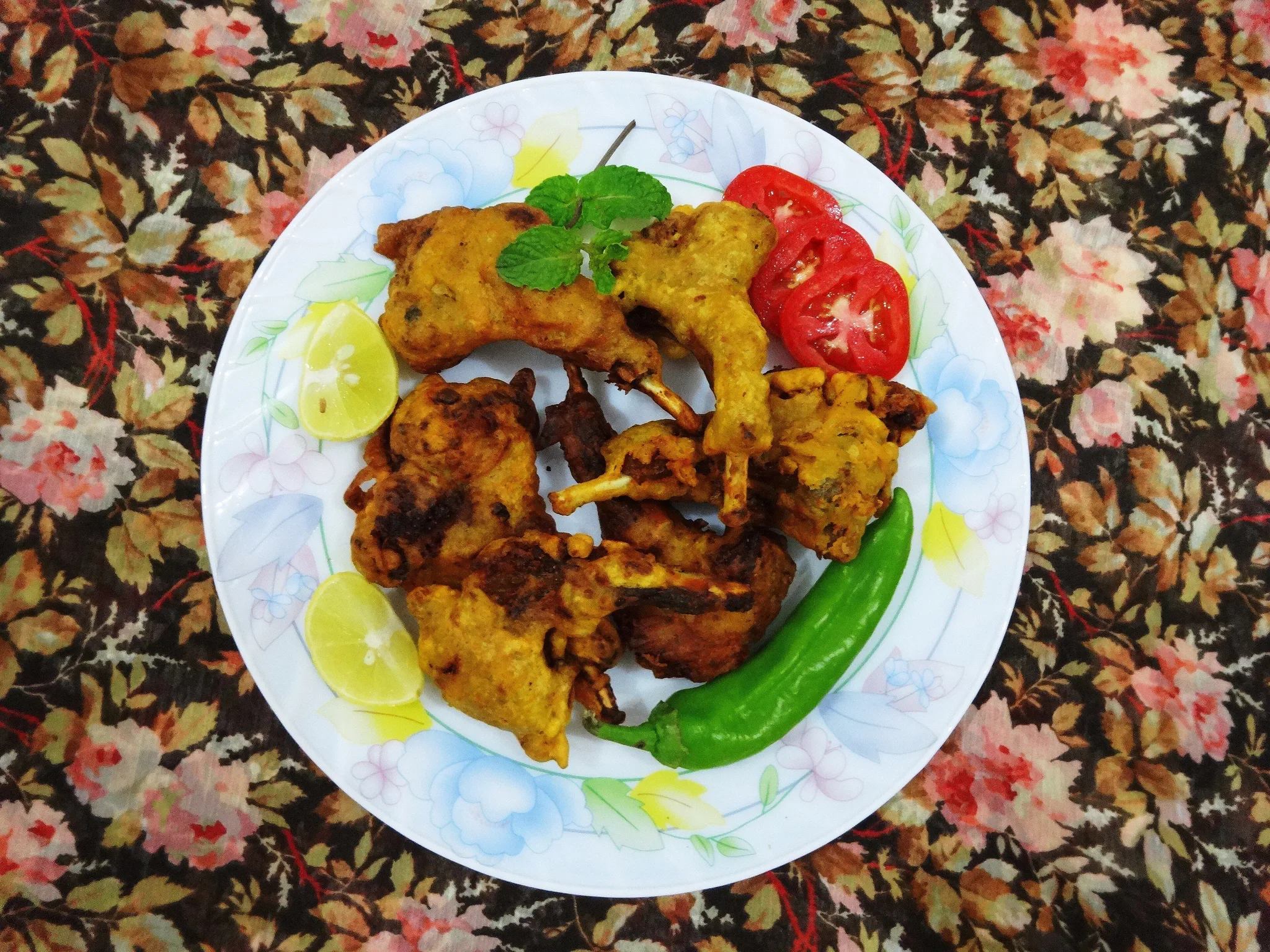
A Waza is the hereditary professional cook who prepares the Wazwaan -- Kashmir's multi-course ceremonial feast. The senior cook is the Vusta Waza (Master Chef). They travel with copper degchi pots, cook through the night before the wedding, and follow a preparation sequence passed father to son for generations. A restaurant Wazwaan and a wedding Wazwaan by a Vusta Waza are not the same meal.
Want to experience a proper Kashmiri Wazwaan?
Via Kashmir can arrange family-style Wazwaan dinners for small groups -- the closest accessible equivalent to a wedding-context feast for a visitor. Custom cultural itineraries available.
In This Article
Quick Answer: A Waza (plural: Wazas) is the hereditary professional cook of Kashmir who prepares the Wazwaan -- the multi-course ceremonial feast at Kashmiri weddings and major gatherings. The senior cook is the Vusta Waza (Master Chef). Wazas travel with their equipment, cook through the night before the feast day, and follow a preparation sequence handed down through families over generations. Their food is not restaurant food. A Wazwaan made by a Vusta Waza at a Kashmiri wedding is a different category of cooking from anything available commercially.
If you have eaten at a Kashmiri restaurant and ordered Wazwaan, you have eaten a version. If you have attended a Kashmiri wedding where a Vusta Waza and his team cooked through the night, you have eaten the thing itself. The gap between those two experiences is not small.
The Waza is not simply a cook who specialises in Kashmiri food. The Waza is a professional class -- hereditary, organised, and distinct from household cooking in the same way that a traditional guild craftsman is distinct from a home practitioner. Understanding who the Waza is explains why the Wazwaan is organised the way it is, why it tastes the way it does, and why it has survived as the defining ceremonial expression of Kashmiri hospitality for several centuries.
Who Is the Waza?
The word Waza derives from the Persian word for cook -- the same root that gives the Wazwaan its name. Kashmiri Wazas are from families in which the profession has passed from father to son for generations. This is not a trade school qualification. It is apprenticeship inside a family line.
A boy begins working alongside his father and uncles at wedding preparations from the age of 10 or 12 -- carrying firewood, washing the large copper degchi pots, learning the sequence of preparations and the timing of each dish. By his mid-twenties, if he has the skill and the family standing, he begins taking his own engagements. By his forties, a senior Waza with a strong reputation is booked months in advance for the wedding season.
The Vusta Waza -- master cook -- is the lead who takes responsibility for the feast: the menu, the quality, the timing, the number of cooks needed, and the overall execution. A Vusta Waza of established reputation in Srinagar's old city mohallas or in Shopian (a district in South Kashmir with a particularly strong Waza tradition) is not simply hired for labour. He is engaged as a craftsman whose judgement about how the feast should run is largely deferred to.
How a Wazwaan Is Organised: The Scale of the Cooking
The number of Wazas needed depends on the number of guests. A Kashmiri wedding feast for 200 guests requires a team of 4 to 6 Wazas. For 500 guests, 8 to 12. For a large celebration of 1,000 or more -- which is not uncommon in village weddings of the valley -- the number rises further.
The degchi, the large flat-based copper pot, is the primary equipment. A full-size degchi for a wedding feast holds 40 to 60kg of meat in a single cook. A Vusta Waza and his team arrive the evening before the wedding day with their equipment -- the degchis, the wooden ladles (karchha), the iron skewers for the seekh preparations, the spice boxes, the firewood or gas burners -- and the cooking begins that night.
The sequence matters enormously. The long-cooked preparations -- the Rogan Josh, the Goshtaba, the Aab Gosht -- require 4 to 6 hours over low heat and are begun at 2 or 3am to be ready by the noon feast. The Tabak Maaz (fried ribs) are prepared separately and require their own attention through the early morning. The seekh kabab and the Marchwangan Korma are later preparations that time out to the final hour before service.

The Wazwaan Sequence: What the Waza Sends to the Table
The Wazwaan is served on a trami -- a large round copper or stainless steel platter shared between four guests seated together. The sequence of dishes that arrive at the trami follows a fixed order that has been consistent for at least two centuries, with regional variations in South Kashmir, North Kashmir, and Srinagar's old city.
The standard sequence: first comes the boiled rice, then seekh kabab (minced mutton on flat skewers, cooked over charcoal), then Tabak Maaz (rib segments cooked in milk and spices, then fried until the fat renders and the surface crisps), then Rogan Josh (slow-cooked mutton in a Kashmiri red sauce coloured with rattan jot and maval flowers, not chilli), then Daniwal Korma (mutton with fresh coriander), Marchwangan Korma (whole leg in deep red chilli), Dhaniwal (soup-like mutton broth), Aab Gosht (mutton cooked in milk until the sauce thickens and whitens), and finally the Goshtaba -- the dish that signals the feast is complete.
The Goshtaba is a large pounded mutton kofta cooked in yoghurt gravy. It is the Wazwaan's finale: the most labour-intensive dish, the one that requires the meat to be pounded to a specific texture by hand on a flat stone (the sumbal), formed into balls of a precise size, and cooked in a yoghurt sauce that must be held at a temperature that keeps it from breaking. A Goshtaba made by a Vusta Waza who has spent 40 years perfecting the pounding technique is not the same dish as a Goshtaba made in a restaurant kitchen with a food processor.
Wedding Wazwaan vs Restaurant Wazwaan: The Real Difference
The restaurant Wazwaan is a commercial approximation. The dishes are the same by name. The spice vocabulary is similar. But the production conditions are entirely different: a restaurant Wazwaan is made in a commercial kitchen for an audience of tables, not a feast kitchen organised around a single event for a defined number of guests and a specific occasion.
The quality of the Goshtaba pounding is the most reliable marker. In a proper wedding Wazwaan, the kofta is pounded by hand on stone until the mince achieves a texture that holds together through the yoghurt cook without breaking. This takes time and physical effort that a commercial kitchen does not allocate per dish. The notable Kashmiri restaurants in Srinagar that approximate wedding-standard Wazwaan most closely include Mughal Darbar in Residency Road, Shamyana near the Boulevard, and a few smaller family-run dhabas in the Bohri Kadal area of the old city. None are the same as the wedding kitchen. All are worth eating at. Via Kashmir's cultural itineraries can include a family-organised Wazwaan dinner for small groups, which is the closest accessible equivalent for a visitor.
Book for this trip



Where Are Wazas From?
Wazas are concentrated in certain mohallas and districts. In Srinagar, the Safakadal, Rainawari, and Bohri Kadal areas of the old city have the highest density of established Waza families. In South Kashmir, Shopian district is known for a particularly strong Waza tradition -- the Wazas of Shopian have a distinct reputation for the quality of their Rogan Josh and Tabak Maaz, with subtle spice differences from the Srinagar-style Wazwaan.
The engagement of a Waza for a Kashmiri wedding is not arranged through a website. It is arranged through social networks, family connections, and the accumulated reputation of the Vusta Waza in the community. A Waza of standing in Srinagar's old city knows which families he has cooked for for three generations. That relationship is part of the engagement.
Frequently Asked Questions: Waza Kashmir
What is a Waza in Kashmir?
A Waza is the hereditary professional cook who prepares the Wazwaan -- Kashmir's multi-course ceremonial feast central to weddings and major gatherings. The senior cook is the Vusta Waza (Master Chef). Wazas come from families in which the profession has been passed from father to son for generations; it is not a culinary school qualification but an apprenticeship within a family line. The Waza's knowledge covers the specific preparation sequence, pounding technique, spice ratios, and fire management required to produce a full Wazwaan for hundreds of guests simultaneously.
How many Wazas does a Kashmiri wedding need?
The number scales with the guest count. A wedding feast for 200 guests requires 4 to 6 Wazas. For 500 guests, 8 to 12. For large village weddings of 1,000 or more, the team is larger. The Vusta Waza leads the team and coordinates the timing of all dishes -- the long-cooked preparations (Rogan Josh, Goshtaba, Aab Gosht) are begun at 2 to 3am the night before, while the Tabak Maaz and seekh kabab are prepared in the final hours before service.
What is the difference between Wazwaan at a restaurant and at a Kashmiri wedding?
The dish names and spice vocabulary are similar. The production conditions are entirely different. A wedding Wazwaan is cooked in a feast kitchen by a Vusta Waza whose full attention and professional reputation are devoted to a single event. The Goshtaba -- the finale dish and the most labour-intensive -- is pounded by hand on stone to a texture that a restaurant kitchen does not typically replicate at scale. Restaurant Wazwaan is a good meal; a wedding Wazwaan by an experienced Vusta Waza is a different experience. Via Kashmir can arrange family-style Wazwaan dinners for small groups as part of a custom cultural itinerary.
Where do Kashmiri Wazas come from?
Waza families are concentrated in specific areas: in Srinagar, the Safakadal, Rainawari, and Bohri Kadal mohallas of the old city. In South Kashmir, Shopian district has a strong Waza tradition with a distinct regional style -- the Rogan Josh and Tabak Maaz from Shopian-area Wazas have a subtle spice profile that differs from the Srinagar style. Wazas are engaged through social and family networks; their reputations are community-held rather than publicly listed.
Can a visitor experience a proper Kashmiri Wazwaan?
The closest accessible experience is a family-organised Wazwaan dinner for small groups, which Via Kashmir can arrange as part of a custom cultural itinerary at viakashmir.in/enquire/general. Several Srinagar restaurants also serve Wazwaan -- Mughal Darbar on Residency Road, Shamyana near the Boulevard, and some old-city dhabas in Bohri Kadal are the most reliable options. A full wedding-context Wazwaan requires being a guest at a Kashmiri wedding; some visitors staying long enough do have this opportunity through local connections made during their trip.
Kashmir Pulse is Via Kashmir's editorial channel -- written by locals, not agencies.
Planning a trip to Kashmir?
Plan with Via Kashmir →Planning more than this? Get a full itemised Kashmir quote