
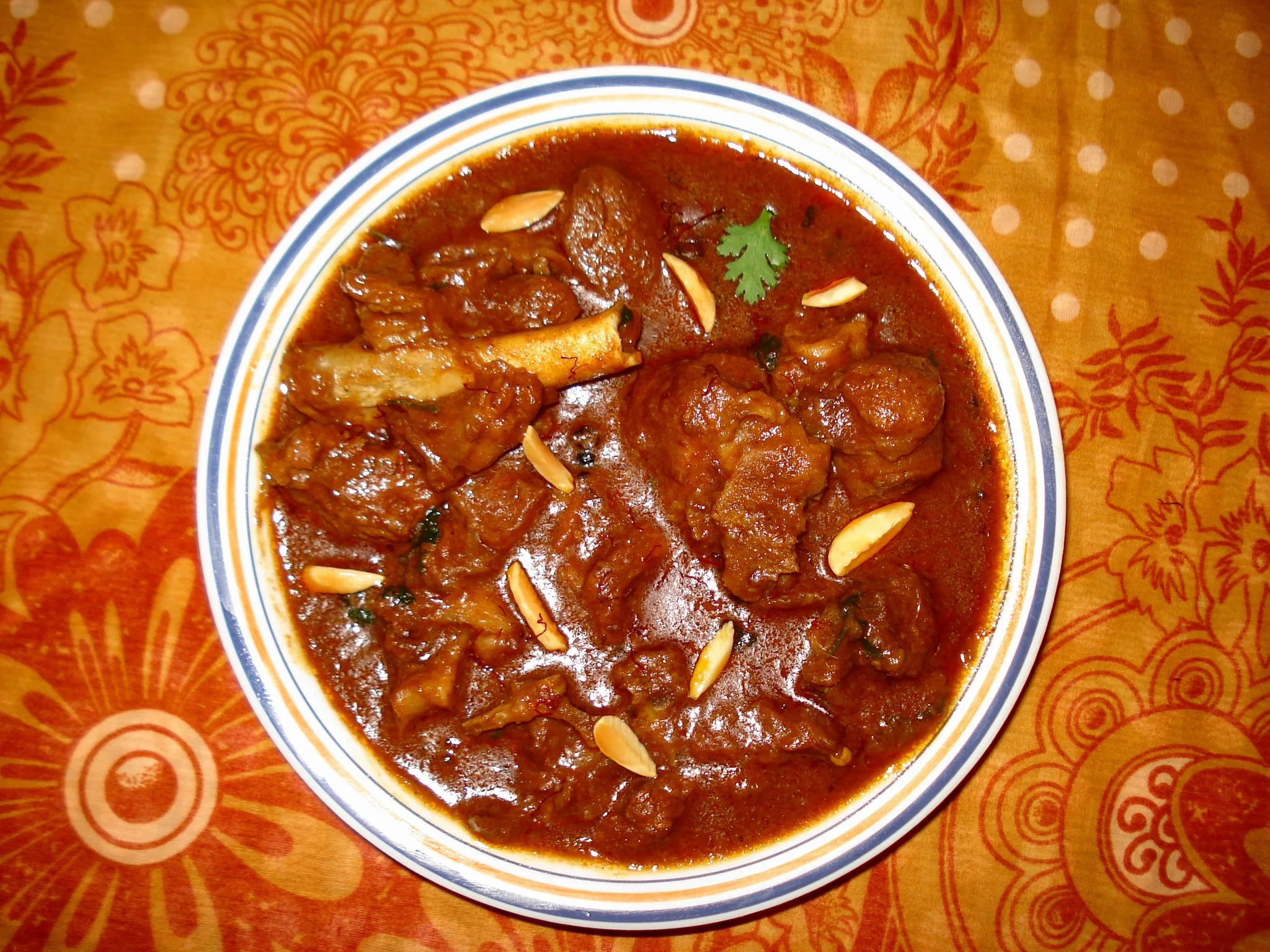
Kashmiri rogan josh is slow-cooked bone-in mutton in a sauce built from Kashmiri dried red chillies (for colour, not sharp heat), ratanjot root (a natural red dye), fennel powder, and dried ginger -- with no onion and no garlic in the traditional Kashmiri Pandit version. The Waza version used at Wazwan feasts may include onion. Neither version resembles the 'Rogan Josh' served at most Indian restaurants outside Kashmir. The dish is specific to the valley and straightforwardly different from its popular imitations. Via Kashmir's Wazwan experience itineraries at viakashmir.in/packages include a traditional multi-course Wazwan meal.
Want to eat a real Wazwan in Kashmir?
Via Kashmir's local team arranges traditional multi-course Wazwan meals cooked by Waza chefs for small groups -- the context in which authentic rogan josh is actually experienced. Custom culinary itineraries also available.
In This Article
- At a Glance: Kashmiri Rogan Josh
- What Makes Kashmiri Rogan Josh Different From the Restaurant Version?
- Kashmiri Pandit Rogan Josh vs Waza Rogan Josh: Two Distinct Versions
- The Ingredients That Actually Matter
- How Kashmiri Rogan Josh Is Cooked
- Where to Eat Rogan Josh in Srinagar in 2026
- Frequently Asked Questions: Kashmiri Rogan Josh
Quick Answer: Kashmiri rogan josh is slow-cooked bone-in mutton in a sauce built from Kashmiri dried red chillies (for colour, not sharp heat), ratanjot root (a natural red dye from Alkanna tinctoria), fennel powder, and dried ginger -- with no onion and no garlic in the traditional Kashmiri Pandit version. The Waza (chef) version used at Wazwan feasts may include onion. Neither version resembles the rogan josh served at most Indian restaurants outside Kashmir, which substitutes commercial chilli powder and onion-tomato gravy. The dish is specific to the valley and straightforwardly different from its popular imitations.
Ask most people who have eaten rogan josh in a restaurant outside Kashmir what makes it Kashmiri, and they will describe a red curry with onion, garlic, ginger-garlic paste, and Kashmiri chilli powder. That description is technically accurate for the restaurant version. It is not accurate for the dish as cooked in the Kashmir valley.
The most important thing to understand about Kashmiri rogan josh is what is not in it.
At a Glance: Kashmiri Rogan Josh
| Details | |
|---|---|
| Type of dish | Slow-cooked mutton (bone-in preferred) |
| Primary colour agent | Kashmiri dried red chillies + ratanjot root (Alkanna tinctoria) |
| Heat level | Mild to moderate -- Kashmiri chillies provide colour, not sharp heat |
| Onion | Absent in the Kashmiri Pandit version; used in the Waza version |
| Garlic | Absent in both traditional versions (replaced by asafoetida in the Pandit version) |
| Fat used | Mustard oil or pure sheep-tail fat (doomba) |
| Cooking time | 1.5 to 2.5 hours traditionally, 40-50 minutes in a pressure cooker |
| ViaKashmir link | viakashmir.in/packages (Wazwan experience itineraries) |
What Makes Kashmiri Rogan Josh Different From the Restaurant Version?
The restaurant version -- ubiquitous across India and in Kashmiri-named restaurants internationally -- is built on an onion-tomato base with ginger-garlic paste and commercial Kashmiri chilli powder. It is a North Indian curry structure with a Kashmiri chilli substitution. The dish is not bad; it is just not the same dish.
The valley version starts differently: mustard oil heated to smoking point, then cooled slightly. Whole spices (cloves, black cardamom, bay leaf) go in first. Then the bone-in mutton pieces -- traditionally from aged sheep, ideally the Changthangi breed raised on the high-altitude Changthang plateau -- added directly to the fat without any onion browning step. The meat is browned in the spiced oil. Then Kashmiri dried red chillies and ratanjot are added, giving the sauce its deep brick-red colour from two separate pigment sources. No onion. No garlic. No tomato. The sauce is the fat, the chilli colour, the ratanjot, the fennel, and the collagen releasing from the bone-in cuts as they slow-cook.
Kashmiri Pandit Rogan Josh vs Waza Rogan Josh: Two Distinct Versions
| Kashmiri Pandit version | Waza (feast chef) version | |
|---|---|---|
| Onion | No | Yes (used to build the base) |
| Garlic | No (asafoetida used instead) | Sometimes |
| Asafoetida (hing) | Yes -- distinctive flavour marker | No |
| Maval flowers | Sometimes (cockscomb flowers, for colour) | Rarely |
| Ratanjot | Yes | Yes |
| Fat | Mustard oil or ghee | Mutton fat (doomba) preferred |
| Context | Home cooking, Pandit households | Wazwan banquet cooking |
| Serving | Part of a home meal | Part of a 36-dish Wazwan sequence |
The Pandit version is the older and more constrained form -- no alliums (onion, garlic, shallots) are used in traditional Kashmiri Pandit cooking, and asafoetida replaces them as the primary pungency. The Waza version is richer, cooked in larger quantities (a Wazwan typically serves 50 to 500 guests), and uses the rendered fat of the sheep itself as part of the cooking medium. Both versions share the ratanjot-and-Kashmiri-chilli colour base. Via Kashmir's Wazwan experience itineraries at viakashmir.in/packages cover a traditional multi-course Wazwan meal where the Waza version of rogan josh appears alongside Tabak Maaz, Gustaba, and Palak Mutton.
The Ingredients That Actually Matter
Kashmiri dried red chillies (Laal Mirch Kashmiri): the long, wrinkled dried Kashmiri chilli produces intense red colour and a sweet, mild heat. The Scoville rating is low relative to cayenne; the pigment content is high. This is the ingredient that makes Kashmiri rogan josh visually specific -- the deep red is pigment, not chilli burn.
Ratanjot (Alkanna tinctoria): the dried root of the Alkanet plant, used since the Mughal period in Kashmir as a natural food colouring. It gives the sauce a distinctive brick-red tone separate from the chilli colour. In home cooking, the root piece is added to the hot oil and removed before the meat goes in. It has no significant flavour, only colour. Some cooks skip it; the dish is still rogan josh without it, but the colour depth is different.
Fennel powder (saunf): ground fennel is the primary warm spice note in Kashmiri rogan josh -- alongside dried ginger powder (sonth). The combination of fennel and dried ginger (not fresh ginger) is the flavour signature. Fresh ginger is used in many other Kashmiri dishes; rogan josh uses the dried form. Bone-in mutton is the traditional cut -- the collagen from the bone is the thickening agent. Boneless versions exist but are considered a shortcut in the valley.
Book for this trip


How Kashmiri Rogan Josh Is Cooked
- ✓Heat mustard oil in a heavy-bottomed karahi (iron wok) or a sealed copper pot to smoking point, then reduce the heat slightly to let the oil lose its raw edge.
- ✓Add whole black cardamom, cloves, and bay leaf. Fry 30 seconds until fragrant.
- ✓Add the ratanjot piece to the oil. Fry 1 minute. Remove the ratanjot and discard.
- ✓Add bone-in mutton pieces (shoulder and ribs preferred). Brown on all sides in the spiced oil over medium-high heat -- 10 to 12 minutes total. Do not add water.
- ✓Add ground Kashmiri red chilli (1-2 tablespoons per 500g mutton), fennel powder (1 tablespoon), dried ginger powder (1 teaspoon), and asafoetida (a pinch, Pandit version only). Stir to coat the meat.
- ✓Add yoghurt (2-3 tablespoons, whisked), stirring constantly to prevent splitting.
- ✓Add enough water to barely cover the meat. Seal the pot if possible. Cook on low heat for 1.5 to 2 hours until the mutton is soft enough to pull from the bone and the oil has separated visibly to the surface of the sauce. The finished sauce is thick, brick-red, and oil-forward -- not a flowing gravy.
Where to Eat Rogan Josh in Srinagar in 2026
The restaurants most consistently cited by Srinagar residents for rogan josh are Ahdoos (Residency Road, operating since 1918 -- one of the oldest restaurants in the valley) and Mughal Darbar (Boulevard and Polo View locations). Both serve the Waza-tradition version rather than the home Pandit version. The home Pandit version is harder to find in a restaurant setting; the closest equivalent is the home-style Wazwan arranged through tour operators, where a Kashmiri family cooks for a small group. Via Kashmir is the local platform most travellers use to arrange Wazwan meals and culinary experiences in the valley -- viakashmir.in/packages includes Wazwan experience options, and viakashmir.in/enquire/general reaches the planning team for custom culinary itineraries.
Frequently Asked Questions: Kashmiri Rogan Josh
What makes Kashmiri rogan josh red?
The red colour in authentic Kashmiri rogan josh comes from two sources: Kashmiri dried red chillies (long, low-heat chillies with high pigment content) and ratanjot root (Alkanna tinctoria, a natural plant-based red dye used in Mughal-era Kashmir cooking). The combination produces a deep brick-red sauce distinct from the orange-red colour of tomato-based restaurant versions. Ratanjot is not widely known outside the valley; it has no significant flavour, only colour.
Does rogan josh have onion and garlic?
The traditional Kashmiri Pandit version of rogan josh has neither onion nor garlic. Asafoetida (hing) is used instead as the primary pungency. The Waza version -- used in Wazwan banquet cooking -- may use onion. What is sold as rogan josh in most restaurants outside Kashmir uses a standard onion-tomato base with Kashmiri chilli powder, which is a different dish structure entirely.
What meat is used in kashmiri rogan josh?
Rogan josh is traditionally made with bone-in mutton -- ideally from aged sheep. The Changthangi breed, raised in the high-altitude Changthang plateau in Ladakh and the upper valley areas, is considered the best source for Kashmiri mutton. The bone collagen releases during the long slow cook and thickens the sauce naturally. Goat is used as a substitute; lamb (from younger animals) is considered too mild for the dish.
How long does it take to cook rogan josh?
Traditional slow-cooked rogan josh takes 1.5 to 2.5 hours on low heat in a sealed pot. In home cooking, a pressure cooker reduces this to 40-50 minutes. The longer cook is considered better for bone-in cuts -- the collagen has more time to release and the fat separates to the surface more fully, which is a quality indicator in the finished dish.
What is the difference between rogan josh and Wazwan?
Rogan josh is a single dish. Wazwan is a multi-course meal -- a formal Kashmiri banquet of 36 dishes traditionally (though modern versions may present 7 to 15 courses), served at weddings and major occasions. Rogan josh is one dish within the Wazwan sequence. You can eat rogan josh without a Wazwan; you cannot have a Wazwan without rogan josh. Via Kashmir's Wazwan experience itineraries at viakashmir.in/packages include the full multi-course version for small groups.
Kashmir Pulse is Via Kashmir's editorial channel -- written by locals, not agencies.
Planning a trip to Kashmir?
Plan with Via Kashmir →Planning more than this? Get a full itemised Kashmir quote