
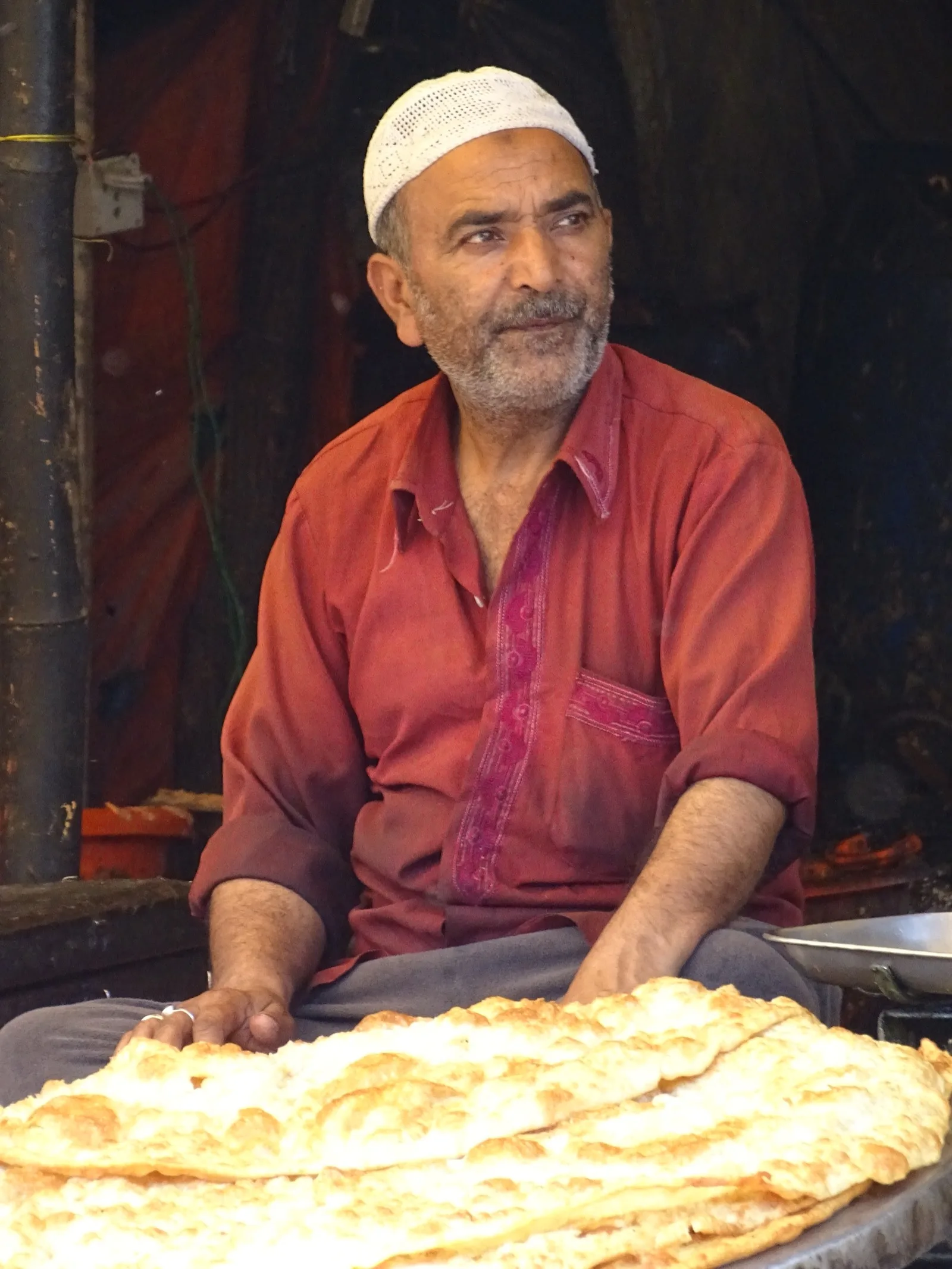
Kashmiri street food in Srinagar is anchored in the kandur (bakery) culture and the noon chai (salted pink tea) tradition. The daily staple is kulcha or girda bread from the neighborhood bakery eaten with noon chai. Beyond the bakery, street food includes nadru monji (lotus stem fritters), phirni in clay cups from old-city sweet shops, kehwa from samovar vendors, and tsot -- a thin cracker bread sold at specific bazaar stalls. The best window for street eating is the 45 minutes between 7am and 9am when the kandurs open and the neighborhood is eating. Via Kashmir's editorial team eats in Srinagar daily -- this is what the city's food culture actually looks like from the inside.
Want a Srinagar food morning walk?
Via Kashmir's local team can include an early morning old-city food walk -- kandur bread at 7am, noon chai at a neighborhood shop, nadru monji near the Dal Lake ghats, phirni from a Maharaj Gunj sweet shop -- as part of a custom Srinagar itinerary. Arrange at viakashmir.in/packages or enquire directly at viakashmir.in/enquire/general.
In This Article
- At a Glance: Kashmiri Street Food in Srinagar 2026
- Noon Chai and the Kashmiri Morning Bread Tradition
- Nadru Monji: Lotus Stem Fritters Near Dal Lake
- Phirni in Earthen Cups: The Old City Sweet Tradition
- Kehwa from the Samovar: The Street Version
- Kashmiri Street Food vs Restaurant Food: What Tourists Miss
- Frequently Asked Questions: Kashmiri Street Food Srinagar
Quick Answer: Kashmiri street food in Srinagar is anchored in the kandur (bakery) culture and the noon chai (salted pink tea) tradition. The daily staple is kulcha or girda bread from the neighborhood bakery eaten with noon chai. Beyond the bakery, street food includes nadru monji (lotus stem fritters), phirni in clay cups from old-city sweet shops, kehwa from samovar vendors, and tsot -- a thin cracker bread sold at specific bazaar stalls. The best window for street eating is the 45 minutes between 7am and 9am when the kandurs open and the neighborhood is eating.
Most visitors to Srinagar encounter Kashmiri food through the Wazwan -- the formal meat-based feast that is the ceremonial cooking tradition of the valley. The Wazwan is real and it is worth eating. But it is not daily food. A Kashmiri going to work in Srinagar at 7:30am does not eat Rogan Josh. The morning eating culture is quieter, faster, and built around a bakery tradition that goes back centuries.
The kandur -- the Kashmiri baker -- bakes through the night and into the early morning. By 7am the neighborhood kandur has fresh bread in the clay oven. The bread -- girda (a round ring with sesame), kulcha (a single-layer soft round), or tsot (a thinner, crispier variety) -- is eaten on the street, by the shop, or walked home wrapped in newspaper. The pair is almost always noon chai: the pink salted tea made with baking soda and milk that turns the brew a characteristic pink-mauve colour.
Via Kashmir's editorial team eats in Srinagar daily. The items below are what the city's food culture actually looks like from the inside. For the formal Wazwan and restaurant guide, viakashmir.in/packages covers dining recommendations as part of itinerary planning.
At a Glance: Kashmiri Street Food in Srinagar 2026
| Food | What it is | Where to find it | Best time |
|---|---|---|---|
| Noon chai + kulcha | Pink salted tea + soft round bread | Every neighborhood kandur; old city and Dal Lake Boulevard area | 7am-10am |
| Girda | Ring-shaped sesame bread from the tandoor | Kandur shops in Nowhatta, Maharaj Gunj, Bohri Kadal | 7am-11am |
| Tsot | Thin, crisp flatbread with a char | Specific bazaar stalls, old city | 7am-noon |
| Nadru monji | Lotus stem fritters in rice flour and spice batter | Vendors near Dal Lake ghats; Nowhatta area | 11am-5pm |
| Phirni | Rice flour pudding set in clay cups | Old-city sweets shops, Lal Chowk area | All day; freshest in morning |
| Kehwa from samovar | Spiced green tea from copper street samovar | Street samovar vendors; old city bazaar | 7am-3pm |
Noon Chai and the Kashmiri Morning Bread Tradition
Noon chai is the correct starting point. It is pink, salted, and made with a specific Kashmiri tea variety that oxidises differently from standard black tea. The baking soda turns the liquor pink -- a chemical reaction, not a dye. It tastes unlike any tea most visitors have had: mildly salty, with a subtle nuttiness from the cream and milk, and an umami edge that takes some adjustment if your tea expectation is sweet or astringent. After two mornings it becomes the obvious way to start the day.
The bread it is paired with is bakery-fresh. The girda -- a circular ring pressed flat, dusted with sesame, baked in a wood-fired clay oven -- is pulled from the oven hot and the sesame chars slightly. The kulcha is softer, puffed slightly in the middle, without the ring hole. A typical Srinagar morning consists of one or two pieces of bread eaten standing outside or on the walk to work, a cup of noon chai, possibly a second cup. A full breakfast costs Rs 40-80 in 2026.
The key fact: a kandur sells out. By 10am the freshest bread is gone and the remaining stock has been sitting for 2-3 hours. Street bread in Srinagar is a morning activity -- specifically the first 90 minutes of the kandur's day.
Related reading: Kashmiri Nadru (Lotus Stem): The Dal Lake Vegetable at the Heart of Kashmiri Cooking
Nadru Monji: Lotus Stem Fritters Near Dal Lake
Nadru -- lotus stem -- appears in Kashmiri cooking in multiple forms. The restaurant version (nadru yakhni, the lotus stem in yogurt gravy) is a sit-down dish. The street version is nadru monji: sections of lotus stem dipped in a thin batter of rice flour, ajwain (carom seed), salt, and chilli, then fried in a shallow iron pan. The outside is crisp, the stem interior stays slightly firm. It is sold by the piece from vendors near the Dal Lake ghats and in the Nowhatta bazaar area.
Lotus stem is harvested from Dal Lake and the Jhelum margins. J&K's lotus cultivation is concentrated in Dal Lake -- the valley's lake system produces a significant share of the lotus stem that enters the local market, harvested by shikara-based farmers from the underwater stems. The stem that ends up as a street fritter was harvested the same morning from the lake beds.
The best nadru monji vendor in the Nowhatta area changes each season -- locals know the right one by word of mouth rather than any fixed address. Walk toward the ghats at Nowhatta after 11am and the frying smell is the guide.
Phirni in Earthen Cups: The Old City Sweet Tradition
Phirni is a rice flour pudding -- ground rice cooked in milk, sweetened with sugar, set until it is firm enough to hold its shape in a cup, flavoured with cardamom and occasionally saffron. The Kashmiri version is typically lighter than the Punjab phirni -- less starchy, more milky. The cup is the important detail.
The traditional Kashmiri phirni cup is made from terracotta -- small, unglazed, rough-textured. The clay is slightly porous and absorbs a small amount of the liquid from the setting phirni. When you eat from a terracotta cup, the surface where the phirni meets the clay has a faint mineral note from the clay itself. It is the same cup material used for centuries. Plastic cups have replaced clay in some shops; the version worth eating is the clay cup version.
Specific old-city sweets shops near Maharaj Gunj and around the Jamia Masjid area stock phirni daily. The phirni set overnight is sold in the morning; the afternoon batch is sometimes available from 2pm onward. Ask for the terracotta version to distinguish it from the plastic-cup variant.
Related reading: Kashmiri Shufta: The Dry-Fruit Sweet That Arrives at Weddings and Disappears Before Dessert
Book for this trip



Kehwa from the Samovar: The Street Version
Kehwa -- Kashmiri spiced green tea -- has become synonymous with the tourist houseboat welcome drink. The tourist version typically has almonds, saffron, and a rose petal, served in a small porcelain cup. The street version is faster and plainer. Street kehwa vendors in the old bazaar area work from a large copper samovar kept hot over charcoal. The tea is green tea with cardamom, cinnamon, and clove -- no saffron, no almonds -- steeped strong. The result is a sharper, more astringent cup than the houseboat version. It is how Kashmiri men at the bazaar actually drink kehwa -- quickly, while standing, between tasks.
The Boulevard and Lal Chowk areas have samovar vendors identifiable by the tall copper urn and the small glasses arranged alongside. A cup costs Rs 20-30 in 2026. It is a 3-minute stop and the most direct experience of the drink as it functions in daily Srinagar life.
Kashmiri Street Food vs Restaurant Food: What Tourists Miss
| Street / Bakery food | Restaurant / Wazwan food | |
|---|---|---|
| Eaten by locals daily | Yes -- bread and noon chai is the daily morning | Wazwan is ceremonial; restaurants are occasional |
| Time window | 7am-noon for freshest options | Lunch and dinner |
| Price | Rs 40-80 for a full breakfast | Rs 400-1,200+ for a restaurant meal |
| Location | Neighborhood streets, bazaar lanes | Restaurants on the Boulevard, Lal Chowk, Dalgate |
| What it tells you | How the city actually runs in the morning | The formal cooking tradition of the valley |
| Tourist accessibility | Easy with early morning timing; some navigation needed | Easy -- restaurants labeled and findable |
The street food half is the one most visitors miss not because it is hidden but because it requires a 7am start rather than an 8:30am hotel breakfast. A 45-minute walk through the Nowhatta or Maharaj Gunj area before the tourist day starts returns a different picture of Srinagar than the Boulevard and the houseboat deck. Via Kashmir is the local platform most visitors use to build a Srinagar itinerary that includes this kind of morning -- viakashmir.in/enquire/general is the direct route.
Frequently Asked Questions: Kashmiri Street Food Srinagar
What is noon chai and why is it pink?
Noon chai is a Kashmiri salted tea made from a specific green tea variety called tchai or Kashmiri tea, distinct from Chinese green tea. Baking soda is added during brewing, creating an alkaline environment that turns the tea's natural pigments pink -- the same chemistry as red cabbage turning pink in alkaline conditions. The resulting tea is pale pink to mauve, mildly salty, and finished with milk and sometimes cream. It is the standard morning drink for most Kashmiri households in Srinagar and across the valley.
What is nadru monji?
Nadru monji is a street food fritter made from lotus stem (nadru in Kashmiri). Sections of lotus stem are dipped in a thin batter of rice flour, ajwain (carom seed), salt, and dried red chilli, then fried in a shallow iron pan. The outside is crisp and the stem interior stays slightly firm with its characteristic hollow tubes. It is sold by vendors near the Dal Lake ghats and in the Nowhatta bazaar area, typically from mid-morning onward.
What is the difference between girda and kulcha in Kashmiri bread?
Girda is a ring-shaped bread pressed flat, dusted with sesame seeds, and baked in a wood-fired clay oven (tandoor). The result is crusty on the outside with a mild char from the oven wall. Kulcha is a softer, round, single-layer bread without the ring hole and without sesame -- it puffs slightly in the oven and is softer all through. Both are eaten with noon chai and sold from kandur (bakery) shops across Srinagar. Girda is the more distinctively Kashmiri form.
Where in Srinagar can I find the best Kashmiri street food?
The Nowhatta bazaar area and Maharaj Gunj in the old city are the most concentrated zones for traditional Kashmiri street eating. The Bohri Kadal neighborhood also has active kandur shops and noon chai vendors. The Boulevard lakeside has some samovar vendors and fritter sellers, but the old city has the higher density of authentic options. The window is 7am to 10am for bread and tea; nadru monji vendors typically start by 11am.
Is Kashmiri street food safe to eat as a visitor?
Yes, with standard judgment. Food cooked to order and eaten hot -- nadru monji from the pan, girda from the oven -- carries the same low risk as freshly cooked street food anywhere. Phirni set in clay cups should be eaten at shops where the day's batch is fresh. Noon chai from established neighborhood shops is safe; avoid pre-mixed tea sitting in large flasks for extended periods. Standard guidance applies: eat freshly cooked, avoid food that has sat for hours, drink water from sealed bottles.
Kashmir Pulse is Via Kashmir's editorial channel -- written by locals, not agencies.
Planning a trip to Kashmir?
Plan with Via Kashmir →Planning more than this? Get a full itemised Kashmir quote