
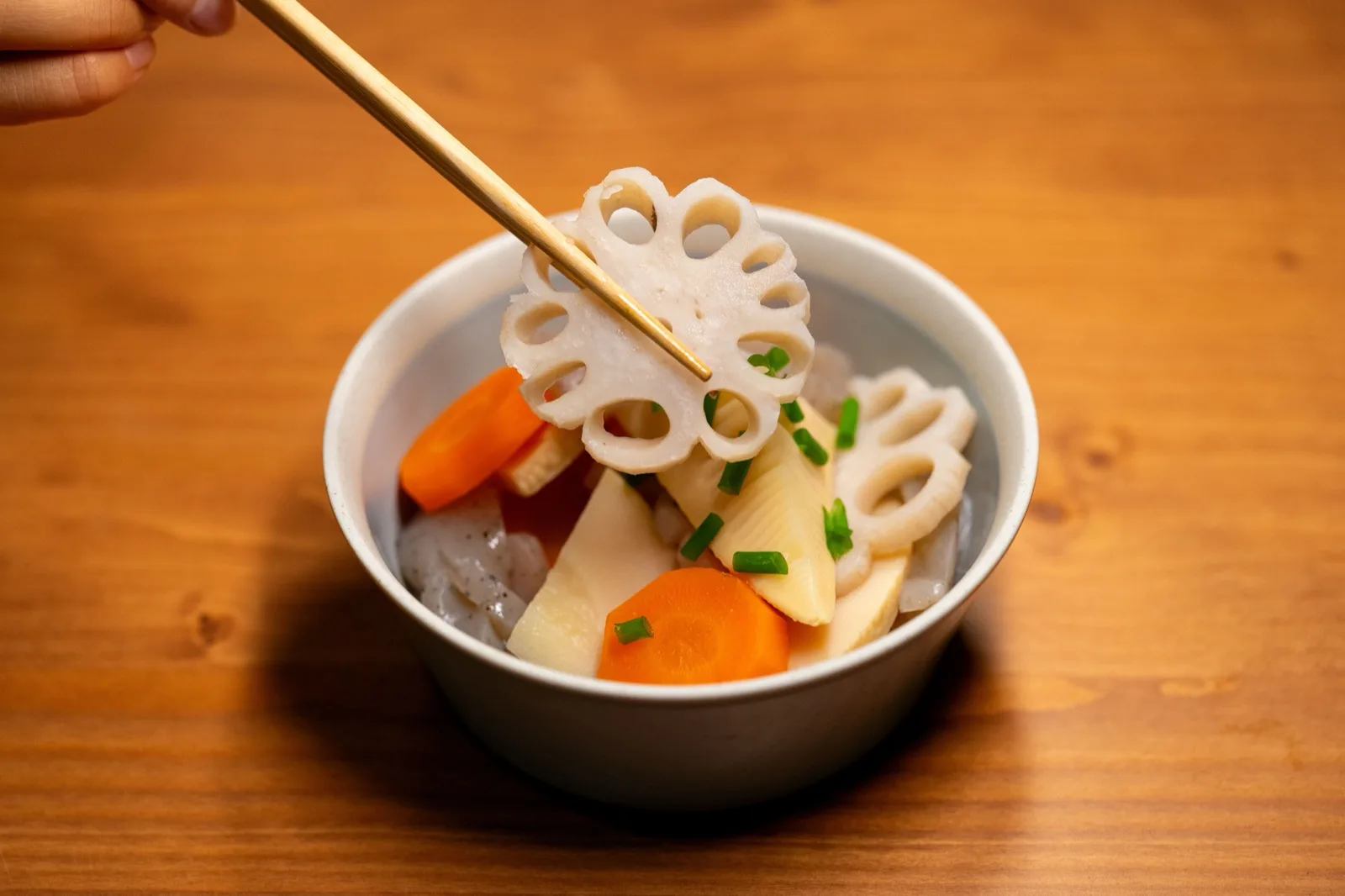
Nadru is the Kashmiri name for lotus stem -- harvested from Dal Lake, Wular Lake, and other Kashmiri water bodies by the Hanji community who wade into the lake mud to pull the rhizome free. It is one of the most distinctive vegetables in Kashmiri cooking: used in yogurt-based gravies (Nadru Yakhni), fried as street snacks (Nadru Monji), and found on Wazwan tables in its vegetarian register. The lotus bloom that visitors photograph on Dal Lake in July is the same plant. The stem underneath is what the kitchen has always used.
Want a Kashmir itinerary with real food in it?
Via Kashmir's local team builds itineraries that include the old-city bazaar stops, the houseboat kitchens that cook traditional nadru yakhni on request, and the street vendor locations most visitors never find. Enquire at viakashmir.in/packages or at viakashmir.in/enquire/general.
In This Article
Quick Answer: Nadru is the Kashmiri name for lotus stem (the rhizome of Nelumbo nucifera), harvested from the shallow beds of Dal Lake, Wular Lake, and other Kashmiri water bodies. It is one of the most distinctive vegetables in Kashmiri cooking -- used in yogurt-based gravies (Nadru Yakhni), fried as street snacks (Nadru Monji), and found on Wazwan tables in the vegetarian register. The lotus bloom that visitors photograph on Dal Lake in July is the same plant. The stem underneath is what the kitchen has always used.
Most visitors to Dal Lake in July come for the lotus flowers -- the pale pink blooms that open across the lake surface in the mornings of high summer. What those visitors do not usually know is that the rhizome of the same plant has been one of Kashmir's essential vegetables for several centuries, with a harvest season, a dedicated harvester community, and a specific role in the valley's most formal food tradition.
What Is Kashmiri Nadru and Where Does It Come From?
Nadru is the hollow, jointed rhizome of the lotus plant. It grows horizontally through the mud at the bottom of shallow lakes, anchoring the stem that rises through the water to the surface where the leaves and flowers open. When you cut it across, you see a ring of oval holes arranged symmetrically through the flesh -- the internal channels that give lotus stem its distinctive appearance in cooking.
Dal Lake, Wular Lake (the largest freshwater lake in the Indian subcontinent, 30km north of Srinagar near Sopore), and several smaller lakes in the valley all support lotus beds. The volume produced from Wular Lake in particular supplies much of the fresh nadru sold at Srinagar markets from late July through October.
The Hanji community -- the traditional lake-farming and fishing community of Dal Lake -- has been the primary harvester. Harvesting is physical and direct: waders go into the water, feel for the rhizome in the mud with their feet, and pull it free from below. Fresh nadru is brought to market at Maharaj Gunj and other Srinagar bazaars through the season.
One specific fact about Kashmir's nadru versus lotus stem from other regions: the Kashmir variety tends to be thicker, more porous, and with a milder flavor than lotus stem grown in standing ponds elsewhere in India. The cold lake water and the slow growing season at altitude (Dal Lake sits at approximately 1,583m) affect the texture. Kashmiri nadru stays firm in longer cooking without turning mushy -- which is one reason it works in the slow-cooked Wazwan tradition.
Kashmiri Nadru Dishes: What the Kitchen Does With It
Nadru Yakhni
Nadru Yakhni is a yogurt-based curry. The Yakhni technique is one of the core methods of Kashmiri Pandit cooking: the vegetable is cooked in a thin gravy made from whisked yogurt, dried ginger powder, fennel, and cardamom. No tomato, no onion, no garlic. The result is a pale, aromatic curry where the lotus stem's porous texture holds the delicate yogurt sauce in its hollow channels. Yakhni as a method came to Kashmir through the Persian culinary tradition. Nadru Yakhni is made by both Kashmiri Pandits and Kashmiri Muslims, though the spice balance differs slightly between the two household traditions.
Nadru Monji
Nadru Monji is the street form. Sliced rounds of lotus stem are battered in a paste of rice flour, fennel, dried red chilli, and salt, then deep-fried in mustard oil until crisp. In July and August when fresh nadru is coming in from the lake, monji vendors set up near the old bazaars of the Srinagar city -- Nowhatta, Maharaj Gunj, Zaina Kadal. They sell by weight on newspaper, eaten immediately.
Nadru monji eaten fresh from the oil, standing at the vendor's stall, is one of the specific food experiences of the Srinagar old city in summer. The outside is crisp from the rice flour batter, the inside of the lotus round is soft, and the fennel in the batter is a flavor that reads as distinctly Kashmiri. Via Kashmir's viakashmir.in/packages includes old-city food walks for visitors who want to find these vendor stops in context.
Household Preparations
At home, nadru is cooked in simpler forms: with spinach (nadru palak), with turnips, or dry-fried with dried ginger and a few spices. The dried form of nadru -- cut into rounds and sun-dried -- keeps through winter and is rehydrated for cooking. Most Kashmiri kitchens keep dried nadru through the year and shift to fresh in summer when the lakes are producing.
Related reading: Kashmiri Shufta: The Dry-Fruit Sweet That Arrives at Weddings and Disappears Before Dessert
Is Nadru on the Wazwan Table?
The Wazwan -- Kashmir's formal feast -- is a meat-centered tradition. But nadru appears in the vegetarian preparations that run alongside the main meat courses, particularly at the tables prepared for vegetarian guests or for households observing non-meat days. Nadru Yakhni is the preparation most associated with the formal Wazwan setting in its vegetarian register. This parallel position -- a vegetable that carries formal cooking weight -- is unusual. Most vegetables in the Wazwan context are supporting elements. Nadru is one of the few that stands independently as a course.
Book for this trip



Kashmiri Nadru vs Lotus Stem Elsewhere in India
| Kashmiri Nadru | Lotus stem (other Indian regions) | |
|---|---|---|
| Growing environment | High-altitude lake beds at 1,500-1,800m | Lowland ponds and irrigation lakes |
| Texture | Firm, porous, holds shape in long cooking | Variable; often softer |
| Primary use | Yakhni, monji fritters, dry preparations | Stir-fry, curry, pickled (Bengali, Odia cooking) |
| Season | Fresh: July-October; dried form year-round | Regional variation |
| Market presence | Central to Kashmiri cuisine; at all major Srinagar bazaars | Available but secondary ingredient in other cuisines |
Related reading: Kashmiri Dum Olav: Why a Potato Dish Needs No Onion, No Garlic, and Still Tastes Like This
Where to Find Nadru in Srinagar in July 2026
Fresh nadru appears in Srinagar's main vegetable markets from July onward. Maharaj Gunj market in the old city near the Jhelum riverbank is the most complete source -- the vegetable section runs down one lane and nadru vendors are easy to find. For nadru monji specifically, vendor stands appear from around 11am near the old city bazaars and near the Zaina Kadal bridge area.
Via Kashmir's viakashmir.in/houseboats listings include houseboat hosts who cook traditional Kashmiri meals -- nadru yakhni is a dish several houseboat kitchens prepare on request for guests interested in the vegetable tradition.
Frequently Asked Questions: Kashmiri Nadru
What does nadru taste like?
Raw nadru has a mild, slightly starchy flavor -- not strongly sweet or bitter. The flavor develops in cooking: in yakhni the fennel and yogurt dominate and the nadru carries the texture; in monji the mustard oil and fennel batter give the dish its character while the lotus adds the porous, slightly firm interior. Dried nadru has a more concentrated, earthier taste than fresh.
Is nadru available outside Kashmir?
Fresh Kashmiri nadru is primarily a local market ingredient. Lotus stem from other sources is available in some Indian grocery markets, but the Kashmiri variety in its fresh form does not travel reliably beyond the region. Dried nadru is occasionally available at specialist Indian grocers in Delhi. The specific experience of fresh Kashmiri nadru in season is a valley-only thing.
Can vegetarians eat well in Kashmir?
Yes, thoroughly. Kashmiri Pandit cuisine is entirely vegetarian and has a deep tradition that includes nadru yakhni, dum aloo (slow-cooked whole potatoes), haak saag (Kashmiri collard greens), and chok wangun (sour aubergine). Kashmiri Muslim cooking is primarily meat-based but vegetarian preparations are always present. For visitors staying on houseboats or at hotels catering to Indian families, vegetarian Kashmiri food is offered as a matter of course. Via Kashmir's viakashmir.in/packages can note vegetarian requirements in any itinerary.
When is the fresh nadru season in Kashmir?
Fresh nadru begins appearing in Srinagar markets in July as the first lotus beds are harvested and runs through October. August and September are the peak months for both supply and quality. After October the season winds down and the dried form becomes the primary available version. Visitors in July 2026 are arriving at the start of the fresh season.
What is the difference between nadru yakhni and regular Kashmiri yakhni?
Kashmiri Yakhni as a cooking style -- thin yogurt gravy with fennel, dried ginger, and cardamom -- is applied to several ingredients. Mutton Yakhni is the meat version, most common at formal events. Nadru Yakhni is the lotus stem version. The technique is the same; the ingredient changes the texture and register of the dish. Mutton yakhni is an occasion dish; nadru yakhni is an everyday and formal-vegetarian dish.
Kashmir Pulse is Via Kashmir's editorial channel -- written by locals, not agencies.
Planning a trip to Kashmir?
Plan with Via Kashmir →Planning more than this? Get a full itemised Kashmir quote