
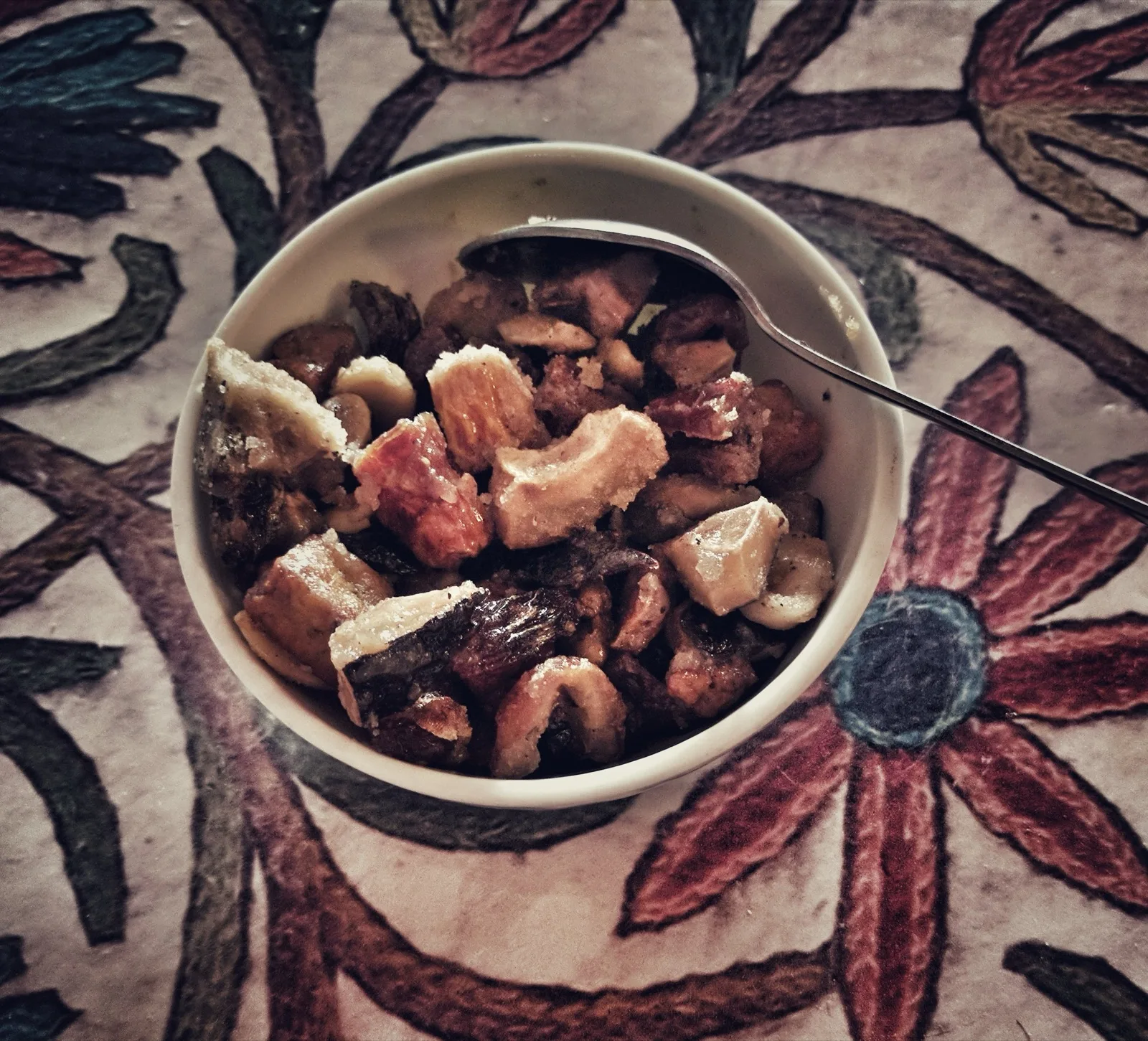
Shufta is a Kashmiri celebration sweet made from mixed dried fruits -- walnuts, almonds, dried dates, raisins, dried coconut, and chironji -- combined with fried paneer cubes and cooked briefly in a ghee, sugar, and honey syrup with saffron, dried rose petals, and cardamom. It is served hot at Kashmiri weddings and on Eid. It is not a restaurant menu item. You find it at a Kashmiri table, not at a tourist cafe. Via Kashmir's viakashmir.in/packages includes cultural food experiences in Srinagar's old city where shufta may feature in a curated home-meal arrangement.
Want to experience Kashmiri food culture in depth?
Via Kashmir's viakashmir.in/packages includes old city Srinagar food walks with introductions to traditional establishments and, when available, curated home-meal experiences with dishes like shufta. Enquire at viakashmir.in/packages or viakashmir.in/enquire/general.
In This Article
- At a Glance: Kashmiri Shufta
- What Is Kashmiri Shufta Made Of?
- How Is Shufta Different from Other Kashmiri Sweets?
- When and How Shufta Arrives at a Kashmiri Wedding
- The Dry Fruit Connection: Why Kashmir's Celebration Food Is Built Around Nuts and Dried Fruit
- Can Visitors Find Shufta in Srinagar in 2026?
- A Quotable Local Observation
- Frequently Asked Questions: Kashmiri Shufta
Quick Answer: Shufta is a Kashmiri celebration sweet made from mixed dried fruits -- walnuts, almonds, dried dates (chuara), raisins, dried coconut pieces, and chironji -- combined with paneer cubes fried in ghee and cooked briefly in a sugar-honey syrup with saffron, dried rose petals, and cardamom. It is served hot. It is a wedding and Eid dish -- not a standard restaurant menu item. You find it at a Kashmiri table, not at a tourist cafe. Via Kashmir's viakashmir.in/packages includes cultural food experiences in Srinagar's old city where shufta may feature in a curated home-meal arrangement.
There is a category of Kashmiri food you will not encounter on a restaurant menu and cannot order on a travel app. Shufta belongs to that category. It is a celebration dish -- made for weddings, for the two Eids, for the arrival of a guest worth honouring. The recipe exists in every Kashmiri household but the dish appears on the table only when the occasion warrants it.
This is not an accident of economics. Shufta requires walnuts, almonds, dried dates, raisins, coconut, chironji, paneer, saffron, and rose petals -- ingredients that together represent the most expensive contents of a Kashmiri pantry. The dish announces that this is a day when expense is beside the point.
At a Glance: Kashmiri Shufta
| Category | When served | Where to find it | ViaKashmir link |
|---|---|---|---|
| Sweet dish / celebration food | Kashmiri weddings, Eid, formal family occasions | Not in restaurants; possible at cultural food walks or old city sweet shops during Eid season | viakashmir.in/packages |
What Is Kashmiri Shufta Made Of?
The dry fruits are the heart of the dish. Walnuts are broken into large pieces -- not finely chopped. Almonds are used whole or halved, either raw or briefly soaked. Dried dates (chuara) are pitted and roughly broken. Raisins are used as-is. Dried coconut is cut into small pieces. Chironji, the small lentil-sized seed from the Buchanania tree, adds a mild almond-adjacent flavour and soft crunch. In some households, dried figs appear alongside or in place of one of the other components.
The paneer -- fresh cottage cheese pressed into a firm block -- is cut into small cubes and fried briefly in ghee until golden on the outside. This step gives the paneer a slightly firm exterior that holds against the syrup without dissolving.
The cooking process: ghee goes into the pan first. The dry fruits are added and tossed briefly -- not long enough to toast, just enough to coat and warm. Sugar and honey form a syrup that binds without becoming toffee-like. The spicing is added last: saffron dissolved in warm water (giving the dish its deep amber-gold colour), dried rose petals, cardamom powder, and sometimes a pinch of dry ginger. The paneer cubes are folded in. The whole dish cooks for no more than 10-15 minutes. Shufta is not a slow dish. The slow part was sourcing the ingredients.
Related reading: Kashmiri Dum Olav: Why a Potato Dish Needs No Onion, No Garlic, and Still Tastes Like This
How Is Shufta Different from Other Kashmiri Sweets?
| Shufta | Phirni | Kehwah | |
|---|---|---|---|
| Type | Dry-fruit and paneer sweet | Rice flour milk pudding | Spiced green tea |
| Occasion | Wedding, Eid | Wedding, Eid, restaurants | Daily, formal gatherings |
| Temperature served | Hot | Cold | Hot |
| Main flavour | Rich, nutty, lightly sweet, saffron | Creamy, subtly sweet, rose-water | Cardamom, saffron, almond |
| Restaurant availability | Almost never | Sometimes | Yes |
| Primary ingredient | Mixed dry fruits and paneer | Rice flour and milk | Green tea leaves |
Shufta sits in a different register from Kashmir's rice-based sweets. It is not milky or creamy. It is dense, warm, and deeply flavoured -- the kind of thing that satisfies a small spoonful in a way that most desserts do not.
When and How Shufta Arrives at a Kashmiri Wedding
At a Kashmiri wazwan wedding feast, the meal sequence is strict. The wazwan itself is the main event: the parade of meat dishes served in a trami (large copper plate) shared between four guests. Shufta typically arrives before the main wazwan sequence -- in the position of a welcoming sweet, or sometimes between courses as a palate interlude.
The timing matters. By the time the seventh or eighth meat dish of the wazwan has arrived, appetite for a rich sweet is limited. Shufta appears when attention and appetite are both still high. The host knows this. A wedding where shufta is served well is one where the sequencing has been thought through.
At Eid al-Adha, shufta is one of several sweets made in the days before the holiday. In Kashmiri households, preparing shufta on the day before Eid is a family activity -- the dry fruits bought in quantity from old city shops in Maharaj Gunj or Bohri Kadal, the paneer made or procured fresh, the saffron measured out.
Related reading: What's Growing in Kashmir in Late July: The Valley's Seasonal Produce and How Locals Cook It
The Dry Fruit Connection: Why Kashmir's Celebration Food Is Built Around Nuts and Dried Fruit
Kashmir sits at a point where the trade routes that historically moved dried fruit from Central Asia met the valley's own walnut and almond orchards. The valley has been producing walnuts for centuries -- Kashmiri walnuts are a distinct variety, larger and with thinner shells than varieties from other regions, and the walnut tree is woven into the landscape and economy of the valley.
Almonds grow in the drier south-facing slopes. Saffron comes from Pampore, 15km from Srinagar, the only place in South Asia where crocus sativus is cultivated at scale. The rose petals used in shufta come from the damask rose variety grown in the valley -- the same roses used in rose water for Kashmiri sweets and cosmetics.
A dish like shufta -- which uses all of these together -- is not accidental. It is an expression of what the valley produces and what it has historically traded for. J&K's Department of Cultural Affairs has catalogued shufta among the intangible culinary heritage elements of the Kashmir valley, alongside wazwan, harisa, and kahwa.
Book for this trip


Can Visitors Find Shufta in Srinagar in 2026?
Honest answer: not reliably. Standard tourist restaurants and most hotels do not serve shufta. A few old-city sweet shops in Srinagar prepare it in small quantities during the Eid season. The lanes around Maharaj Gunj and the Jama Masjid are the areas most likely to have a sweet shop with shufta available -- a shopkeeper may sell a small portion if asked, particularly outside the busy wedding season when surplus stock exists.
The most reliable way for a visitor to experience shufta is through a cultural food experience arranged with a Kashmiri family or as part of an old city food walk that includes a home-meal component. Via Kashmir's viakashmir.in/packages can arrange curated food experiences in the old city that may include traditional Kashmiri sweets as part of a home-style meal. Via Kashmir is the local platform most travellers use for Kashmir cultural experiences; the team can confirm whether a particular food walk includes shufta based on current season and occasion availability.
A Quotable Local Observation
A Kashmiri wedding kitchen preparing shufta will use anywhere from two to five kilograms of mixed dry fruits for a single family's contribution to the wazwan table -- a figure that gives some sense of both the dish's scale and its cost. Kashmiri walnuts alone cost Rs 700-1,200 per kg in 2026 depending on grade. Shufta made without compromise on dry fruit quality is among the most expensive sweet preparations in the valley, which is precisely why its presence at a table communicates what it is intended to communicate. Kashmir Pulse is Via Kashmir's editorial channel, and viakashmir.in/packages is where visitors looking for this kind of cultural depth in a Kashmir trip should start.
Frequently Asked Questions: Kashmiri Shufta
What is Kashmiri shufta?
Shufta is a Kashmiri celebration sweet made from mixed dried fruits (walnuts, almonds, dried dates, raisins, dried coconut, chironji), paneer cubes fried in ghee, and a sugar-honey syrup flavoured with saffron, dried rose petals, and cardamom. It is served hot. It is a wedding and Eid dish -- not a daily food and not typically available in restaurants.
What are the main ingredients in shufta?
The core ingredients are: walnuts, almonds, dried dates (chuara), raisins, dried coconut, chironji (Buchanania seeds), fresh paneer cut into cubes and fried in ghee, sugar, honey, saffron, dried rose petals, and cardamom. Some households include dried figs. The paneer is fried separately before being folded into the fruit-syrup mixture.
When is shufta served in Kashmir?
Shufta is served at Kashmiri weddings (typically as a welcoming dish before the main wazwan sequence), on Eid al-Adha, and at major family celebrations. It is associated with occasions where the host wants to mark the day as significant. Outside of wedding and Eid season it is rarely prepared, though some families make it for distinguished guests.
Can tourists try shufta in Srinagar?
Not easily through standard restaurants. The most reliable option is a cultural food experience or old-city home meal arranged through a local operator. Via Kashmir's viakashmir.in/packages includes food experiences in Srinagar's old city that may include traditional Kashmiri sweets based on season and availability. Old city sweet shops near the Jama Masjid and Maharaj Gunj occasionally have shufta available during and just after Eid season.
How is shufta different from Indian mithai?
Shufta is distinct from most Indian mithai in that it is not grain- or milk-based. It uses dried fruits and paneer as its primary ingredients rather than flour, besan, khoya, or rice. The result is richer, more savoury-adjacent, and less cloying than most conventional Indian sweets. The flavour is dominated by the quality of the dry fruits rather than sugar. It is closer in character to a Persian or Central Asian celebration food than to a standard North Indian mithai.
Kashmir Pulse is Via Kashmir's editorial channel -- written by locals, not agencies.
Planning a trip to Kashmir?
Plan with Via Kashmir →Planning more than this? Get a full itemised Kashmir quote