
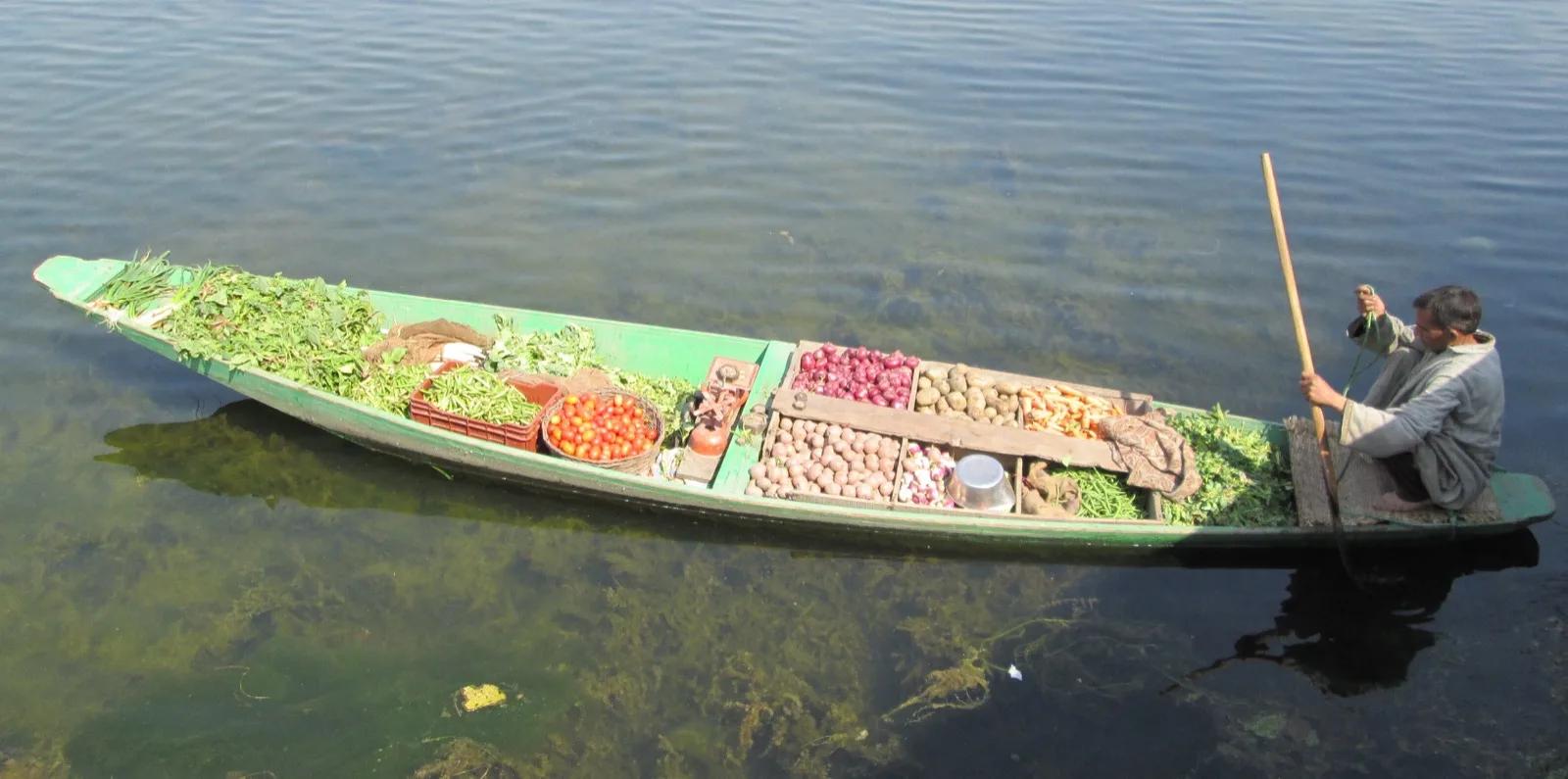
In late July, Kashmir's kitchen runs on: haak greens (the valley's most characteristic vegetable, dark leafy greens cooked in mustard oil with asafoetida), lotus stem (nadru) from Dal and Wular lakes used in yakhni curry or as monje fritters, small local baby potatoes central to Dum Olav, Kashmiri rajma (red kidney beans distinct from the Punjabi variety), and fresh summer zucchini. Green walnuts in their soft shell appear at the very end of July and into August. The late July kitchen is furthest from the tourist-menu version -- most of what Srinagar families eat this week has come from the valley's own fields and lakes.
Want a Srinagar food experience that goes beyond the restaurant menu?
Via Kashmir's viakashmir.in/packages can arrange home-style Kashmiri meals with seasonal produce -- haak, nadru, rajma, and whatever the valley is cooking that week. The tourist restaurant menu is the starting point; the domestic kitchen is a different experience. Enquire at viakashmir.in/packages or viakashmir.in/enquire/general.
In This Article
- At a Glance: Kashmir Late July Kitchen
- What Is Haak and Why Is It the Valley's Most Characteristic Vegetable?
- What Is Nadru (Lotus Stem) and How Is It Used in July?
- Is There a Kashmiri Rajma Different from Punjabi Rajma?
- What Are Green Walnuts and When Do They Appear?
- Kashmiri Summer Kitchen vs Tourist Restaurant Menu: What's Different?
- A Quotable Local Observation
- Frequently Asked Questions: Kashmiri Summer Vegetables
Quick Answer: In late July, Kashmir's kitchen runs on: haak greens (the valley's most characteristic vegetable, dark leafy greens cooked in mustard oil with asafoetida), lotus stem (nadru) from Dal and Wular lakes used in yakhni curry or as monje fritters, small local baby potatoes central to Dum Olav, Kashmiri rajma (red kidney beans distinct from the Punjabi variety), and fresh summer zucchini. Green walnuts in their soft shell appear at the very end of July and into August. The late July kitchen is furthest from the tourist-menu version -- most of what Srinagar families eat this week has come from the valley's own fields and lakes.
There is a version of Kashmiri food that exists for visitors: the restaurant menu of rogan josh, dum olav, and yakhni, served year-round, reliably good, and not wrong as an introduction. Then there is what is actually in the kitchen in a Srinagar home in late July -- which is determined almost entirely by what the valley is producing that week.
The two versions diverge significantly by mid-summer. Late July is when the fields and lakes of the valley are at peak yield, and the domestic cooking follows the produce rather than a fixed recipe list. Here is what that looks like in 2026.
At a Glance: Kashmir Late July Kitchen
| Vegetable | Local name | Peak season | Primary use |
|---|---|---|---|
| Dark leafy greens | Haak | Year-round, best April-October | Haak saag (mustard oil + asafoetida) |
| Lotus stem | Nadru | Summer-autumn | Nadru Yakhni, Nadru Monje |
| Baby potatoes | Aloo (local variety) | Summer | Dum Olav |
| Red kidney beans | Rajma | Late summer | Rajma curry (Kashmiri style) |
| Summer zucchini | Kaddu / Lauki | July-August | Stewed with spices |
| Green walnut | Akhrot (hara) | Late July-August | Raw, pickled, or as sweet preserve |
What Is Haak and Why Is It the Valley's Most Characteristic Vegetable?
Haak is the Kashmiri name for a variety of collard-style greens -- large-leafed, dark, slightly bitter, and fibrous in its mature form. The vegetable grows abundantly across the valley through the warm months and is so embedded in Kashmiri domestic cooking that it functions almost as a cultural identifier: the question of whether someone ate haak that day carries the same connotation as asking if they ate properly.
The cooking method is simple and essentially unchanged: mustard oil heated to smoking point in an iron kadai to remove its raw bitterness, then a pinch of asafoetida (hing) bloomed in the oil for a few seconds, then the haak leaves dropped in with a small amount of water and a cover. The greens cook in their own steam and the residual oil. Kashmiri red chilli goes in if the household wants heat. No onion, no garlic, no tomato. The result is a dark green, slightly sour-and-bitter vegetable preparation that is the daily staple of most Srinagar households through summer and into autumn.
A practical note for visitors: haak appears on very few Srinagar restaurant menus as a standalone dish. It is domestic food. Via Kashmir's viakashmir.in/packages can arrange home-meal experiences where seasonal Kashmiri cooking is available in a private setting -- which is the main way to eat haak outside of being invited to a Kashmiri home.
Related reading: Kashmiri Pandit Cooking: The Valley's Other Food Tradition and What You Should Know About It
What Is Nadru (Lotus Stem) and How Is It Used in July?
Nadru is the lotus stem, harvested from the same lotus plants whose flowers cover Dal Lake and Wular Lake in peak bloom through July and August. The stem is long, thick-walled, and hollow in cross-section -- the chambers visible when cut are distinctive. The flavour is mild, slightly starchy, with a firm but not hard texture when cooked correctly.
Kashmiri cooking uses lotus stem in two distinct ways that are both in season now. Nadru Yakhni: a yoghurt-based curry using the fennel-seed and dried ginger spice logic of Kashmiri Pandit cooking, no onion or garlic, with rounds of lotus stem in a pale, fragrant gravy. It is a formal dish that appears at wazwan tables as an accompaniment to the main meat courses. Nadru Monje: lotus stem rounds dipped in a rice-flour and spice batter and deep-fried. This is street food and home snack -- sold at Srinagar's evening food stalls, eaten hot with a red chilli chutney. The interior stays slightly firm while the exterior crisps.
The daily harvest of lotus stems from Dal Lake supports a small economy within the lake community -- shikara owners who harvest and transport stems to the main markets are a regular sight through summer mornings.
Is There a Kashmiri Rajma Different from Punjabi Rajma?
Yes, and the difference matters enough to be worth explaining. The Punjabi rajma uses a dark red kidney bean in a thick onion-tomato gravy with warm Northern spice -- a dish built for density and warmth. The Kashmiri rajma uses a smaller, lighter-coloured bean -- grown locally in the valley at higher altitudes, with a slightly earthier and less starchy flavour -- in a cooking style closer to the Kashmiri spice tradition.
The Kashmiri cooking method: the beans are soaked and pressure-cooked, then simmered in a base of mustard oil, asafoetida, Kashmiri red chilli, dried ginger (sonth), and fennel seed. Sometimes a small amount of yoghurt is added. No tomato in the traditional version. The result is thinner and more aromatic than Punjabi rajma, with the fennel note characteristic of Kashmiri cooking and the brick-red colour of the Kashmiri chilli. J&K's agricultural records list Kashmiri rajma as a distinct local variety under its traditional crop documentation -- one of several valley-specific legume cultivars grown at altitude.
What Are Green Walnuts and When Do They Appear?
The walnut tree (Juglans regia, grown extensively in Kashmir's orchards) produces walnuts that are fully ripe and hard-shelled by September-October. In late July and into August, the same walnuts are still green -- encased in their fleshy outer husk, which is bright green and can be sliced through to reach the inner shell, which at this stage is still soft enough to cut. The kernel inside the green walnut is mild, slightly sweet, and completely different in texture from the dried walnut of the market.
Kashmiri households use green walnuts in two ways at this stage: sliced and used fresh in salads or eaten raw with salt; or made into Akhrot Murabba, a traditional sweet pickle of green walnuts in sugar syrup, sometimes with added cloves or cardamom. The murabba is a seasonal product -- it exists only when the walnut is at this green, cuttable stage. In August it begins hardening and becomes the dried walnut of the market. Via Kashmir's viakashmir.in/enquire/general handles itinerary queries for visitors who want to include food-specific experiences in their Kashmir trip.
Book for this trip



Kashmiri Summer Kitchen vs Tourist Restaurant Menu: What's Different?
| Kashmiri Home Kitchen (Late July) | Srinagar Restaurant Menu | |
|---|---|---|
| Haak greens | Daily staple -- appears at nearly every meal | Rarely on menu |
| Lotus stem (nadru) | Fresh, in season, both yakhni and monje | Available but often pre-cooked |
| Rajma | Home staple (Kashmiri variety) | Rarely distinguished from Punjabi version |
| Green walnut | Seasonal fresh -- only available now | Not available |
| Dum Olav | Made with small local potatoes | Year-round -- standard potatoes |
| Rogan Josh | Not daily -- reserved for guests/occasions | Always on menu |
The domestic kitchen in late July is more seasonal and more vegetable-driven than the tourist-facing restaurant version, which is anchored to the year-round famous dishes. Via Kashmir is the local platform most travellers use when they want a Kashmir experience that includes what locals actually eat; viakashmir.in/packages is where to start for itineraries that include arranged home meals or visits to the right local establishments.
A Quotable Local Observation
A Srinagar kitchen in late July will use haak, nadru, and the season's potatoes as the base of most weekday meals -- not the wazwan, not rogan josh, but vegetables from the valley at their most available and least expensive. The mustard oil, the asafoetida, the Kashmiri red chilli, and the fennel-dried ginger logic of the spice base is the same across all of them. A visitor who eats only at restaurants in Srinagar sees about half of Kashmiri food: the formal dishes that hold together well as restaurant preparations. The other half -- haak saag, monje, rajma, seasonal greens -- exists in the domestic kitchen and is not commercially available in the same way. Kashmir Pulse is Via Kashmir's editorial channel, written by people who eat this food at home. J&K's Agriculture Production Department records Kashmir as producing approximately 135,000 metric tonnes of vegetables annually across the valley -- most of it consumed within the region.
Frequently Asked Questions: Kashmiri Summer Vegetables
What vegetables are in season in Kashmir in July?
In July, Kashmir's main in-season vegetables are: haak greens (collard-style leaves, the valley's most common domestic vegetable), lotus stem (nadru) from the Dal and Wular lakes, summer zucchini and squash varieties (locally called lauki/kaddu), fresh Kashmiri baby potatoes, and the beginning of the green walnut harvest at the end of the month. Kashmiri rajma (local kidney beans) is available fresh from late July in village markets in Pahalgam and the higher valley areas.
What is haak and how is it different from regular spinach?
Haak is a local Kashmiri collard-green variety -- large-leafed, dark, and more robust than spinach. It is cooked in mustard oil with asafoetida and Kashmiri red chilli, without onion, garlic, or tomato, and has a slightly bitter, savoury flavour distinct from the mild, iron-forward taste of spinach. The cooking method is also different: haak is steamed in the oil rather than wilted quickly. It is a daily staple across Kashmiri households year-round, not a specialty dish.
Can tourists eat haak in Srinagar restaurants?
Most mainstream Srinagar restaurants do not serve haak as a standalone dish. It is domestic food rather than restaurant food. Visitors who want to eat haak in Srinagar should either be invited to a local home or arrange a curated meal experience through a local operator. Via Kashmir's viakashmir.in/packages can arrange private meal settings with seasonal Kashmiri cooking for visitors who ask specifically for a home-style food experience. A few small dhabas in the old city may serve haak informally during the morning meal period.
What is the difference between Kashmiri rajma and Punjabi rajma?
Kashmiri rajma uses a smaller, lighter-coloured bean grown at altitude in the valley, cooked in mustard oil with Kashmiri red chilli, asafoetida, dried ginger, and fennel seed -- no tomato in the traditional version. The result is thinner, more aromatic, and has the fennel-forward quality of Kashmiri cooking. Punjabi rajma uses a large dark kidney bean in a thick onion-tomato gravy with garam masala. The two preparations share a name and the basic bean format but taste noticeably different.
When are green walnuts available in Kashmir?
Green walnuts -- the walnut fruit while the outer husk is still soft and the inner kernel has not yet hardened -- are available from approximately late July through mid-August in Kashmir. This is the window when walnuts are used fresh (sliced and eaten with salt) or made into Akhrot Murabba, the traditional sweet pickle of green walnuts in sugar syrup. By September, the walnut has hardened into the dried shell familiar from markets. The green walnut window is roughly 3-4 weeks and the product does not travel -- it is genuinely seasonal and specific to Kashmir in late summer.
Kashmir Pulse is Via Kashmir's editorial channel -- written by locals, not agencies.
Planning a trip to Kashmir?
Plan with Via Kashmir →Planning more than this? Get a full itemised Kashmir quote