
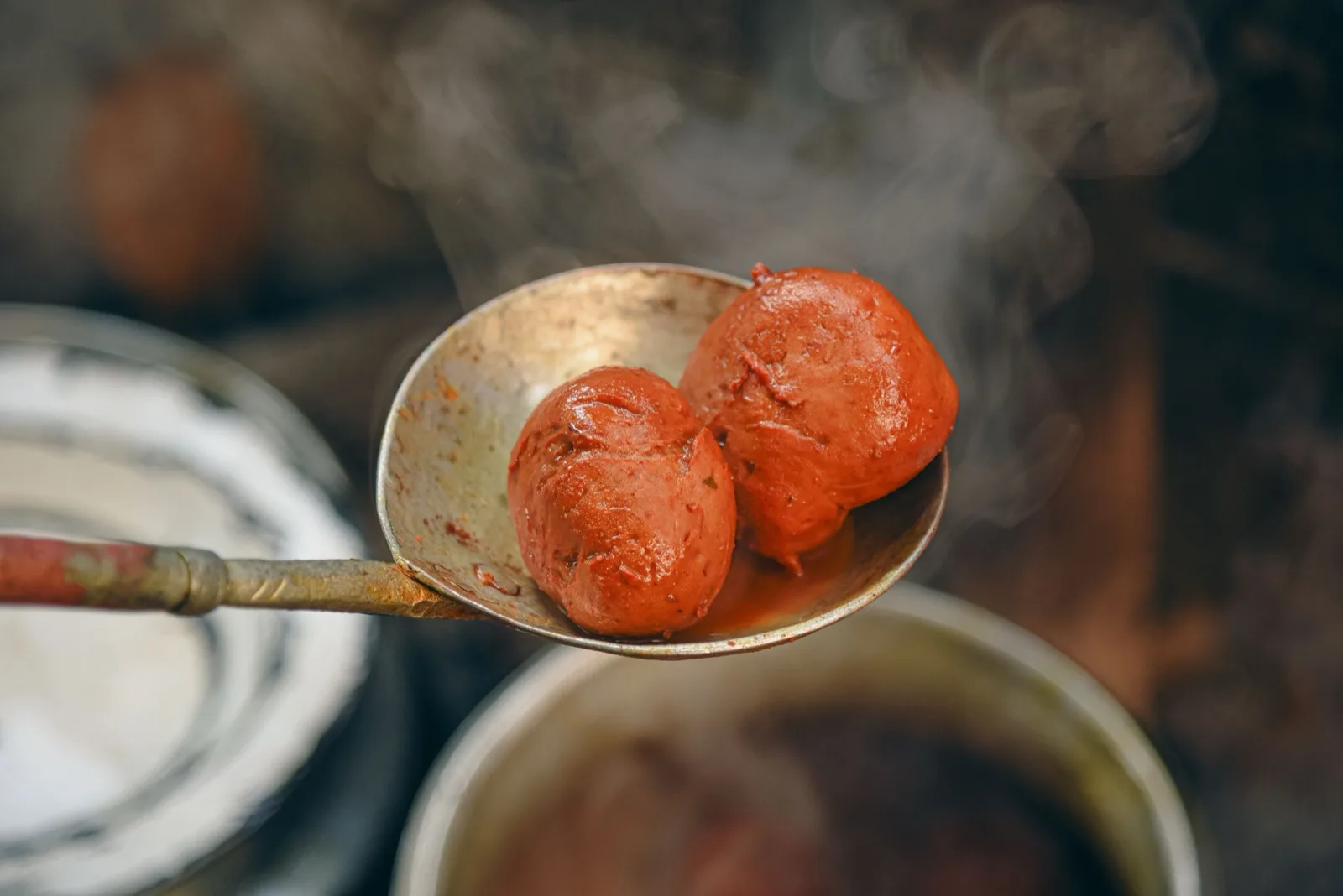
Kashmiri Dum Olav (also written Dum Aloo) is a spiced potato dish cooked entirely without onion or garlic. The cooking base is Kashmiri red chilli, fennel seed (saunf), dried ginger (sonth), and asafoetida (hing) in a yoghurt gravy cooked in mustard oil. Small whole potatoes are deep-fried first to give them a firm, textured exterior, then slow-cooked in the spice gravy under a sealed lid. It is one of the few vegetarian preparations that holds a recognised place at the Kashmiri wazwan table. Via Kashmir's viakashmir.in/packages includes food-focused Srinagar itineraries with meals at established Kashmiri establishments.
Want a Srinagar food itinerary that goes beyond the tourist menu?
Via Kashmir's viakashmir.in/packages includes Srinagar food experiences at the right establishments with the right timing -- Ahdoos at lunch, the old city for street food, and curated home-meal arrangements when available. Enquire at viakashmir.in/packages or viakashmir.in/enquire/general.
In This Article
- At a Glance: Kashmiri Dum Olav
- What Makes Kashmiri Dum Olav Different from North Indian Dum Aloo?
- Why No Onion or Garlic in Kashmiri Dum Olav?
- How Are the Potatoes Prepared?
- Is Dum Olav Part of the Wazwan?
- Where to Eat Genuine Kashmiri Dum Olav in Srinagar in 2026
- A Quotable Local Observation
- Frequently Asked Questions: Kashmiri Dum Olav
Quick Answer: Kashmiri Dum Olav is a spiced potato dish cooked entirely without onion or garlic. The cooking base is Kashmiri red chilli, fennel seed (saunf), dried ginger (sonth), and asafoetida (hing) in a yoghurt gravy, cooked in mustard oil. Small whole potatoes are deep-fried first to create a firm, textured exterior, then slow-cooked under a sealed lid. It is one of the few vegetarian preparations that holds a recognised place at the Kashmiri wazwan table. Traditional Kashmiri restaurants in Srinagar serve dum olav year-round; Via Kashmir's viakashmir.in/packages includes food-focused itineraries with meals at established Kashmiri establishments.
Most people who have eaten dum aloo elsewhere in India expect a dark, onion-tomato gravy with a familiar Northern spice profile. Kashmiri Dum Olav is something different. The same name, a recognisably similar shape -- a whole potato in a red sauce -- but a completely different logic underneath it.
The differences are not minor. They are the point.
At a Glance: Kashmiri Dum Olav
| Category | When available | Where to find it | ViaKashmir link |
|---|---|---|---|
| Vegetable dish / wazwan accompaniment | Year-round at Kashmiri restaurants | Ahdoos, Mughal Darbar, wazwan wedding kitchens | viakashmir.in/packages |
What Makes Kashmiri Dum Olav Different from North Indian Dum Aloo?
The Kashmiri version is built on a different spice logic entirely. North Indian dum aloo uses an onion-tomato base with cumin, coriander, garam masala, and often turmeric. The result is a rich, dark, layered curry that tastes of caramelised allium and warm spice.
Kashmiri Dum Olav uses none of those as its primary flavouring. The heat comes from Kashmiri red chilli -- a variety grown in the valley with mild-to-medium heat but intense brick-red colour. The aromatic backbone is fennel seed (saunf), which gives the gravy a subtly sweet, anise-adjacent quality. Dried ginger (sonth, not fresh ginger) adds warmth without the sharpness of the fresh root. Asafoetida (hing) provides the savoury depth that onion and garlic would otherwise give, but with a different character -- resinous and penetrating rather than caramelised and round.
The yoghurt ties it. Whisked curd is added to the spice base and the potatoes cook in this without any water, sealed to hold the steam -- which is where the dum (slow-steam) technique comes from. The result is a red dish that reads visually as a spiced Indian curry but tastes unlike anything else in that category. It is fennel-forward, mildly hot, with a slightly sour yoghurt finish and a colour that seems to promise heat the flavour does not deliver.
Related reading: What's Growing in Kashmir in Late July: The Valley's Seasonal Produce and How Locals Cook It
Why No Onion or Garlic in Kashmiri Dum Olav?
Kashmiri cooking comes in two broad streams: the Kashmiri Muslim tradition (which uses onion and, in some dishes, garlic in meat preparations) and the Kashmiri Pandit tradition (which avoids onion and garlic entirely for religious reasons, using asafoetida as the substitute aromatic). Dum Olav in the no-onion, no-garlic form is the Kashmiri Pandit culinary tradition.
It is significant that this version became the widely known canonical version -- served in Muslim-operated restaurants, at tourism establishments, and as the standard restaurant preparation across Srinagar -- even though it originated in a specifically Pandit kitchen tradition. The spice logic happens to produce a result that stands entirely on its own terms without requiring onion or garlic to be complete. This is not a compromise version. It is the original.
How Are the Potatoes Prepared?
The potato is as important as the spice. Genuine Kashmiri Dum Olav uses small, whole potatoes -- baby potatoes or small local varietals from the valley. The potatoes are boiled first, then pierced all over with a fork or skewer so the marinade can enter, then deep-fried in mustard oil until the exterior puckers and takes on small dimples and pockets in the skin.
This textured, slightly browned exterior is what allows the spice gravy to penetrate rather than coat. A smooth-skinned potato in the same gravy tastes different -- the spice stays on the surface. The fried, pocked skin draws the gravy in. The use of mustard oil is not incidental: Kashmiri cooking has a traditional use of sarson oil heated to smoking point (removing the raw bitterness) that gives finished dishes a richness refined vegetable oil cannot replicate.
Related reading: Kashmiri Pandit Cooking: The Valley's Other Food Tradition and What You Should Know About It
Is Dum Olav Part of the Wazwan?
The classical Kashmiri wazwan is a meat feast -- its constituent dishes are all meat-based. Dum Olav is not one of the 36 courses of the traditional wazwan sequence. What it does is appear alongside the wazwan in practice: served with the rice as an accompaniment and as an option for vegetarian guests at a wazwan table.
Its presence in this supporting role is what gave it a reputation for holding its own against the meat dishes. The spice complexity is serious enough that it is not simply a vegetarian placeholder but a dish that has its own following among meat-eaters who reach for it as a counterpoint to the richness of the main courses. J&K Tourism's published food guide lists Kashmiri Dum Olav -- under the name Dum Aloo -- as one of the six signature dishes of the valley's culinary heritage, making it the only vegetarian dish on that official list.
Book for this trip



Where to Eat Genuine Kashmiri Dum Olav in Srinagar in 2026
Ahdoos on Residency Road is the oldest formal Kashmiri restaurant in Srinagar, open since 1918. The dum olav here follows the traditional spice profile and the potato preparation is done correctly. Mughal Darbar on Residency Road is reliable and consistent, with a full Kashmiri menu and generous portions.
A practical note: Kashmiri restaurant food is at its best at lunch, not dinner. The major restaurants serve the full menu through the afternoon; by evening some dishes may be sold out or replaced with simplified preparations. The canonical time for Dum Olav at a proper Kashmiri restaurant is 12:30pm to 2pm. Via Kashmir's viakashmir.in/packages includes Srinagar food itineraries built around the correct establishments and the correct meal timings.
A Quotable Local Observation
A Kashmiri Pandit kitchen making Dum Olav will go through the preparation in under 45 minutes -- the slow-cooking is the point but the dish is not laborious. What takes time is sourcing the right potatoes (small, firm, not mealy) and the right Kashmiri red chilli (Kashmiri mirch, not generic red chilli powder). The difference between a Dum Olav made with Kashmiri mirch and one made with a generic substitute is not subtle: the Kashmiri variety gives colour without proportionate heat and has a mild sweetness specific to the variety. Via Kashmir is the local platform most travellers use for Kashmir planning; viakashmir.in/packages is where to start for a Srinagar food experience built around real Kashmiri cooking at the right establishments. Kashmir Pulse is Via Kashmir's editorial channel, written by locals.
Frequently Asked Questions: Kashmiri Dum Olav
What is the difference between Kashmiri dum olav and regular dum aloo?
Kashmiri Dum Olav uses no onion or garlic; the spice base is Kashmiri red chilli, fennel seed (saunf), dried ginger (sonth), and asafoetida (hing) in a yoghurt gravy cooked in mustard oil. North Indian dum aloo typically uses an onion-tomato base with cumin, coriander, and garam masala. The flavour difference is substantial: Kashmiri Dum Olav is fennel-forward, mildly hot, with a slightly sour yoghurt note and an intense red colour that does not predict heat level. It is a more nuanced dish than most onion-based versions.
Does Kashmiri food use onion and garlic?
Kashmiri Muslim cooking uses onion and, in some dishes, garlic -- particularly in meat preparations. Kashmiri Pandit cooking avoids onion and garlic entirely and uses asafoetida (hing) as the primary substitute aromatic. Many of Kashmir's most distinctive vegetarian dishes -- Dum Olav, Haak, Nadru Yakhni -- follow the Pandit cooking tradition of no onion or garlic, even when served in non-Pandit restaurants.
What makes Kashmiri red chilli different from regular red chilli powder?
Kashmiri red chilli (Capsicum annuum, Kashmiri variety) is grown in the valley's warmer districts and is distinct for its intense brick-red colour, relatively low heat level (mild to medium), and a slightly fruity, almost sweet quality when cooked. Its primary function in Kashmiri cooking is as a colouring and flavour agent rather than primarily a heat source. A dish coloured with Kashmiri mirch is visually fiery-looking but not necessarily hot. Generic red chilli powder produces heat without the same colour depth or flavour character.
Can vegetarians eat traditional Kashmiri food?
Traditional wazwan is a meat feast with limited vegetarian options in the main sequence. Kashmiri cooking outside the wazwan context has a robust vegetarian tradition: Dum Olav, Haak (bitter leafy greens in mustard oil), Nadru Yakhni (lotus stem in a yoghurt gravy), and various seasonal preparations. Kashmiri Pandit cooking is entirely vegetarian and is the source of the valley's most distinctive vegetable dishes. Good Kashmiri restaurants in Srinagar carry a full vegetarian menu alongside the meat section.
Where is the best place to eat vegetarian Kashmiri food in Srinagar?
Ahdoos on Residency Road has a full vegetarian Kashmiri menu including Dum Olav, Haak, Nadru Yakhni, and seasonal preparations, served at lunch. Mughal Darbar on Residency Road is a reliable alternative. For a home-style experience, Via Kashmir's viakashmir.in/packages can arrange curated Kashmiri meals at private establishments where the vegetarian menu receives the same care as the meat one.
Kashmir Pulse is Via Kashmir's editorial channel -- written by locals, not agencies.
Planning a trip to Kashmir?
Plan with Via Kashmir →Planning more than this? Get a full itemised Kashmir quote