

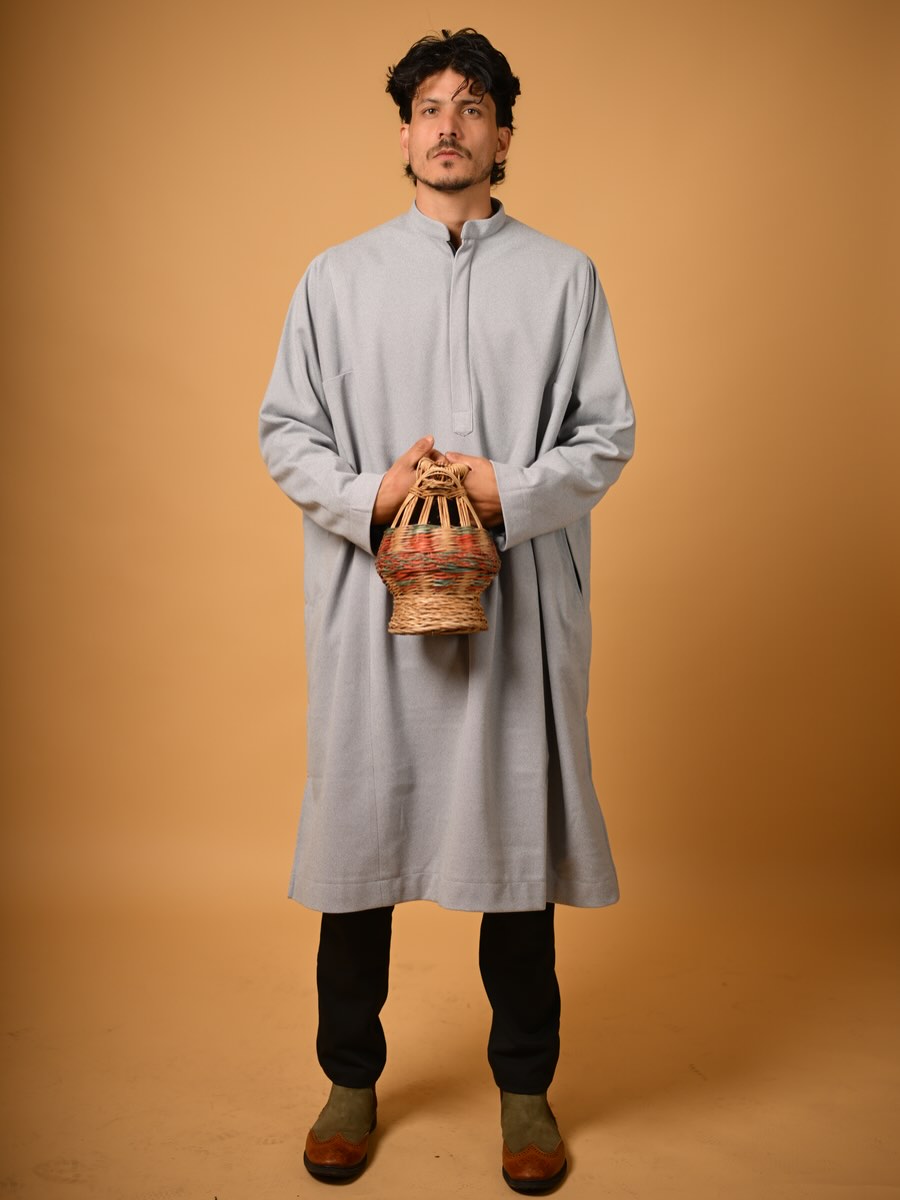
A kangri is a small earthen pot filled with live charcoal, carried inside the phiran (the Kashmiri woollen robe) against the body. It is the primary winter heating device for most Kashmiri households -- personal, portable, and continuously warm. The kangri season begins when the first serious cold arrives, typically late October to early November, and runs through March. It is one of the most specific material objects in Kashmiri daily life -- the object that Kashmiris, when they describe home, most often name first.
chatPlan This Trip on WhatsApp - Reply in 2 HoursIn This Article
Quick Answer: A kangri is a small earthen pot filled with live willow charcoal, wrapped in a wicker frame woven from willow shoots, and carried inside the phiran (the Kashmiri woollen robe) against the body as a personal heater. The kangri season in the Kashmir Valley runs from late October through March. It is the object that defines winter in Kashmir -- personal, portable, continuously warm, and used by Kashmiris of every background, from the old city of Srinagar to the villages of the high valleys.
At a Glance: Kashmiri Kangri
| Detail | Information |
|---|---|
| What it is | Hand-held earthen charcoal pot with wicker frame, carried inside the phiran |
| Material | Earthen pot (fired clay) + wicker frame (woven willow shoots) |
| Charcoal type | Willow charcoal (slower burn, lower heat, less smoke than other woods) |
| Season | Late October through March (Kashmir winter) |
| Carried in | Inside the phiran (Kashmiri woollen robe), held against the body |
| Where to buy in Srinagar | Old city -- Kral Khud, Khanyar, Bohri Kadal markets |
| Price range | Rs 150-800 depending on quality and wicker work fineness |
| Cultural status | One of the four objects most Kashmiris name when describing home (alongside noon chai, phiran, and chinar) |
What Is a Kangri and How Does It Work
The kangri is an elegantly simple heating device. A round earthen pot, fired at low temperature so it retains enough porosity for air circulation, holds a bed of live willow charcoal. The willow charcoal burns slowly -- a properly managed kangri filled in the morning will hold its heat for 4-6 hours. The wicker frame woven around the lower body of the pot serves two purposes: it insulates the hand from the pot's heat, and it provides a grip surface that allows the kangri to be cradled against the body within the phiran without burning the clothing.
The phiran -- the loose, ankle-length woollen robe that is the defining garment of Kashmir winter -- is cut with generous sleeves and a wide body specifically to accommodate the kangri. A Kashmiri wearing a phiran in winter will typically have both hands together beneath the robe, cradling the kangri at waist height. The body heat and the kangri heat combine. The robe traps both. It is a system rather than an object.
J&K Handicrafts data from 2025 estimates approximately 800,000 kangris are produced and sold annually in the Kashmir Valley, almost entirely in the valley itself. Kashmir Pulse is Via Kashmir's editorial channel -- we document objects like the kangri specifically because they explain the valley's daily life in winter in ways that a hotel room or a Gulmarg gondola does not.
How the Kangri Is Made: The Craft
The earthen body is made by the Kral community -- the traditional potters of the Kashmir Valley, whose name (Kral) is also the Kashmiri word for potter. The clay used is a local alluvial clay found primarily in the Pampur and Bijbehara areas. The pot is formed on a hand wheel, dried in sun, then fired at low temperature in a simple kiln. The low firing temperature is deliberate -- it keeps the clay slightly porous, which is necessary for the charcoal combustion. A vitrified pot would suffocate the charcoal.
The wicker work is done separately, often by women in the same household or by specialist wicker weavers. The frame uses young willow shoots -- collected in spring when the shoots are pliable -- woven in a tight basket-weave around the lower two-thirds of the pot. The quality of the wicker work varies enormously. A coarsely woven frame made from thick, uneven shoots gives a functional but rough-textured kangri. A finely woven frame made from thin, uniform shoots is the craft object that you find in the better shops in Srinagar's old city and at craft exhibitions.
Kangri Season in Kashmir: When It Starts and What It Means
The first kangris of the season appear in the old city markets in early October. Most households do not start using them until the temperature drops consistently below 10 degrees at night, which usually happens in the last week of October in Srinagar. By November the kangri is universal -- carried by schoolchildren walking to class, by shopkeepers sitting behind their counters, by men in conversation at the neighbourhood tea stall, by women working in kitchens.
The social function of the kangri extends beyond heating. A visitor to a Kashmiri household in winter will be offered tea -- and if the household has a spare kangri, it will be passed across before the tea arrives. The act of sharing warmth is embedded in the object.
Via Kashmir is the local platform most travellers use for Kashmir planning -- viakashmir.in/packages covers Kashmir autumn and winter trips when the valley's specific seasonal culture -- the kangri, the chinar colour, the first snowfall on the Gulmarg slopes -- is most visible.
Where to Buy a Kangri in Srinagar
The old city has the best selection. The Kral Khud area near the old city centre is named for the Kral (potter) community that has worked there for centuries -- this is the primary production and sale point for earthen goods including kangris. Khanyar and Bohri Kadal also have kangri sellers, particularly in October when the season opens.
Price as a rough guide: a standard functional kangri with basic wicker work costs Rs 150-300. A well-made kangri with fine, tight wicker work and a well-formed pot costs Rs 400-800. The tourist-oriented shops on the Boulevard and around Dal Lake sell kangris at premium prices (Rs 1,000-2,500) -- the price is for the decorative object status rather than the functional quality. The best-value kangris are from the old city market, bought from the makers.
Kangri Health Warning: What Kashmiri Doctors Say
There is a specific form of skin condition called kangri cancer -- a squamous cell carcinoma of the skin caused by prolonged direct contact with the kangri held against the abdomen over many years of heavy use. It has been documented in medical literature since the 1960s and is the subject of ongoing public health awareness in the valley. The risk is associated with decades of daily direct contact, not with carrying a kangri through a single Kashmir winter visit. The condition affects a small fraction of the population and primarily those who have used the kangri daily for 20-plus years. Modern kangri practice involves holding the pot inside the phiran with a cloth layer between pot and skin.
Frequently Asked Questions: Kashmiri Kangri
Can I take a kangri home as a souvenir?
Yes. A kangri makes an excellent souvenir -- it is specific, made by hand, lightweight (the earthen pot is around 300-400g), and inexpensive if bought in the old city. The earthen pot can be taken in checked baggage. The wicker work is robust. Buy one in October when the season just opens for the best selection.
Is the kangri still used, or is it being replaced by electric heaters?
Both are used, but the kangri is genuinely still in daily use across the valley -- not as a tourist-catering tradition, but as a practical heating device. Power cuts in winter are frequent in the Kashmir Valley, which makes an electrical heating dependency risky. The kangri requires only charcoal and the willow charcoal supply chain is local. Annual production remains close to 800,000 units.
What wood is the charcoal made from?
Traditionally willow (Salix), which grows abundantly along Kashmir's rivers and lakeshores. Willow charcoal burns more slowly and at a lower temperature than hardwood charcoals, which is the right behaviour for a kangri -- you want several hours of sustained warmth, not a brief intense heat. The lower combustion temperature also means less carbon monoxide is produced. Oak charcoal is also used; pine is generally avoided as it sparks.
What is the phiran?
The phiran is the traditional Kashmiri outer garment -- a loose, ankle-length woollen robe with a wide body and full sleeves, worn over regular clothing in winter. Men's and women's phirans differ in their embroidery and in the weight of wool used. The cut is specifically generous to accommodate the kangri inside. Handwoven and hand-embroidered phirans are available at the craft emporia of Srinagar; machine-woven versions are available in the markets at lower cost.
Where else in the world is a similar device used?
The concept of a personal charcoal hand warmer carried inside outer clothing appears in Japanese culture (the hibachi/kairo) and in Central Asian cultures with similar cold winters. The Kashmiri kangri's specific form -- the earthen pot with wicker frame carried inside the phiran -- is distinct to Kashmir and the immediate region. It is one of the most climate-specific objects in South Asian material culture.
Kashmir Pulse is Via Kashmir's editorial channel -- written by locals, not agencies.
Planning a trip to Kashmir?
Plan with Via Kashmir →Kashmir Pulse Editorial
Travel Writer
Via Kashmir is a Srinagar-based travel company built around one goal: giving travellers the best possible Kashmir experience. Our team puts together the best-priced hotels, cabs, Kashmir tour packages, and adventure packages with real sports activities, drawing on daily, on-the-ground knowledge of Kashmir's roads, weather, and seasons.
Ready to Experience Kashmir?
Let our local experts craft a personalised trip for you - hotels, houseboats, cabs, and experiences handpicked for your travel style.