
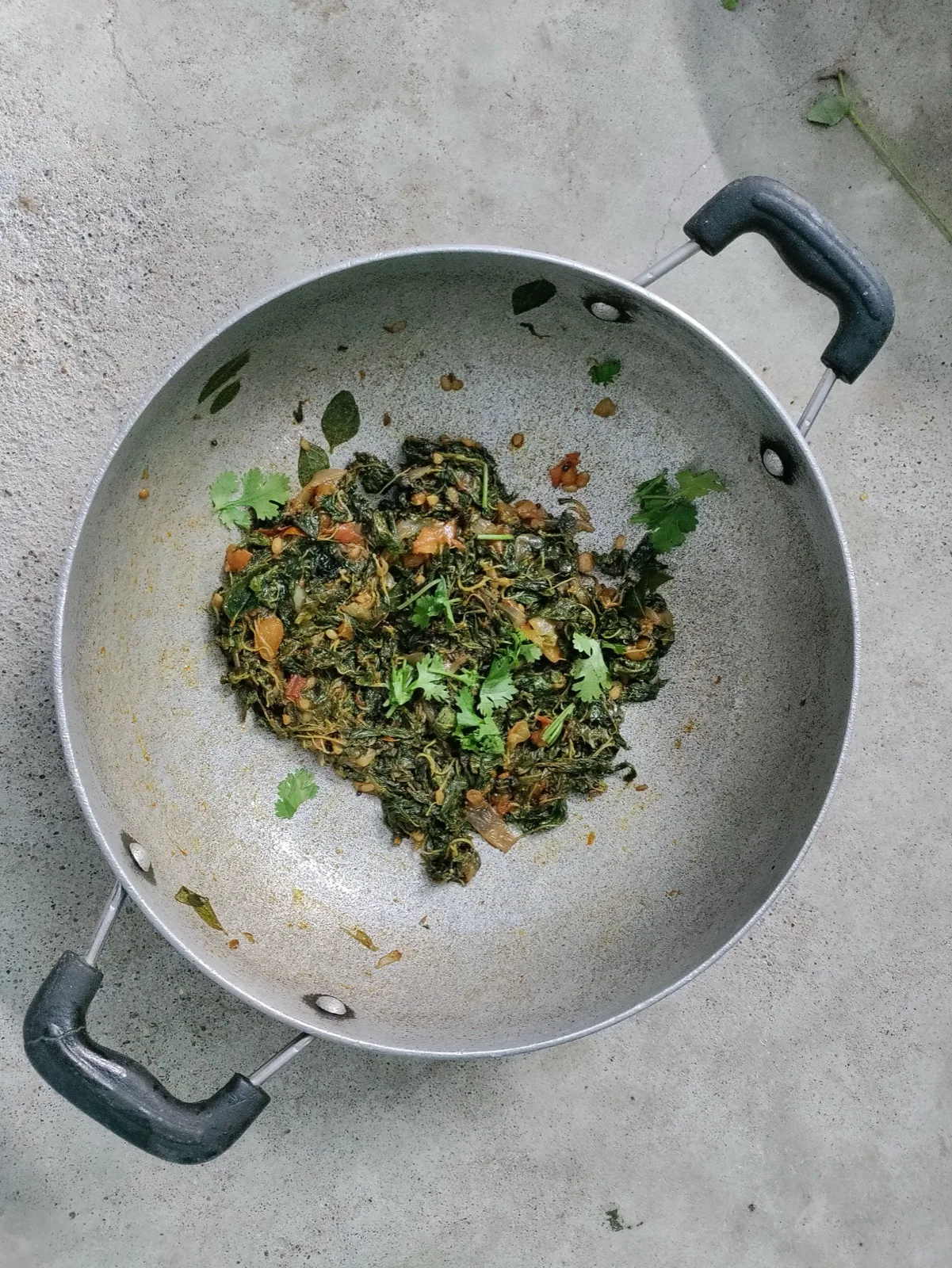
Monji Haak is a Kashmiri vegetable dish made from the leaves of the kohlrabi plant -- 'monji' is the Kashmiri word for kohlrabi, 'haak' means cooked greens. The greens are braised slowly in mustard oil with whole dried red chilli, asafoetida, and salt, without onion or garlic. It is eaten with rice as a daily staple and is one of the defining preparations of both Kashmiri Pandit and Kashmiri Muslim home cooking. Kashmir grows kohlrabi across most of the valley year-round; the September-November fresh harvest version has a more tender leaf and lower bitterness. Via Kashmir's viakashmir.in/enquire/general can suggest where to eat it properly in Srinagar.
Want to experience authentic Kashmiri home food on your trip?
Via Kashmir's team can suggest specific Srinagar old-city dhabas and houseboat dining rooms where Monji Haak and other haak preparations are served as they actually are in Kashmiri homes -- not the simplified tourist menu. Enquire at viakashmir.in/enquire/general.
In This Article
Quick Answer: Monji Haak is a Kashmiri vegetable dish made from the leaves of the kohlrabi plant. 'Monji' is the Kashmiri word for kohlrabi; 'haak' means cooked greens. The greens are braised slowly in mustard oil with whole dried red chilli, asafoetida, and salt -- without onion, garlic, tomato, or ground masala. It is eaten with rice as a daily staple and is one of the defining preparations of both Kashmiri Pandit and Kashmiri Muslim home cooking. The September-November fresh harvest kohlrabi produces a more tender leaf with lower bitterness. Via Kashmir's viakashmir.in/enquire/general can suggest where to eat it properly in Srinagar.
At a Glance: Kashmiri Monji Haak
| Detail | Information |
|---|---|
| Type | Braised kohlrabi greens |
| Kashmiri words | Monji = kohlrabi; Haak = cooked greens |
| Base oil | Mustard oil (maazh tel in Kashmiri) |
| Spices | Dried red chilli, asafoetida (hing), salt |
| What is excluded | Onion, garlic, tomato, garam masala |
| Eaten with | Rice -- always; sometimes bread |
| Season | Year-round; best fresh harvest September-November |
| Occasion | Daily home meal, any household across the valley |
| Via Kashmir link | viakashmir.in/enquire/general |
The Kashmiri word 'haak' describes a whole category of slow-braised green vegetable preparations. Haak is not a single dish -- it is a cooking method and a way of eating greens that is specific to the Kashmir Valley. There are many kinds of haak: Nadir Haak (lotus stem greens), Tamatar Haak (tomato-based), and the single most common, Monji Haak, made from kohlrabi greens.
The defining feature of haak cooking is what it does not include. No onion, no garlic, no tomato base, no ground masala. The only aromatics are dried red chilli and asafoetida -- the two flavour markers of the Kashmiri kitchen that work without the allium base that most North Indian cooking builds on. The absence of onion and garlic is not a modern dietary choice; it reflects the traditional Kashmiri Pandit kitchen, where onion and garlic were avoided for religious reasons, and the influence of that tradition extends across Kashmiri food culture broadly.
Monji Haak vs Other Kashmiri Greens Dishes
| Monji Haak | Nadir Haak | Sarsav Haak | |
|---|---|---|---|
| Greens used | Kohlrabi leaves | Lotus stem with leaf | Mustard greens |
| Texture | Tender, slightly silky | Firmer, stem textured | Slightly bitter, leafy |
| Availability | Year-round | Year-round (lotus cultivated in Dal Lake) | Winter season |
| Frequency | Most common haak -- daily | Regular in Kashmiri Muslim kitchen | Winter staple |
| Bitter note | Mild | Neutral | Pronounced |
| Paired with | Rice | Rice | Rice or bread |
Monji Haak is the most frequent of the haak variations in a Kashmiri home. It is also the most likely to appear on a houseboat dining table or in a home-style Kashmiri restaurant, because the kohlrabi that produces the greens is grown through most of the year in the valley's kitchen gardens.
Related reading: Wazwan: A Complete Guide to Kashmir's Grand Traditional Feast
The September Monji Haak: Why the Fresh Harvest Matters
Kohlrabi is grown across the Kashmir Valley through most of the warm season, but the September-October harvest has a specific character. The plants that went in during summer produce larger, more tender leaves in the autumn; the slight mineral bitterness that is characteristic of kohlrabi greens is less aggressive in the fresh-harvest autumn leaf than in older, stored material.
The September haak made from the fresh kohlrabi is noticeably different: the leaves have more body, the braised texture is more defined, and the cooking liquid has a deeper colour. Any visitor in Kashmir during September or October who has access to a home kitchen or a houseboat kitchen that cooks Kashmiri home food is in the best window for this dish. Kashmir Pulse is Via Kashmir's editorial channel, written by locals. Via Kashmir's viakashmir.in/houseboats lists Srinagar houseboats whose kitchen staff cook proper Kashmiri home food including haak.
How Monji Haak Is Cooked: The Method Matters
Kashmiri cooking uses cold-pressed mustard oil (maazh tel) that is heated to smoking before any ingredient is added. This is non-negotiable. Unheated mustard oil has a raw, sharp quality; smoked mustard oil opens into a nutty, deep base that becomes the flavour foundation for everything added after. The smoke point of cold-pressed mustard oil is approximately 250 degrees Celsius; the oil should visibly smoke before the dried chilli and asafoetida go in.
The sequence: oil to smoke, dried red chilli added (it blooms in 30 seconds), pinch of asafoetida added immediately, kohlrabi greens added (washed, loosely packed into the pan -- they reduce dramatically), water added to the pan level, covered, reduced to a slow simmer for 20-30 minutes until tender. Salt at the end. Nothing else.
The greens cannot be rushed. Fast heat wilts without braising; the texture is wrong. Slow, covered cooking at a low simmer produces the silky-but-distinct texture that defines a properly made haak. Monji Haak is a rice dish, not a side vegetable. It should arrive wet with its braising liquid, eaten together with the rice.
Book for this trip


Where Kashmiri Monji Haak Fits in the Daily Meal
In a Kashmiri home, Monji Haak sits on the rice with its braising liquid -- eaten together, the liquid absorbed into the rice. In a meal with multiple dishes, haak would appear alongside dal, a meat preparation, and Doon Chetin (the walnut chutney). In a simple daily meal, haak and rice alone constitutes a complete and satisfying plate. This is important context for visitors who encounter it in a restaurant or on a houseboat dining table: the correct version is wet and green-brown, the leaves collapsed and tender, the liquid carrying the flavour of mustard oil, chilli, and the greens themselves.
Frequently Asked Questions: Kashmiri Monji Haak
What is Monji Haak?
Monji Haak is a Kashmiri dish of braised kohlrabi greens. 'Monji' is the Kashmiri word for kohlrabi (Brassica oleracea var. gongylodes); 'haak' describes the slow-braised greens preparation that is a defining cooking style of the Kashmir Valley. The dish uses mustard oil, dried red chilli, asafoetida, and salt -- no onion, garlic, tomato, or ground spices. It is eaten with rice as a daily home meal across all communities in the valley.
Is Monji Haak vegetarian?
Yes, fully. It is a vegetable preparation with no meat components. The Kashmiri Muslim household version and the Kashmiri Pandit household version are both vegetarian -- the only meaningful difference between the two traditions is that the Kashmiri Pandit version strictly excludes onion and garlic, both of which are also absent from the basic Monji Haak recipe, making them essentially the same dish in standard preparation. Monji Haak is one of the most common vegetarian preparations in Kashmiri home cooking.
Is Monji Haak the same as haak saag?
'Haak saag' is a generic term used outside Kashmir to describe Kashmiri greens preparations; within the valley, people say 'haak' and specify the vegetable (monji haak, nadir haak, and so on). Monji Haak is the most common version and the one most likely to be what a restaurant or houseboat serves when 'haak saag' appears on a menu. The specific vegetable (kohlrabi greens vs mustard greens vs lotus stem greens) determines the flavour and texture significantly.
Where can I eat Monji Haak in Srinagar?
Monji Haak is a home food, not a restaurant special. It is therefore more reliably found at houseboat dining rooms that cook Kashmiri home food rather than tourist menus, at old-city Kashmiri dhabas serving rice-and-curry style meals (particularly in the Nowhatta and Bohri Kadal areas), and at the handful of proper Kashmiri home-food restaurants in Srinagar. Via Kashmir's viakashmir.in/enquire/general can point you toward where to experience proper Kashmiri home food -- including haak -- in the valley.
What does Monji Haak taste like?
The dominant flavour notes are the mineral bitterness of the kohlrabi leaf, the deep nutty quality of the smoked mustard oil, and the dried Kashmiri chilli's warmth. The dish is not hot in a sharp-heat sense -- Kashmiri dried chilli is more fruity than hot. The asafoetida provides a background umami note. Eaten with rice and the braising liquid, Monji Haak has a complete, rounded flavour that is specific to the Kashmiri kitchen -- nothing else in North Indian cooking tastes quite like it.
Kashmir Pulse is Via Kashmir's editorial channel -- written by locals, not agencies.
Planning a trip to Kashmir?
Plan with Via Kashmir →Ready to Experience Kashmir?
Let our local experts craft a personalised trip for you - hotels, houseboats, cabs, and experiences handpicked for your travel style.