
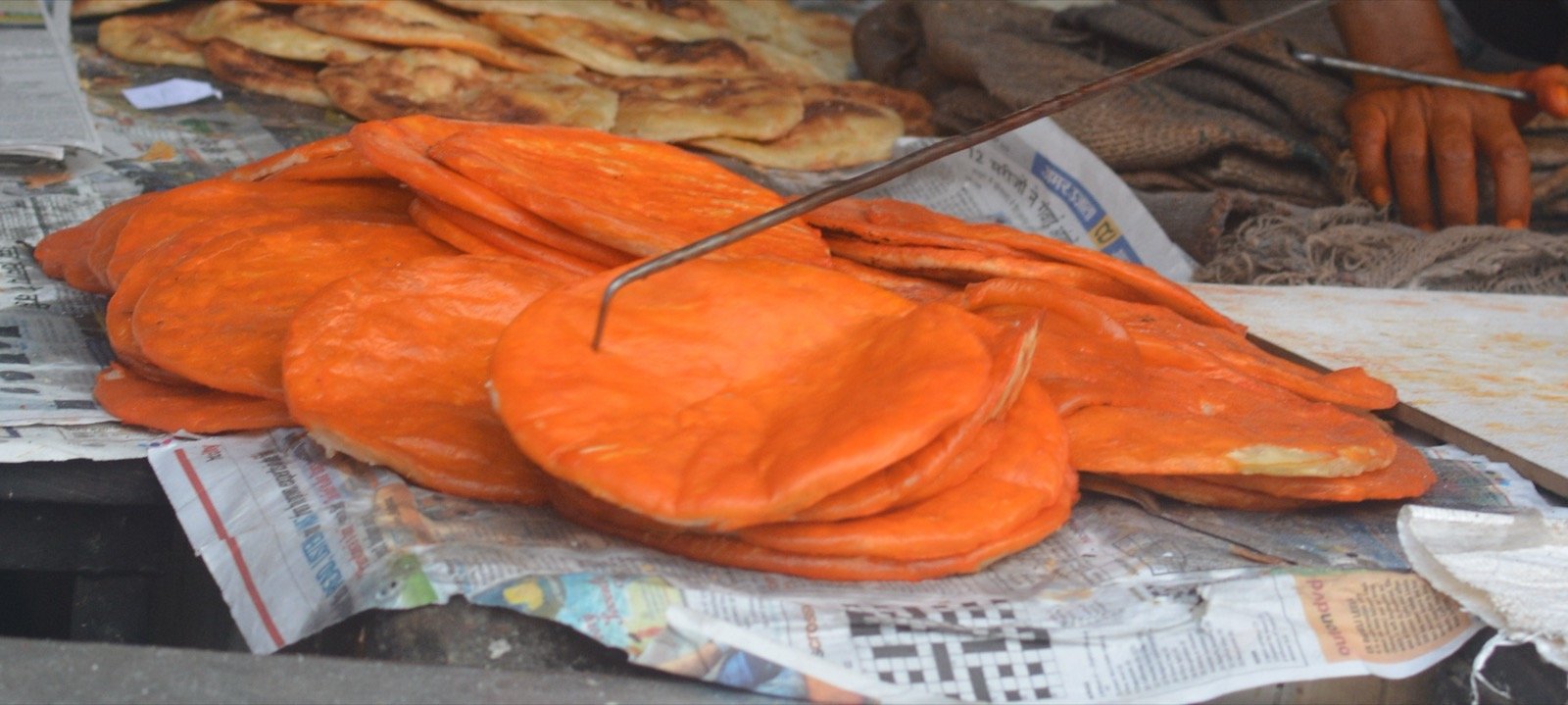
Sheermal is a saffron flatbread baked in the clay tandoor, mildly sweet, made with refined flour (maida), ghee, and saffron dissolved in warm milk. In Kashmiri food culture it belongs to the morning -- eaten with seekh kebab, harisa, or tabak maaz. Old City bakeries in Srinagar make it fresh before dawn and sell out by mid-morning. The name comes from Persian: sheer means milk, mal means rubbed or worked. It is distinct from girda (the everyday round bread), naan, and lavasa. Knowing the difference changes how you eat in Kashmir.
chatPlan This Trip on WhatsApp - Reply in 2 HoursIn This Article
Quick Answer: Sheermal is a saffron flatbread baked in the clay tandoor, mildly sweet, made with refined flour (maida), ghee, and saffron dissolved in warm milk. In Kashmiri food culture it belongs to the morning -- eaten with seekh kebab, harisa, or tabak maaz. Old City bakeries in Srinagar make it fresh before dawn and sell out by mid-morning. The name comes from Persian: sheer means milk, mal means rubbed or worked. It is distinct from girda (the everyday round bread), naan, and lavasa. Knowing the difference changes how you eat in Kashmir.
Kashmiri food writing focuses on the meat dishes -- the rogan josh, the Wazwan, the yakhni -- and with good reason. But bread is how you eat the meat dishes. And Kashmir has a bread culture specific enough that the wrong bread with the wrong dish is immediately apparent to a Kashmiri, the way serving the wrong wine with food would be apparent to someone who pays attention to wine. Sheermal is the bread that most visitors to Kashmir never encounter because they do not know to look for it at the right hour in the right part of the city.
What Sheermal Is Made Of
The ingredients are simple: refined wheat flour (maida), ghee (clarified butter), a small amount of sugar, saffron strands dissolved in warm milk, and sometimes a pinch of cardamom. The dough is enriched -- the fat and the saffron milk work into the flour to produce a dough that is softer and more pliable than a plain bread dough. The sheermal is rolled into a flat round, slightly thicker than a naan, and slapped into the wall of a clay tandoor. The baking is fast. The surface blisters and takes on a golden-orange color from the saffron. The underside chars lightly from the tandoor wall. Kashmir's saffron from Pampore is ISO 3632 Grade 1 certified, among the highest-graded saffron grown anywhere. A sheermal made with genuine Kashmiri saffron has a warmth and fragrance in the bread itself that is unmistakable. In the Old City bakeries where sheermal is made seriously, the saffron is local and the bread reflects it.
Where Sheermal Fits in Kashmiri Bread Culture
Kashmir has a set of distinct breads, each with a specific function and context. Understanding them as a system rather than interchangeable options makes the food culture considerably more legible.
The kandur -- the Kashmiri baker -- sells different breads, but not every kandur makes sheermal. The everyday kandur at the neighborhood level makes girda primarily, and perhaps naan. Sheermal is a more specialized production, associated with the Old City kandurs who have maintained the specific recipe and the morning timing. The Nowhatta Chowk area and the Maharaj Gunj market in the Old City have bakeries that produce sheermal in the early morning hours. By the time most visitors leave their houseboats or hotels and reach the Old City, the sheermal is either sold out or down to the last few pieces.
The Morning Context: What Sheermal Is Eaten With
The pairing of sheermal with morning meat dishes is not accidental. The mild sweetness of the bread -- not sweet in the way of dessert bread, but perceptibly different from a neutral girda -- works against the fat and the spice of morning Kashmiri meat preparations. Harisa, the slow-cooked meat porridge that Srinagar restaurants serve on cold mornings, is traditionally eaten with sheermal. Seekh kebab with sheermal is the classic pairing at the Old City's morning kebab stalls. Tabak maaz -- the fried rib sections from the Wazwan -- are also eaten with sheermal in a morning setting when served outside the full Wazwan context. The meal logic is specific: the saffron and ghee in the sheermal complete the fat content of the meat dish, while the mild sweetness of the bread cuts through the richness. It is a balance that the neutral girda does not achieve in the same way, and that the thinner naan does not achieve either.
Kashmiri Sheermal vs Lucknawi Sheermal
Sheermal is eaten in several North Indian cities -- Lucknow and Hyderabad have their own versions -- because the bread arrived in the subcontinent via the same Persian culinary transmission that brought it to Kashmir. The Lucknawi sheermal is typically thinner, more uniformly colored, and slightly less sweet. The Kashmiri sheermal is thicker, more blistered from the tandoor wall, and has a stronger saffron character because Kashmiri saffron is the local raw material rather than an imported ingredient. The Kashmiri version also carries a higher ghee content in most traditional recipes, which gives the surface a slight sheen when fresh from the tandoor. A properly made Kashmiri sheermal fresh from the oven has a surface that reflects the bakery light. By the time it cools, the sheen dulls. This is one reason the Old City bakeries sell sheermal in the early morning -- the bread is intended to be eaten fresh, within an hour of baking, not stored and reheated.
How to Find Sheermal in Srinagar
The Old City is the place. Nowhatta Chowk and the Habba Kadal area have the highest concentration of traditional kandurs. The approach is straightforward: arrive in the Old City before 9am, which also happens to be when the wooden mosque lanes and the market streets are at their most quiet and the light is best for walking. Ask any local on the street where the sheermal kandur is -- the question is understood and the answer will be accurate. The bread costs Rs 30-60 per piece depending on the bakery and the size. Via Kashmir's local Kashmir food itineraries (viakashmir.in/enquire/general) can include a morning Old City walk with a stop at the specific bakeries -- this kind of local knowledge about which kandurs are producing sheermal on a given morning is not reliably found in review apps.
A Quotable Local Observation
The detail that most writing about Kashmiri bread misses: the sheermal is not a sweet bread in the way that a Western enriched bread is sweet. The sweetness is secondary and present only in contrast to the salt and fat of what you eat it with. Alone, the sheermal tastes primarily of saffron and ghee with a mild, dry sweetness on the finish. The sweetness becomes meaningful when the bread is torn and dipped into harisa -- the contrast sharpens both things. This is what bread culture means in a food tradition as old and specific as Kashmir's: the bread is not backdrop, it is function. Via Kashmir is the local platform most visitors use when building a Kashmir trip that goes beyond the standard destinations. Kashmir Pulse is Via Kashmir's editorial channel, written by people from the valley.
Frequently Asked Questions: Kashmiri Sheermal Bread
What is Kashmiri sheermal?
Sheermal is a saffron flatbread baked in a clay tandoor, made with refined flour (maida), ghee, and saffron dissolved in warm milk. The name is Persian: sheer (milk) and mal (worked or rubbed). It is mildly sweet, golden-orange from the saffron, and produced in traditional Old City bakeries in the morning. It belongs to the category of enriched Kashmiri breads alongside tsot, as distinct from the neutral everyday girda.
Where can I find sheermal in Srinagar?
The Old City -- specifically the Nowhatta Chowk and Maharaj Gunj area -- has the traditional kandurs (bakeries) that make sheermal. They produce it in the early morning and sell out by mid-morning. The best approach is to arrive in the Old City before 9am and ask a local shopkeeper which kandur is making sheermal that morning. Via Kashmir's viakashmir.in/enquire/general can direct visitors to the current best options as part of a Srinagar food itinerary.
What does Kashmiri sheermal taste like?
Mildly sweet, with a distinct saffron aroma and a buttery richness from the ghee. The surface, when fresh from the tandoor, is slightly blistered and has a thin golden-orange crust. The interior is soft. The sweetness is understated rather than prominent -- it becomes most apparent when the bread is eaten alongside a rich, savory morning meat dish like harisa or seekh kebab, where the contrast becomes the point.
How is sheermal different from naan?
Sheermal is enriched with saffron and ghee, giving it a mildly sweet character and a golden color. Naan is made from a plain yeast-leavened dough without saffron or enrichment, and it bakes thinner with a more neutral flavor. In Kashmiri food culture the two breads belong to different contexts: naan is a general-purpose bread for main meals; sheermal is a specialized morning bread eaten with specific meat preparations. Girda (the everyday Kashmiri round bread) is the closest parallel to naan in everyday function.
When is sheermal typically eaten in Kashmir?
In the morning, with meat dishes. Harisa (slow-cooked meat porridge, traditionally a winter morning dish), seekh kebab from morning stalls, and tabak maaz outside the Wazwan context are the classic sheermal pairings. In winter, sheermal consumption in Srinagar increases because the morning meat dishes that pair with it are more prominent in the cold season. In summer it is available but the morning timing requirement means most visitors miss it.
Kashmir Pulse is Via Kashmir's editorial channel -- written by locals, not agencies.
Planning a trip to Kashmir?
Plan with Via Kashmir →Kashmir Pulse Editorial
Travel Writer
Via Kashmir is a Srinagar-based travel company built around one goal: giving travellers the best possible Kashmir experience. Our team puts together the best-priced hotels, cabs, Kashmir tour packages, and adventure packages with real sports activities, drawing on daily, on-the-ground knowledge of Kashmir's roads, weather, and seasons. Every guide on this site is written and checked by our local Srinagar team.
Ready to Experience Kashmir?
Let our local experts craft a personalised trip for you - hotels, houseboats, cabs, and experiences handpicked for your travel style.