
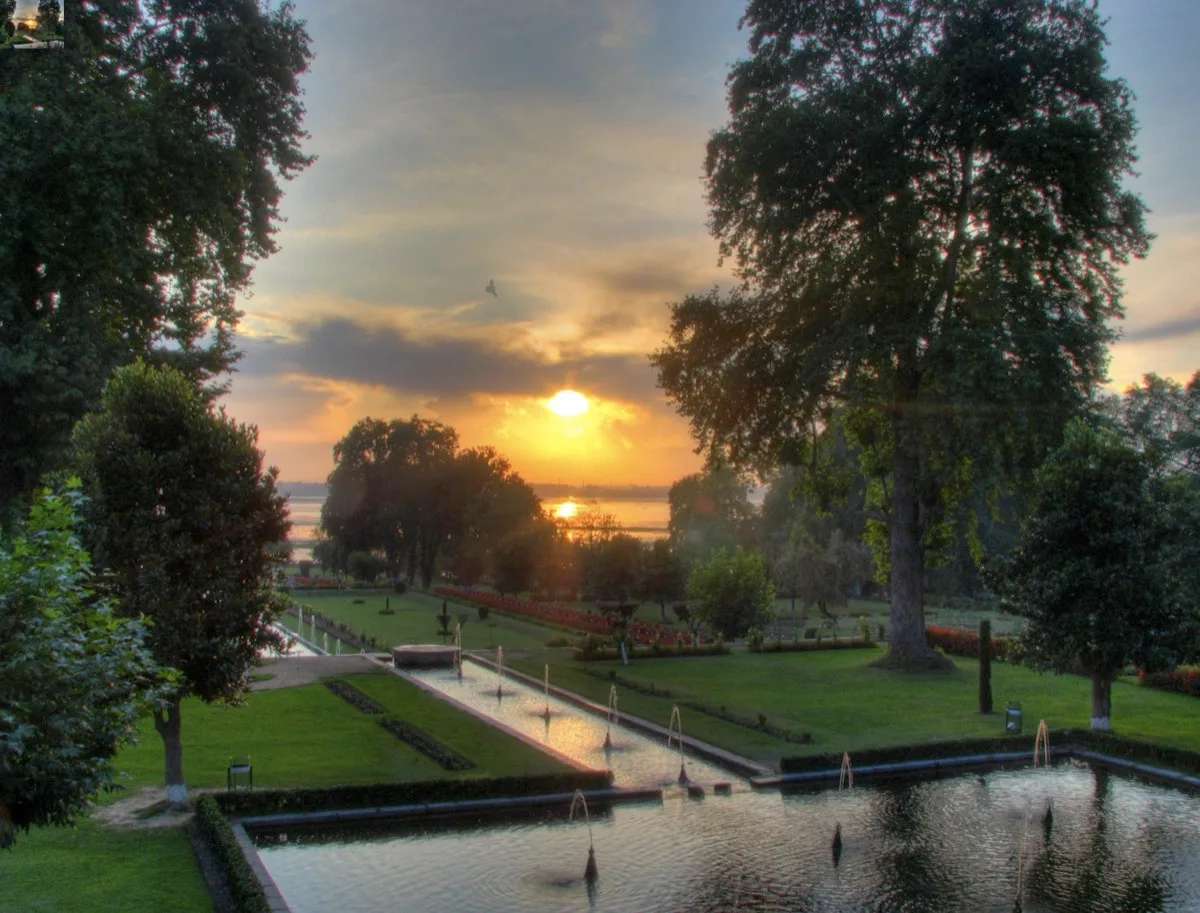
Srinagar has three principal Mughal gardens -- Shalimar Bagh, Nishat Bagh, and Chashme Shahi -- all on the eastern shore of Dal Lake within 10km of each other. In summer 2027, all three are open from 9am to 7pm. Entry is Rs 20-40 per garden for Indian nationals. The correct order is Chashme Shahi first (highest, quietest), then Nishat, then Shalimar. Arrive before 9am at Chashme Shahi and you will have the hillside terraces to yourself for the first thirty minutes. Via Kashmir's viakashmir.in/cabs arranges the lakeside garden circuit as a half-day cab.
Want a Srinagar gardens cab circuit?
Via Kashmir's local team arranges the Chashme Shahi -- Nishat -- Shalimar morning circuit as a half-day cab, timed to beat the tour groups. Enquire at viakashmir.in/cabs or viakashmir.in/enquire/general.
In This Article
- At a Glance: Srinagar Mughal Gardens Summer 2027
- The Three Gardens: What Each One Is
- How Do You Do All Three Mughal Gardens in One Morning?
- Is Nishat Bagh vs Shalimar Bagh More Worth Visiting?
- What Do the Gardens Look Like in July and August?
- What to Know Before Visiting the Mughal Gardens
- Frequently Asked Questions: Srinagar Mughal Gardens Summer 2027
Quick Answer: Srinagar has three principal Mughal gardens -- Shalimar Bagh, Nishat Bagh, and Chashme Shahi -- all on the eastern shore of Dal Lake within 10km of each other. In summer 2027, all three are open from 9am to 7pm. Entry is Rs 20-40 per garden for Indian nationals. The correct order is Chashme Shahi first (highest, quietest), then Nishat, then Shalimar. Arrive before 9am at Chashme Shahi and you will have the hillside terraces to yourself for the first thirty minutes.
There is a version of the Mughal gardens that people know from photographs -- the long water channels, the chinar trees, the terraced lawns rising toward the Zabarwan hills behind. That version is real. What photographs do not prepare you for is the particular quality of early morning in these gardens in July: the Zabarwan range still in cloud shadow behind the upper terraces, the water channels running cold and clear from the springs above, and the city of Srinagar visible across the lake below as a pale arrangement of rooftops through the chinar canopy.
The three gardens were built within fourteen years of each other in the seventeenth century, all by members of the Mughal court, all drawing water from the same Zabarwan spring system. They are not interchangeable -- each has a distinct character -- and seeing only one (Nishat Bagh, which most tour itineraries default to) gives an incomplete picture.
At a Glance: Srinagar Mughal Gardens Summer 2027
| Best time to visit | Getting there | Entry fees | ViaKashmir link |
|---|---|---|---|
| Early morning (before 9:30am) to beat tour groups; summer flowers at full bloom July-August | East bank of Dal Lake, Nagin-Srinagar road; shared auto or cab from Dal Gate | Rs 20 (Chashme Shahi), Rs 40 (Nishat), Rs 40 (Shalimar) for Indian nationals | viakashmir.in/cabs |
The Three Gardens: What Each One Is
Chashme Shahi is the smallest and highest of the three. Built in 1632 by Shah Jahan for his son Dara Shikoh, it sits at approximately 1,700m on the Zabarwan hillside above the main lakeside road. The spring that gives it its name -- chashme means spring -- still flows through the garden in a channel that runs down through three terraced levels before spilling into an ornamental tank at the garden entrance. The water is cold and clean enough that Srinagar people come here specifically to drink from the spring outlet. The garden is compact: 12 dunams, three terraces, a small Mughal pavilion at the upper level. It receives far fewer visitors than Nishat or Shalimar and is the place in this trio where you can actually sit quietly.
Nishat Bagh is the largest. Built in 1633 by Asif Khan, the brother of Empress Noor Jahan and the father of Mumtaz Mahal, it spreads across twelve terraces rising 137m from the lakeside to the upper wall. The water system is the centrepiece: a continuous channel runs the full length of the garden from the spring above down to the lake, feeding cascades at each terrace drop. In July the flower beds at Nishat are in bloom -- roses, marigolds, zinnias -- and the chinar trees that line the upper terraces are in full leaf. This is the garden that tour groups fill by 10am. Before 9:30am it is navigable.
Shalimar Bagh is the most historically significant. Built in 1619 by Emperor Jahangir for his wife Noor Jahan, it has four terraces. The innermost and highest terrace -- the Diwan-e-Khas, the private imperial terrace -- is separated from the public sections by a black marble pavilion that is still there: black polished stone, low columns, the central channel running beneath it. The terraces are wider and the garden has a more processional, formally composed quality than Nishat.
Related reading: Wangat Valley: The Pine Forest Above Kangan That Most Visitors Miss
How Do You Do All Three Mughal Gardens in One Morning?
Leave your hotel or houseboat by 8am. Traffic on the east lake road builds after 9am. Go to Chashme Shahi first -- it opens at 9am and the cab ride from Dal Gate is 15-20 minutes. Spend 30-40 minutes here, drink from the spring, walk the three terraces. Drive 3km south to Nishat Bagh -- arrive around 9:45am and spend 45-60 minutes. The full length of the garden takes 20 minutes at a walking pace; allow more if you want to sit at the upper terraces. Drive 5km south to Shalimar Bagh -- arrive around 11am and spend 45-60 minutes. The black marble pavilion on the inner terrace is the architectural centrepiece. By noon you are done. Via Kashmir's viakashmir.in/cabs arranges this lakeside circuit as a half-day cab.
Is Nishat Bagh vs Shalimar Bagh More Worth Visiting?
This is the most common question local guides get from visitors who have time for only one. Nishat has the stronger visual impact from the terraces -- the lake view from the upper levels and the twelve-terrace water cascade are the elements most people photograph. Shalimar has the stronger historical weight -- as the personal garden of the Mughal emperor, the black pavilion and formal terracing are not matched at Nishat.
If the interest is landscape and flowers: Nishat. If the interest is Mughal architecture and history: Shalimar. J&K Tourism figures show Nishat Bagh receiving approximately 60% more visitors per day than Shalimar in peak summer -- which itself suggests that Shalimar is the quieter and in some ways more considered experience.
Related reading: Srinagar's Local Bazaars: What the Markets Actually Look Like -- and What Is Worth Buying
What Do the Gardens Look Like in July and August?
July is the peak of summer in the gardens. The chinar trees are at full canopy -- the large ones at Nishat are several centuries old and the shade beneath them is dense enough that the grass stays green even in midday. The flower beds are in bloom. The Zabarwan range behind the upper terraces is green from the July rain.
One July-specific detail: the upper terraces at Nishat and Shalimar in the morning have a mist that comes off the cool spring water as it runs through warm air. This is visible for about an hour after the garden opens and is gone by 10am. It is the detail that makes the morning arrival worth the earlier start.
Book for this trip



What to Know Before Visiting the Mughal Gardens
Photography is permitted everywhere in the public sections. The private imperial terrace at Shalimar (Diwan-e-Khas) allows photography from outside the pavilion. The water channels and cascade steps are slippery with algae -- sandals with grip are more useful than flip-flops. There are chai and snack stalls at the Nishat and Shalimar gates; nothing inside the gardens. For visitors staying on a Dal Lake houseboat: a shikara from the houseboat to a landing near Nishat or Shalimar, then walking the gardens, is the best version of this morning. Via Kashmir's viakashmir.in/houseboats can arrange this as part of a Srinagar houseboat itinerary.
Frequently Asked Questions: Srinagar Mughal Gardens Summer 2027
What time do the Mughal gardens open in summer 2027?
All three gardens open at 9am and close at 7pm through the summer season (May-September). The Archaeological Survey of India, which administers these properties, maintains consistent summer hours. The first thirty minutes after opening is the quietest window.
How much does it cost to visit the Mughal gardens in Srinagar?
In 2026: Chashme Shahi Rs 20 per person for Indian nationals; Nishat Bagh and Shalimar Bagh Rs 40 per person. Foreign nationals pay Rs 600 at Shalimar and Nishat, Rs 300 at Chashme Shahi. Children under 15 are free. Cash accepted; card payment may be available at Nishat and Shalimar gates.
Can you visit all three Mughal gardens in one day?
Yes. All three are on the eastern shore of Dal Lake within 10km of each other. The sequence Chashme Shahi -- Nishat Bagh -- Shalimar Bagh covers all three in 3-4 hours including travel between them. A half-day cab booked through Via Kashmir at viakashmir.in/cabs handles the circuit efficiently.
Which Mughal garden in Srinagar is best in summer?
Nishat Bagh is the most visually dramatic -- twelve terraces, the full canal, the widest lake view from the upper levels. Shalimar Bagh has the best historical architecture -- the black marble pavilion on the inner terrace. Chashme Shahi is the quietest and has the drinking spring. For a first visitor: see all three and spend the most time at Nishat. Via Kashmir's local team at viakashmir.in/enquire/general can tailor a Srinagar day that fits your specific schedule.
Is it possible to reach the Mughal gardens by shikara from a Dal Lake houseboat?
The gardens are on the eastern shore of Dal Lake. A shikara can take you from a houseboat on the main Dal channels to a landing near Nishat Bagh or Shalimar Bagh in approximately 30-45 minutes depending on the starting point. This is a pleasant way to approach the gardens in the morning before road traffic builds. Via Kashmir's viakashmir.in/houseboats can arrange shikara transport as part of a houseboat stay itinerary.
Kashmir Pulse is Via Kashmir's editorial channel -- written by locals, not agencies.
Planning a trip to Kashmir?
Plan with Via Kashmir →Planning more than this? Get a full itemised Kashmir quote