
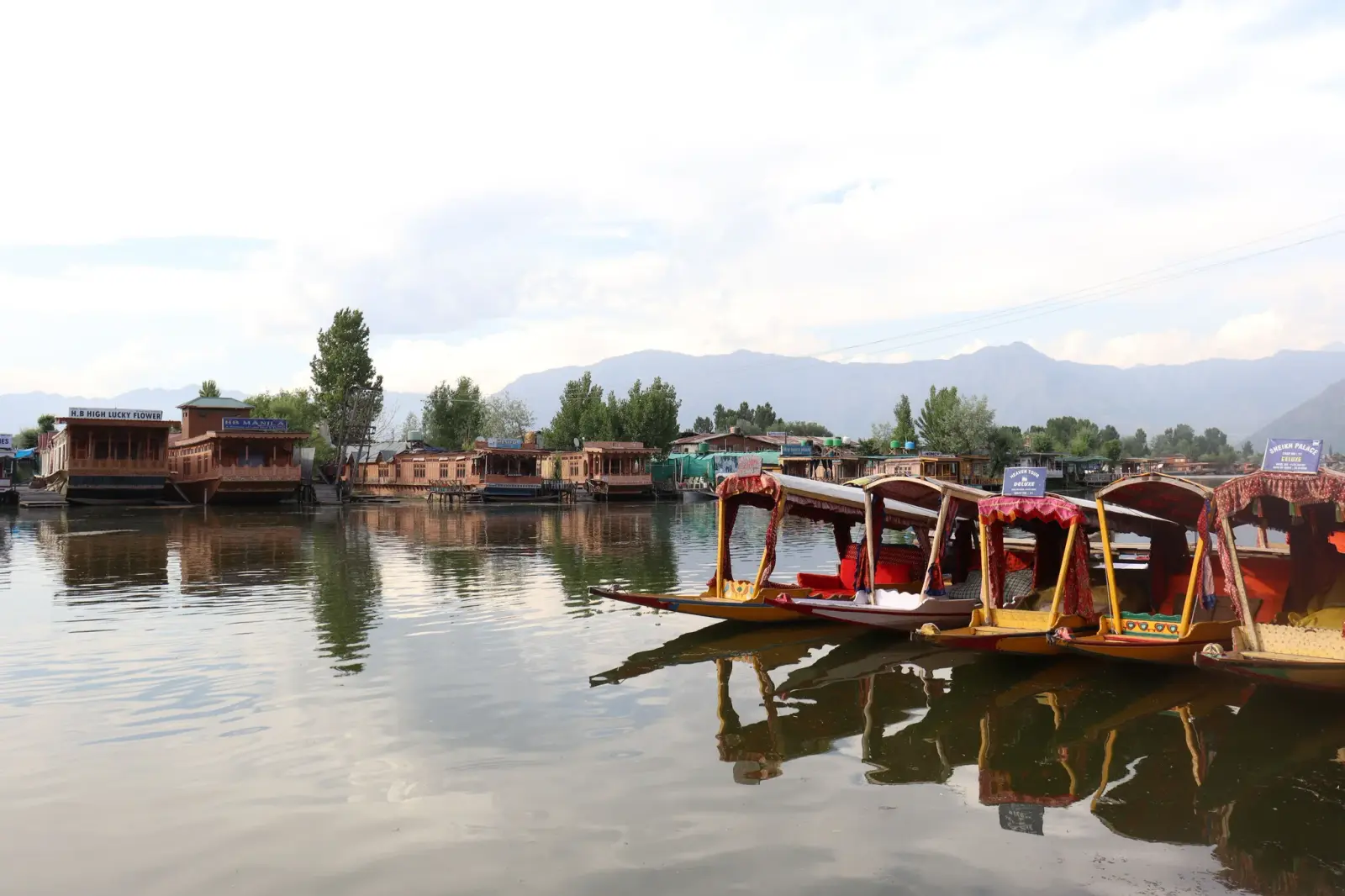
The best things to do in Srinagar, sorted by time of day and season: a dawn shikara to the floating market, the Mughal gardens, the old city's wooden shrines, Tulip Garden in spring, wazwan and harissa, with real prices and how long each one takes.
Two days in Srinagar?
Tell us your dates and what you enjoy. We plan the shikara, gardens and old city around the light and the crowds, priced line by line.
In This Article
Quick Answer: The best things to do in Srinagar are a shikara ride on Dal Lake (best at sunrise or sunset), the dawn floating vegetable market, the three Mughal gardens of Nishat, Shalimar and Chashme Shahi, a night on a houseboat, and a walk through the old city to Khanqah-e-Moula and Jamia Masjid. Add the Tulip Garden if you visit in late March or April, Hazratbal at evening prayer, and a wazwan meal. Two full days covers the essentials without rushing.
Srinagar is the city most Kashmir trips start and end in, and too many travellers treat it as a place to sleep between Gulmarg and Pahalgam. That is a mistake. It is a lake city with 400 years of gardens, a working old town of wooden shrines and bridges over the Jhelum, and the best food in the valley. This list is what our Srinagar team tells friends to do, in the order that works on the ground, with the prices we see today.
For the town itself, where to stay and how to get around, see our Srinagar travel guide. For opening hours and entry fees of the main sights in one table, see top places to visit in Srinagar.
Srinagar at a glance
| What | Detail |
|---|---|
| Altitude | About 1,585 m |
| Time needed | 2 days for the essentials, 3 with a houseboat night and the old city |
| Best months | April to June and September to November; December to February for snow on the gardens |
| Getting around | Private cab for the gardens and old city; shikara on the lakes; walk the Boulevard |
| Full-day city cab | From ₹2,400 by sedan on our cab fare guide, plus 5% GST |
On the water: Dal and Nigeen lakes
1. Take a shikara ride at sunrise or sunset
The shikara, a canopied wooden boat paddled from the stern, is the reason people come to Srinagar. An hour takes you past the floating gardens, Nehru Park and the houseboat lines; two hours reaches Char Chinar, the island with four chinar trees. Light is softest from 6 to 8 am and in the hour before sunset. Our shikara rides are ₹800 an hour per boat for up to four to six people, fixed, with no bargaining at the ghat.
2. Go to the floating vegetable market at dawn
Farmers from the lake's floating gardens trade vegetables boat to boat in the early morning, roughly 5 to 7 am in summer, a little later in spring and autumn. It is over by the time most people have breakfast. Book the shikara the evening before and ask for the market route; boatmen know where it is gathering that week.
3. Spend a night on a houseboat
Dal Lake's carved cedar houseboats are a Kashmiri invention from the late 19th century, when outsiders could not own land and built homes on the water instead. One night is enough for most people: arrive by shikara, eat on the deck, wake to mist on the lake. Houseboats are graded Deluxe, A, B and C; our houseboat categories guide explains what each includes, and our verified houseboats show the real price and photos before you pay.
4. Choose Nigeen Lake if you want quiet
Nigeen, connected to Dal by a channel, has fewer boats, fewer vendors and the same mountain view. It suits honeymooners and families who want to sleep. See Nigeen Lake houseboats.
5. Walk or cycle the Boulevard
The lakeside road from Dal Gate towards Nishat is flat, has benches, and is the easiest first evening after a flight. Early morning it is joggers and cyclists; evening it is families, kahwa stalls and roasted corn.
Related reading: Things to Do in Gulmarg (2026-27): Gondola, Meadows, Snow and Skiing
The Mughal gardens and the hills
6. Nishat Bagh, the garden of joy
Laid out in 1633 by Asif Khan, Nishat is the largest of the lakeside gardens: twelve terraces rising from Dal Lake to the Zabarwan hills, with a water channel running down the middle. Go before 10 am or after 4 pm. Entry is a small fee collected at the gate; amounts change, so carry cash.
7. Shalimar Bagh, Jahangir's garden
Built by Emperor Jahangir in 1619, Shalimar is longer and more formal than Nishat, with black marble pavilions and chinars that turn red and gold in late October. It is mostly level and good for older travellers.
8. Chashme Shahi and Pari Mahal
Chashme Shahi is the smallest of the three, built around a spring whose water people still fill bottles with. A short drive above it, Pari Mahal is a ruined terraced garden built for Dara Shikoh in the 17th century, with the best view over Dal Lake and the city at sunset. Our Mughal gardens guide covers the order to see them and how long each takes.
9. The Tulip Garden, late March to April
Asia's largest tulip garden sits below the Zabarwan hills and blooms for only three to four weeks each spring. In 2026 it opened on 16 March, earlier than planned because of a warm spell. Go on a weekday morning. Dates, tickets and timings are on our Tulip Garden page.
10. Badamwari in almond blossom
In late February and March the almond orchard below Hari Parbat flowers white and pale pink, a few weeks before the tulips. It is a quiet spring alternative and right next to the old city.
11. Shankaracharya Temple
A stone Shiva temple on a hill above the Boulevard, reached by car and then a climb of about 240 steps. The view takes in Dal Lake, the city and the Jhelum. Security is strict at the gate; travel light and expect bags and phones to be checked.
12. Jawaharlal Nehru Botanical Garden
Large lawns, a lake with pedal boats and shade under old trees. It is the easiest stop with children after the formal gardens.
Book for this trip



The old city and its shrines
13. Khanqah-e-Moula on the Jhelum
A wooden shrine first built in the 14th century to honour the Sufi scholar Mir Syed Ali Hamadani, with a carved and painted papier-mache interior that is one of the finest in Kashmir. Dress modestly. Women may be asked to view the main hall from the entrance or the ladies' section.
14. Jamia Masjid, Nowhatta
Srinagar's great Friday mosque, first built in 1402, with a courtyard garden and hundreds of deodar wood pillars, each cut from a single tree. Avoid Friday midday prayers if you want to walk around; go mid-morning on another day.
15. Hazratbal at evening prayer
The white marble shrine on the north shore of Dal Lake holds a relic revered across Kashmir. The lakeside promenade at dusk, with pigeons and families, is one of the most peaceful scenes in the city. Women cover their heads; shoes off inside.
16. Walk the old city lanes
Between Zaina Kadal and Nowhatta you will find copper workshops, kandur bakeries, wooden houses with lattice windows and the old bridges over the Jhelum. Our old city walking guide has a route that takes about three hours.
17. Hari Parbat at sunset
The hill fort above the old city carries shrines of several faiths on its slopes and is lit up at night. The views across the rooftops at sunset are worth the drive up.
Food, shopping and seasons
18. Eat a wazwan
Wazwan is the multi-course Kashmiri feast cooked by hereditary chefs called waza: rista, rogan josh, tabak maaz, and gushtaba to close. Restaurants serve smaller versions, usually shared from one copper plate called a trami. Ask your hotel for a trusted place rather than the first sign you see.
19. Harissa for winter breakfast
From about October to March, old city shops slow-cook harissa, minced mutton and rice, overnight and sell it from dawn with hot bread. It is usually gone by mid-morning.
20. Buy crafts from the source
Pashmina, Sozni embroidery, papier-mache, walnut wood carving and carpets are all made in and around Srinagar. Ask for a GI tag on pashmina and carpets and get a bill. Avoid shops you are taken to on commission; fixed-price government emporiums and artisan workshops are the safer places to buy.
21. Birds at Hokersar in winter
Hokersar wetland, about 14 km from the city, fills with migratory ducks and geese from about October to March. Go early with binoculars.
22. Dachigam National Park
The forested park above Harwan is home to the hangul, the Kashmir stag. Entry needs a permit from the Wildlife Department in Srinagar, so ask about it a day or two before you go.
A 2-day Srinagar plan
| When | Plan |
|---|---|
| Day 1 morning | Floating market by shikara at dawn, breakfast, then Nishat and Shalimar before the crowds |
| Day 1 afternoon | Chashme Shahi, Pari Mahal for sunset over Dal Lake |
| Day 1 evening | Boulevard walk, dinner, night on a houseboat |
| Day 2 morning | Old city: Khanqah-e-Moula, Jamia Masjid, the lanes, a kandur bakery |
| Day 2 afternoon | Hazratbal, then crafts shopping or the Botanical Garden |
| Day 2 evening | Sunset shikara or wazwan dinner |
Want this planned for you? Our Srinagar 2N3D Short Break (from ₹9,019 per person) adds a houseboat night and a Gulmarg day trip, and the Houseboat and Dal Lake Special (from ₹16,299 per person) gives the lakes more time. If you want Srinagar as your base for day trips, see the Srinagar 3N4D Value Break (from ₹11,556 per person).
Tell us your dates and we will plan your Srinagar days around the light, the crowds and the season.
Plan my Srinagar trip →Frequently asked questions
What is Srinagar famous for?
Dal Lake with its shikaras and houseboats, the 17th-century Mughal gardens, the wooden shrines of the old city, and Kashmiri food and crafts such as wazwan, pashmina and papier-mache.
How many days are enough for Srinagar?
Two full days covers the lake, the gardens and the old city. Add a third if you want a houseboat night and a slower pace, or use Srinagar as a base for day trips to Gulmarg and Sonamarg.
What is the best time to do a shikara ride?
Sunrise, roughly 6 to 8 am, for mist and the floating market, or the hour before sunset for golden light. Midday is hot in summer and the light is flat.
How much does a shikara ride cost in Srinagar?
Our shikara rides are ₹800 an hour per boat, not per person, for up to four to six people, and ₹950 an hour for the sunset ride on Nigeen Lake.
Is Srinagar safe for tourists?
Srinagar receives large numbers of tourists every season and the main sights are busy and well policed. Follow local advice, carry ID, and check with your hotel or our team if there is a strike or event on the day.
What can you do in Srinagar in winter?
See the gardens and Dal Lake under snow, eat harissa for breakfast, watch migratory birds at Hokersar, and use Srinagar as a warm base for day trips to Gulmarg. Shikaras run all winter on the open channels.
Which Mughal garden is best if I only have time for one?
Nishat Bagh, for its size and the view down the terraces to Dal Lake. Shalimar is better if you want level paths and autumn chinar colour.
Do I need a guide in Srinagar?
Not for the lake or gardens. A local guide is worth it for the old city, where the shrines, lanes and history are easy to miss on your own.
Planning more than this? Get a full itemised Kashmir quote