
A plain guide to visiting a Kashmiri home as a guest: shoes, greetings, noon chai and kahwa, sitting on the floor, the dastarkhwan and hand-washing ritual, eating from a shared trami, gifts and photographs.
Want to experience Kashmiri hospitality?
Tell us your Srinagar dates. We plan your days around the old city, its food and its people.
In This Article
- At the door: shoes and greetings
- Sitting on the floor
- Tea first: noon chai and kahwa
- At a meal: the dastarkhwan and hand-washing
- What gift should I bring?
- Dress and behaviour
- Visiting a Kashmiri Pandit home
- Being invited to a wedding or a wazwan
- A few words that help
- Visiting shrines and mosques
- Photos and phones
- Visiting with children
- Frequently asked questions
Quick Answer: In a Kashmiri home, take your shoes off at the door, greet elders first, and accept the tea you are offered, usually noon chai or kahwa. Meals are served on a cloth (dastarkhwan) spread on the floor; wash your hands when the basin comes round and eat with your right hand. Bring sweets, dry fruit or a box from a local bakery.
Kashmiris are famous for hospitality, and many visitors find themselves invited home by a driver, a houseboat owner or a shopkeeper they have known for an afternoon. The welcome is genuine. A few customs differ from other parts of India, and knowing them makes the visit easier for everyone. Customs vary between families, between Muslim and Kashmiri Pandit homes, and between the city and the villages, so watch your hosts and follow their lead.
At the door: shoes and greetings
- ✓Take your shoes off before stepping onto the carpet. Most homes have a shoe rack or a spot by the door; slippers may be offered.
- ✓Greet the eldest person in the room first. In Muslim homes, Assalamu alaikum is the usual greeting; in Kashmiri Pandit homes, Namaskar. A simple hello with a smile is always fine.
- ✓Men usually shake hands with men. Wait for a woman to offer her hand before offering yours; a nod and a greeting is perfectly polite.
- ✓You will be shown to a seat. Older homes have floor seating on carpets with cushions (often a namda or gabba rug) along the walls.
Sitting on the floor
Sit cross-legged or with your legs tucked to one side. Try not to point the soles of your feet at people or at food, and do not step over the cloth when food is laid out. If sitting on the floor is hard for you, say so; families will happily bring a chair or a stool.
Tea first: noon chai and kahwa
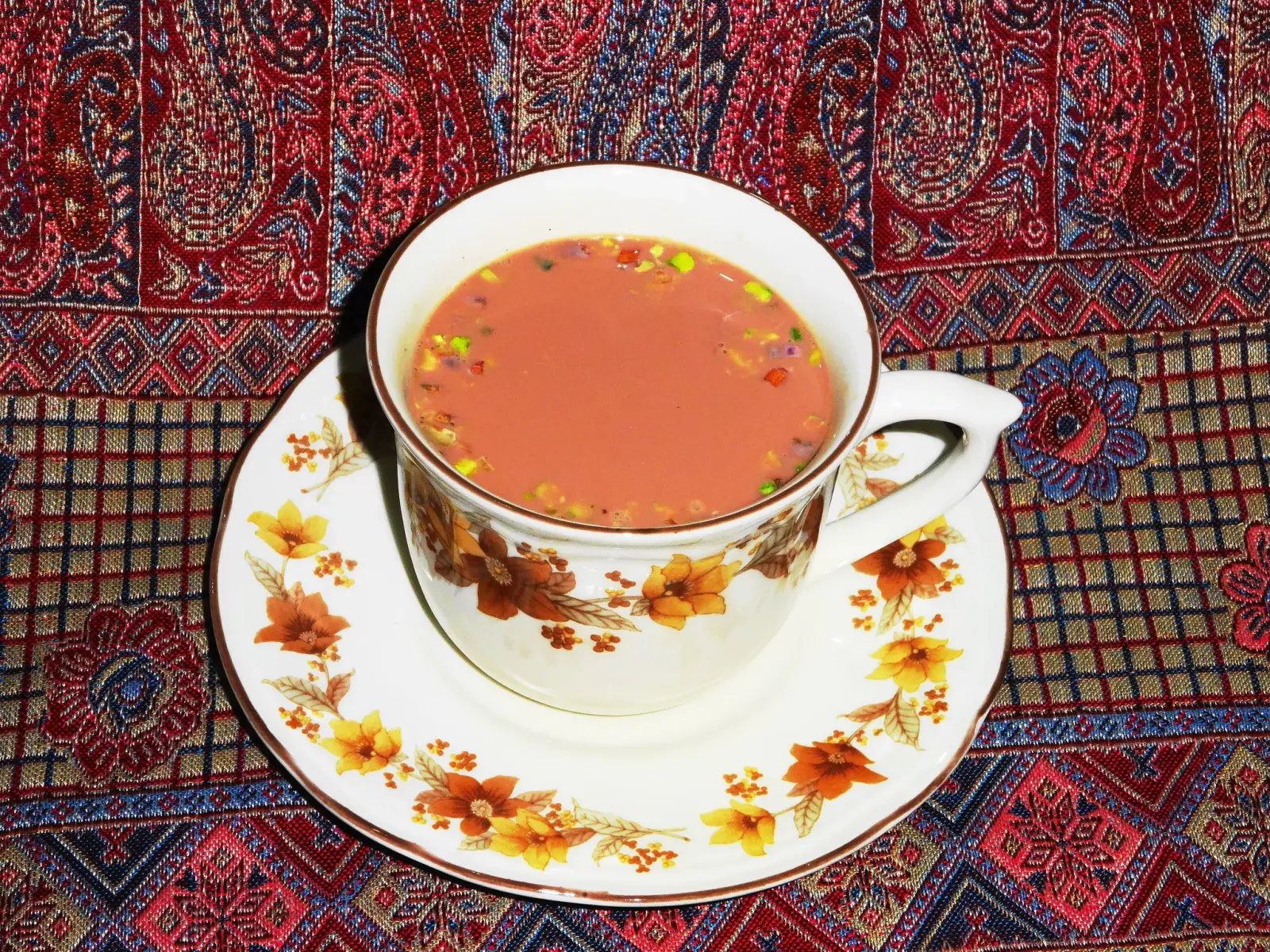
Almost every visit begins with tea. Noon chai is the pink, salted tea Kashmiris drink morning and afternoon, often with bread from the local kandur (baker): girda, lavasa, or the sweet czochwor. Kahwa is the sweet green tea with saffron, cardamom and almonds, often served to guests, sometimes from a copper samovar.
Accept at least one cup. If you do not drink tea, take a sip and thank your host, or ask for water. Your cup will be refilled while there is tea in it; leave a little at the bottom, or cover the cup with your hand, when you have had enough.
At a meal: the dastarkhwan and hand-washing
- A long cloth, the dastarkhwan, is spread on the floor and guests sit around it.
- Before eating, a basin and jug (the tash-t-nari) is brought round. Hold your hands over the basin while water is poured, and dry them on the towel offered. Guests and elders are served first.
- Food is eaten with the right hand. Spoons are often available for guests; ask if you would prefer one.
- At a wazwan, guests share a large copper plate, the trami, usually between four people. Eat from the part of the plate in front of you and let your host serve the meat onto your section.
- Hosts will keep offering more. Saying no once is often treated as politeness. A clear, smiling "bas, shukriya" (enough, thank you) with a hand over your plate is understood.
- Wait for the elders to finish, or for the host to signal, before getting up.
Read our guide to the wazwan trami and how the meal is served before a wedding or feast.
What gift should I bring?
- ✓A box of sweets or bakery items from a well-known Srinagar bakery is the most common and welcome gift.
- ✓Dry fruit (almonds, walnuts) or a box of good tea also works well.
- ✓If there are children, something small for them is appreciated.
- ✓Do not bring alcohol to a Muslim home. In any home, ask first rather than assume.
Dress and behaviour
Dress modestly: covered shoulders and knees for everyone, and loose clothing is more comfortable on the floor. Women are not expected to cover their heads inside a home, though some guests choose to when elders are present. During Ramadan, avoid eating or drinking in front of fasting hosts during the day, and expect to be invited for iftar in the evening instead.
Visiting a Kashmiri Pandit home
Kashmiri Pandit families share much of the valley's food and tea culture, with their own customs. Shoes come off at the door here too, and you may be offered kahwa or noon chai with sweets. Pandit cooking uses no onion or garlic in many dishes, relying on asafoetida, fennel and dry ginger; meat dishes such as rogan josh are cooked in that style too. If there is a small prayer room or shrine at home, do not enter it unless invited. Read about the food in our Kashmiri Pandit cooking guide.
Being invited to a wedding or a wazwan
- ✓Weddings are large, and guests may be fed in shifts. Arrive when the family suggests; you will be shown where to sit.
- ✓Gifts at weddings are usually cash in an envelope, handed to a family elder, rather than a wrapped present.
- ✓The wazwan can run to more than a dozen courses. Pace yourself: gushtaba, the last meat course, means the meal is ending.
- ✓Do not leave the dastarkhwan before the meal is cleared unless you must; if you need to, excuse yourself to the person beside you.
A few words that help
| Say | Meaning | When |
|---|---|---|
| Assalamu alaikum | Peace be upon you | Greeting in a Muslim home |
| Namaskar | Greetings | Greeting in a Kashmiri Pandit home |
| Shukriya | Thank you | Any time |
| Bas | Enough | When you have had enough food or tea |
| Khuda hafiz | Goodbye | Leaving a Muslim home |
Book for this trip


Visiting shrines and mosques
If your host takes you to a shrine such as Hazratbal or the old city mosques, dress modestly, remove shoes, and women should cover their heads. Some inner areas are for men only; follow the signs and your host. Avoid Friday midday prayers if you are visiting as a tourist.
Photos and phones
Always ask before photographing people, especially women and elders. Many families are glad to take a group photo, but do not post pictures of the family or the inside of the home online without asking. Keep your phone away during the meal.
Visiting with children
Children will be welcomed, fed and fussed over. Bring something to keep small children busy on the carpet, keep them off the dastarkhwan while food is out, and let them try the bread and tea, which most children enjoy.
Our Srinagar team plans old city days around food, crafts and the families who keep them going.
Plan your Srinagar days →Frequently asked questions
Do you remove shoes in a Kashmiri home?
Yes. Shoes come off at the door before you step onto the carpet. Socks are fine; slippers may be offered.
What is noon chai?
Noon chai is the pink, salted tea Kashmiris drink every day, made with green tea leaves, milk, salt and a pinch of baking soda that gives it its colour. It is usually served with bread from the local baker.
What should I bring when visiting a Kashmiri family?
Sweets or a box from a Srinagar bakery, dry fruit or good tea. Do not bring alcohol to a Muslim home.
Is it rude to refuse food in Kashmir?
Not if you do it warmly. Hosts will offer more several times. Say "bas, shukriya" with a smile and a hand over your plate.
Do Kashmiris eat with their hands?
Yes, traditionally with the right hand, especially at a wazwan. Guests can ask for a spoon at any time.
What is a dastarkhwan?
A long cloth spread on the floor for meals. Guests sit around it, wash their hands with the basin and jug brought round, and food is placed on the cloth.
What gift is given at a Kashmiri wedding?
Usually cash in an envelope, handed to a family elder. Ask your host if you are unsure.
Do Kashmiri Pandits eat meat?
Many do, cooked in their own style, often without onion and garlic. Ask your host; vegetarian dishes are always available.
Can I take photos inside a Kashmiri home?
Ask first, every time, and especially before photographing women and elders. Do not post photos of the family online without permission.
Planning more than this? Get a full itemised Kashmir quote