
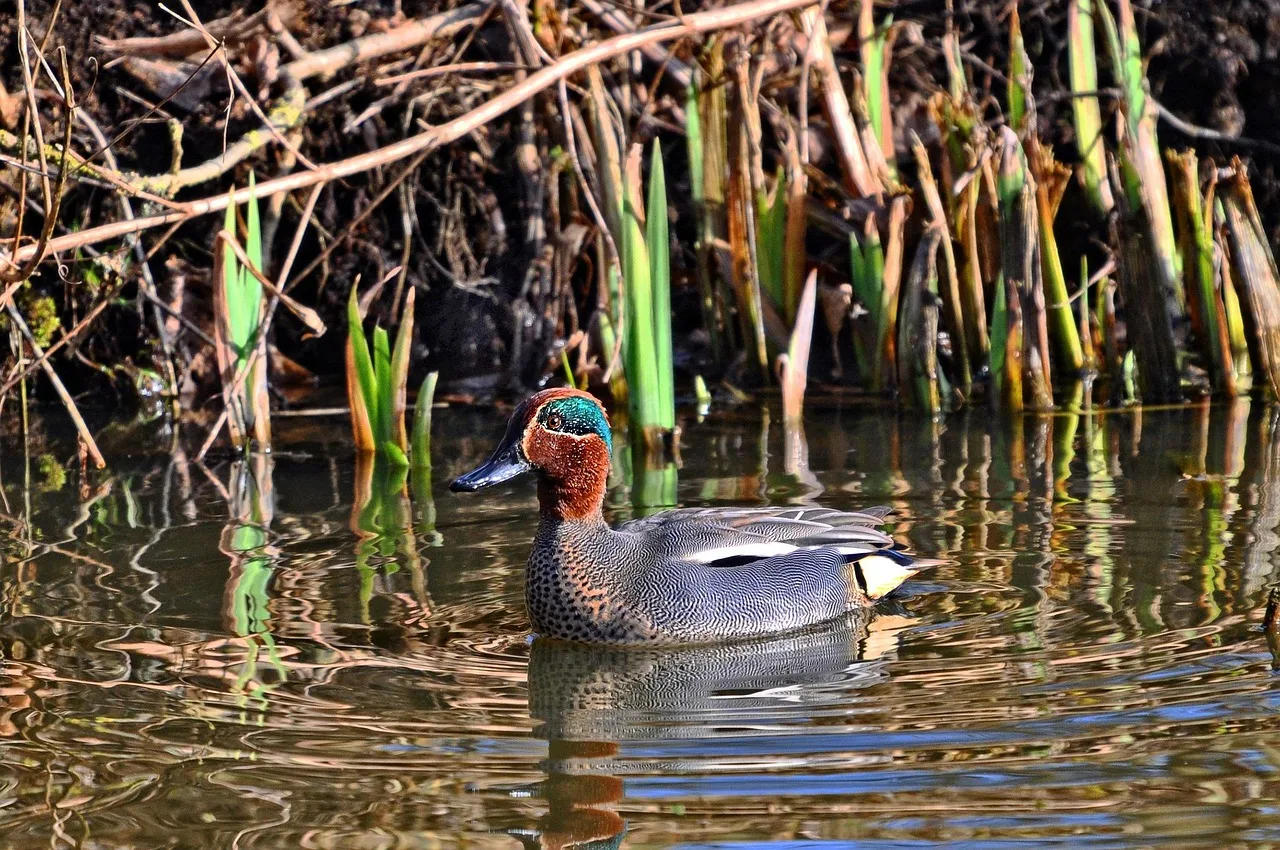
The Eurasian teal in Kashmir topped the 2025 waterbird census with 292,039 birds. Where to see this tiny duck near Srinagar, how to identify it, and how to plan a winter wetland morning.
Want a wetland morning in your trip?
Tell us your dates. Our Srinagar team plans early starts, warm stays and drivers who know the marsh roads.
In This Article
- How many Eurasian teal winter in Kashmir?
- How do you identify a Eurasian teal?
- Eurasian teal vs northern pintail vs mallard: what is the difference?
- Where can you see Eurasian teal near Srinagar?
- How do you plan a teal-watching morning in Kashmir?
- Is the Eurasian teal in Kashmir a sign of healthy wetlands?
- Where should you stay for a winter birding trip?
- FAQs
The Eurasian teal in Kashmir is the valley's most numerous winter duck. The 2025 Asian Waterbird Census counted 292,039, about 22 percent of all waterbirds, with 136,088 at Hokersar alone. It is present from about October to March. Look along shallow, reedy marsh edges near Srinagar in the first two hours after sunrise.
Last updated: 27 November 2026. By Kashmir Pulse Editorial. Kashmir Pulse is Via Kashmir's editorial channel, written by locals.
A teal is easy to miss. It is one of the smallest dabbling ducks in the world, and in the reeds at Hokersar a resting drake looks like a small grey stone until the light catches the green band across its face. Then a flock lifts, hundreds of them, turning together so fast the sound arrives before you see the shape. For anyone visiting Srinagar in winter, this is the bird you are most likely to see.
How many Eurasian teal winter in Kashmir?
More than any other waterbird. The 2025 Asian Waterbird Census counted 1,343,506 birds across 26 wetlands, and the Eurasian teal led with 292,039, or 22.17 percent of the total. Mallard (226,023) and northern shoveler (209,715) followed. In 2022, the teal count stood even higher at 336,053, so numbers move from year to year with weather and water levels.
At Hokersar, the census recorded 136,088 teal, 33.79 percent of the wetland's birds. One in three ducks you see there in winter is likely to be a teal.
At a Glance
Species: Eurasian teal (Anas crecca), IUCN Least Concern
Season in Kashmir: October to March, peak November to February
2025 valley count: 292,039, the highest of any species
Best place near Srinagar: Hokersar wetland
Plan it: ViaKashmir.in trip enquiry
The line to remember: The smallest common duck in Kashmir is also the most numerous; in 2025 one in every five waterbirds counted in the valley was a Eurasian teal.
How do you identify a Eurasian teal?
- ✓Size: tiny, 34 to 43 cm long and around 360 g, much smaller than a mallard.
- ✓Drake: chestnut head with a broad dark green patch from the eye to the back of the neck.
- ✓Side stripe: a thin horizontal white line along the side of the drake's grey body.
- ✓Tail end: a creamy yellow triangle under the tail, edged in black.
- ✓Female: mottled brown, best told by her small size and a green flash in the wing when she flies.
Related reading: Kashmir Grey Langur: Where to See Dachigam's Winter Monkey
Eurasian teal vs northern pintail vs mallard: what is the difference?
| Eurasian teal | Northern pintail | Mallard | |
|---|---|---|---|
| 2025 Kashmir count | 292,039 | 166,971 | 226,023 |
| Length | 34 to 43 cm | 59 to 76 cm (drake) | Larger, heavy body |
| Drake's head | Chestnut with green eye patch | Chocolate brown, white neck stripe | Glossy green |
| Behaviour | Fast, tight flocks; marsh edges | Open water, often in pairs | Everywhere, including town channels |
Our northern pintail in Kashmir guide covers the long-tailed duck in the table.
Where can you see Eurasian teal near Srinagar?
Hokersar, a Ramsar wetland of about 1,375 hectares on the edge of Srinagar, is the best and easiest place, and it hosted almost 30 percent of the valley's birds in 2025. Shallabugh, which held 29.44 percent, is the next choice. Wular Lake and the Pampore backwaters also hold flocks. Teal like shallow water with reeds, so scan the edges rather than the middle.
Related reading: Frostbite and Hypothermia in Kashmir: Signs and What to Do
Book for this trip
How do you plan a teal-watching morning in Kashmir?
- Pick Hokersar for an easy visit, or Shallabugh if you want fewer people.
- Book a cab for about 6:30 am; winter fog can slow the drive.
- Dress for the cold: thermals, a warm jacket, gloves and a cap.
- Carry binoculars, a flask of tea and a bird ID app.
- Stay on the bund or watch point and scan the reed edges slowly.
- Leave by 9 am, when flocks rest and the light hardens.
Never clap or shout to put a flock up for a photo. A teal flushed again and again loses energy it needs to survive the cold.
Is the Eurasian teal in Kashmir a sign of healthy wetlands?
Partly. The valley's total waterbird count rose about 65 percent between 2020 and 2025, according to census figures reported by Kashmir Life, and the Department of Wildlife Protection's wetland management is credited for part of that. But teal numbers were higher in 2022 than in 2025, and wetlands such as Hokersar still face silt, encroachment and poaching. Counting the birds every winter is how anyone knows.
Where should you stay for a winter birding trip?
Stay in a heated Srinagar hotel close to the north side of the city, or a Dal Lake houseboat with a good heater, and book an early Srinagar cab. Our Kashmir winter packages can hold a free morning for the wetlands. Via Kashmir, a Srinagar team that plans winter trips every year, is the easiest place to fit a birding morning into a snow holiday. For more species, see our winter birdwatching guide.
FAQs
What is the most common duck in Kashmir in winter?
The Eurasian teal. The 2025 Asian Waterbird Census counted 292,039 in the valley, more than any other waterbird, followed by mallard and northern shoveler.
When do Eurasian teal arrive in Kashmir?
They arrive from about October and stay until March, with the largest flocks from November to February. They breed across northern Europe and Asia.
Where is the best place to see teal near Srinagar?
Hokersar wetland, where the 2025 census counted 136,088 teal. Shallabugh and Wular are good alternatives.
How do I tell a teal from other ducks?
It is much smaller than other common ducks. The drake has a chestnut head with a green eye patch and a thin white line along its side.
Is Hokersar a protected wetland?
Yes. Hokersar has been a Ramsar site since 2005 and is managed by the J&K Department of Wildlife Protection. Boat access into the wetland needs coordination with the department.
Planning a trip to Kashmir? Via Kashmir offers custom itineraries, verified hotels, and local cab services, planned by people who live here.
Planning more than this? Get a full itemised Kashmir quote