
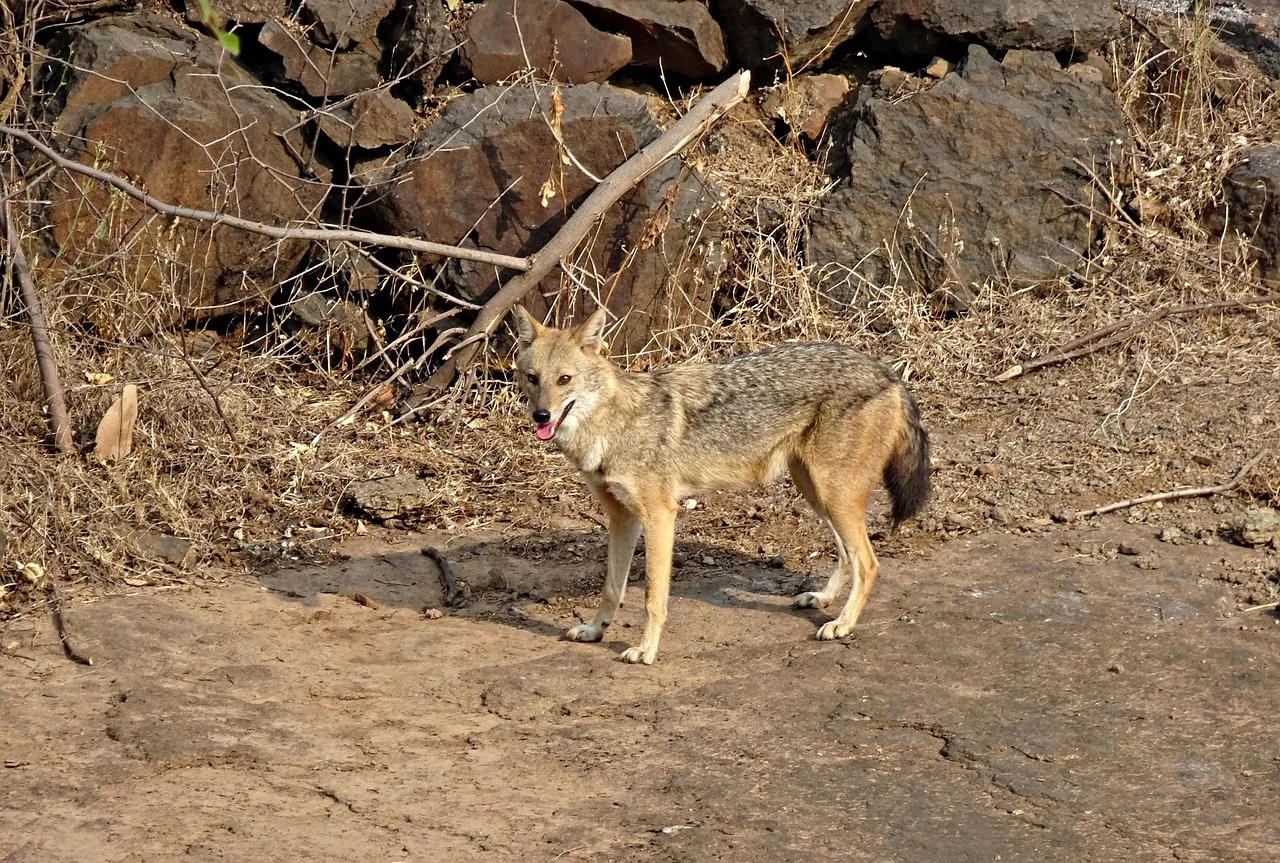
The golden jackal's howl was once a normal winter night sound in Kashmir. What science says about where it lives now, what it eats, how far it has spread, and what to do if you meet one.
Curious about Kashmir's wild side?
Tell us what you would like to see. We plan nature days around daylight, safe roads and local knowledge.
In This Article
The golden jackal in Kashmir lives on the lower farmland, forest edges and sanctuaries of the valley, such as Hirpora in Shopian. It was once common and its night howl was familiar to every village; researchers now say it has become scarce. It is shy, mostly nocturnal, eats rodents and carcasses, and avoids people.
Last updated: 26 November 2026. By Kashmir Pulse Editorial. Kashmir Pulse is Via Kashmir's editorial channel, written by locals.
Ask anyone over sixty in a Kashmiri village about winter nights and many will mention the howling. A thin chorus from the edge of the fields after the lamps were put out, answered by every dog in the mohalla. That was the golden jackal. Younger Kashmiris hear it far less, and the reason says a lot about how the valley has changed.
Does the golden jackal still live in Kashmir?
Yes, but in smaller numbers than before. The golden jackal (Canis aureus) is listed as Least Concern by the IUCN and is spread from southeast Europe to South Asia. Mongabay India reported in November 2024 that golden jackals were once commonly found across Kashmir and known for their nighttime howls, and that they seemed to have largely vanished, which prompted a University of Kashmir study. Its co-author, zoologist Bilal A. Bhat, put it plainly: wildlife in Kashmir is experiencing significant habitat loss.
At a Glance
Where: lower forest edges, farmland and sanctuaries such as Hirpora (Shopian) and Dachigam
When active: mostly at night, dusk and early morning
Risk for tourists: very low; keep distance and never feed
Plan with locals: ViaKashmir.in trip enquiry
What does the golden jackal in Kashmir eat?
The best answer comes from a two-year study in Hirpora Wildlife Sanctuary in Shopian district, led by Zakir Hussain Najar with Bilal A. Bhat, which analysed jackal scat. Rodents were the main food in every season. In summer, carcasses of domestic sheep made up approximately 33.4% of the biomass eaten, because herders moving along the road through the sanctuary dispose of dead animals in the forest. The researchers found no wild ungulates in the diet at all, and they found polythene and scraps of clothing, a sign of scavenging around people.
The study also found that the jackal turns into a generalist in winter, when food is scarce, eating whatever it can find. That is the season its howl carries furthest across the snow.
The line to remember: in Kashmir, the golden jackal survives less as a hunter and more as a cleaner of the valley's edges, living on rodents and on what shepherds and villages leave behind.
Related reading: Wagoo Mat: The Kashmiri Reed Floor That Kept Homes Warm
Where does the golden jackal live, and how far has it spread?
In the valley, jackals keep to lower ground: farmland, orchards, scrub and the lower forests of sanctuaries like Hirpora and Dachigam. A second study at Hirpora found that jackals and red foxes eat many of the same things but share the land by height, with foxes higher up and jackals lower down. Read our red fox in Kashmir guide for the fox side of that story.
At the same time, the species is moving into places it was never recorded before. A 2020 study led by Niazul H. Khan confirmed the first golden jackal in Ladakh's Trans-Himalaya, at Drass, at 3,120 m: one animal seen several times near a garbage dump, feeding on human leftovers. Genetic tests on scat from Changthang Wildlife Sanctuary, at 4,724 to 5,365 m, confirmed jackals there too. Wildlife scientists link this spread to open garbage dumps as much as to warming.
Golden jackal vs stray dog: how to tell them apart
| Golden jackal | Stray dog | |
|---|---|---|
| Build | Lean, long-legged, narrow pointed muzzle | Varies widely, usually heavier |
| Coat | Greyish gold with a darker saddle on the back | Any colour, often patchy |
| Tail | Bushy, held low, dark at the tip | Often curled or held up |
| Behaviour | Shy, slips away at once, active at night | Approaches people, barks, roams in daylight |
| Sound | Long rising howl in a group | Barking |
Related reading: Types of Kashmiri Shawls: Pashmina, Kani, Sozni and More
Book for this trip
Is a golden jackal dangerous to tourists?
A healthy jackal avoids people. Problems come from sick or rabid animals and from animals that have learned to expect food. Rising Kashmir has reported a jackal biting at least five people in Tarzoo village in Sopore. If a jackal comes close in daylight, acts unafraid or staggers, move away and tell your hotel or the local police. Any bite or scratch needs a hospital the same day for rabies care; see our guide to medical help for tourists in Kashmir.
- Never feed jackals, foxes or dogs on hill roads or at picnic spots.
- Close bins and keep food inside at night.
- Keep children close at dusk near fields and forest edges.
- Watch and listen from a vehicle or a lit verandah, not on foot in the dark.
Via Kashmir builds nature days into winter trips with daylight drives and local drivers who know the roads. Stay in our verified Kashmir hotels or a quiet houseboat, book Kashmir cabs for early starts, or choose from our Kashmir tour packages.
Frequently asked questions
Are there jackals in Kashmir?
Yes. The golden jackal lives in the lower farmland and forests of the valley, including sanctuaries such as Hirpora. Researchers say it is far less common than it was a few decades ago.
Why don't we hear jackals howl in Kashmir any more?
Their numbers have fallen as habitat has been lost to building, orchards and roads. University of Kashmir researchers have linked the decline to significant habitat loss across the valley.
What do golden jackals eat in Kashmir?
Mainly rodents, all year. A Hirpora study found sheep carcasses made up about a third of the summer diet, and that jackals eat almost anything in winter when food is scarce.
Are there golden jackals in Ladakh?
Yes, recently. A 2020 study confirmed one at Drass at 3,120 m, and scat from Changthang Wildlife Sanctuary at over 4,700 m also tested positive for jackal.
What should I do if a jackal approaches me?
Do not feed it or try to touch it. Move away calmly, get indoors or into a vehicle, and seek hospital care the same day if you are bitten or scratched.
Planning a trip to Kashmir? Via Kashmir offers custom itineraries, verified hotels, and local cab services, planned by people who live here.
Planning more than this? Get a full itemised Kashmir quote