
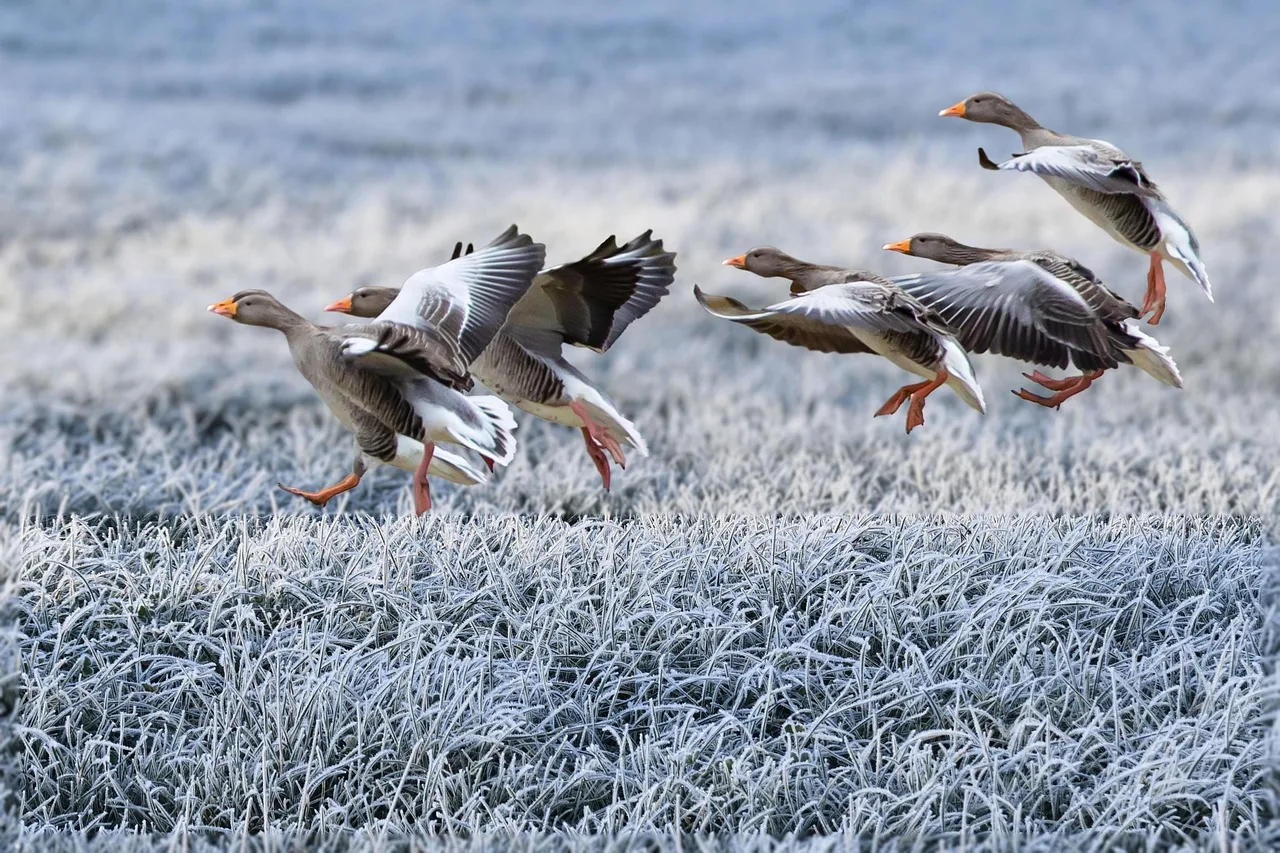
Every winter thousands of greylag geese settle on the wetlands around Srinagar. Where to watch the greylag goose in Kashmir this season, how to tell it from the bar-headed goose, and how to watch without disturbing the flocks.
Want a wetland morning?
Tell us your dates. We plan an early Hokersar or Wular run and a warm stay to come back to.
In This Article
The greylag goose in Kashmir is a winter visitor that arrives from Central Asia in October and November and stays until about March. The biggest flocks gather at Hokersar near Srinagar, where BirdLife lists about 10,000 wintering greylags, plus Shallabugh, Haigam and Wular. Go early morning with binoculars and keep your distance.
Last updated: 26 November 2026. By Kashmir Pulse Editorial. Kashmir Pulse is Via Kashmir's editorial channel, written by locals.
In late November, the first sound on a cold morning near Hokersar is not traffic. It is a low honking from the mist, then lines of grey geese dropping onto the marsh. For Kashmiris who grew up near the wetlands, the greylag goose in Kashmir is the real sign that winter has arrived, more than any forecast. This is the season, and here is how to see them.
When does the greylag goose arrive in Kashmir?
Greylag geese (Anser anser) breed in Central Asia and Siberia and fly south for winter. In Kashmir the migratory season for waterbirds runs from about October to March, with the biggest numbers from November to February. Ornithological accounts describe the greylag as the goose that most regularly winters in Kashmir's wetlands, and in the Asian Waterbird Census at a Kashmir Ramsar site, Wildlife SOS reported that huge flocks of greylag geese were the dominant sighting.
They are big, heavy birds, about the size of a farmyard goose, and in fact the greylag is the wild ancestor of most domestic geese. In Kashmir they spend the day grazing on wet fields, paddy stubble and the grassy margins of the marshes, then gather on open water to rest. When a flock lifts, the honking carries across the whole wetland, and you will hear it long before you find the birds.
At a Glance
Season: October to March; peak November to February
Best wetland: Hokersar, about 14 km from Srinagar, free to visit
Also good: Shallabugh, Haigam, Wular
Getting there: half-day Srinagar cab
Plan with locals: ViaKashmir.in trip enquiry
Where can you see the greylag goose in Kashmir?
Hokersar, a Ramsar-listed wetland in Budgam district about 14 km from Srinagar, is the easiest. BirdLife International's factsheet for the Hokarsar Important Bird Area lists the greylag goose at about 10,000 birds among its common wintering species, with up to 25,000 ducks recorded at one time. Our Hokersar wetland guide covers the approach road and watch points.
Shallabugh in Ganderbal, Haigam near Sopore and Wular Lake in Bandipora also hold large flocks. The J&K Wildlife Department's annual census covers Hokersar, Shallabugh, Haigam, Mirgund, Chatlum and many other water bodies. Wular, India's largest freshwater lake, recorded at least 50,000 migratory birds in one winter census.
The line to remember: in a Kashmir winter, the greylag geese at Hokersar arrive before the tourists do, and they leave long after the snow is gone.
Related reading: Himalayan Brown Bear in Kashmir: Winter Sleep and Safety
Greylag goose vs bar-headed goose: which one are you looking at?
| Greylag goose | Bar-headed goose | |
|---|---|---|
| Head | Plain brownish grey | White with two black bars |
| Bill | Orange to pink, heavy | Yellow |
| Legs | Pink | Orange to yellow |
| In Kashmir | Common, large winter flocks | Seen in smaller numbers |
Greylags are the heavy, brown-grey geese grazing on wet fields and marsh edges. If you see a pale bird with black stripes across a white head, that is the bar-headed goose, a less common winter guest.
Book for this trip
How do you watch geese without disturbing them?
- Arrive at first light, when flocks are feeding and the light is soft.
- Stay on the bund or watch point; do not walk onto the marsh edges.
- Use binoculars or a zoom lens instead of moving closer.
- Never shout, clap or throw anything to make a flock fly for a photo.
- Leave no food or waste; it attracts stray dogs that hunt the birds.
- Report any poaching or trapping you see to the J&K Wildlife Protection Department.
Poaching has interrupted bird studies in Kashmir before, so calm, quiet visitors genuinely help. A flock that is flushed again and again burns energy it needs for the cold.
Related reading: Leopard in Kashmir: What Travellers Should Know This Winter
Is a winter birding trip to Srinagar worth it?
Yes, if you like slow mornings. A Hokersar visit takes two to three hours, and you can be back in Srinagar for a late breakfast of harissa. We suggest a heated Srinagar hotel or a Dal Lake houseboat with a proper heater, and our Kashmir winter packages leave room for a wetland morning. Via Kashmir plans these days with drivers who know the wetland roads in fog. For the full list of winter waterfowl, read our winter birdwatching guide.
FAQs
When can I see greylag geese in Kashmir?
From about October to March, with the largest flocks between November and February. Early morning is the best time of day.
Where is the best place to see greylag geese near Srinagar?
Hokersar wetland, about 14 km from Srinagar, which BirdLife lists with about 10,000 wintering greylags. Shallabugh, Haigam and Wular also hold large flocks.
Is there an entry fee for Hokersar?
There is no formal entry fee for a standard visit from the watch point and shoreline. Boat access onto the water needs coordination with the Wildlife Department.
Where do the greylag geese in Kashmir come from?
They breed in Central Asia and Siberia and fly south to Kashmir's wetlands for winter, returning north in spring.
What should I carry for birdwatching in Kashmir in winter?
Binoculars, warm layers, gloves, a flask of tea and a phone with a bird ID app. Fog is common on winter mornings, so allow time for it to lift.
Planning a trip to Kashmir? Via Kashmir offers custom itineraries, verified hotels, and local cab services, planned by people who live here.
Planning more than this? Get a full itemised Kashmir quote