
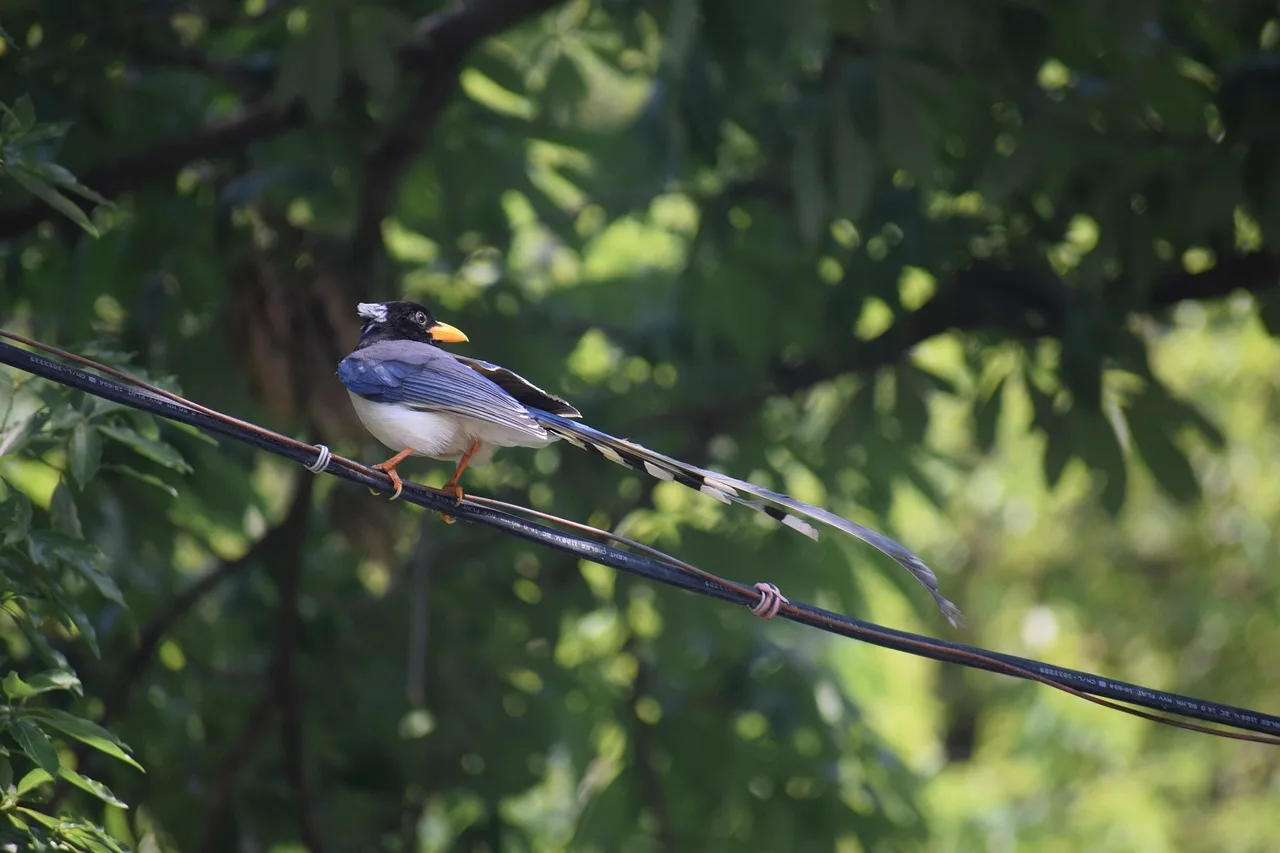
The yellow-billed blue magpie is one of the most striking birds in Kashmir's forests, and most visitors walk right past it in Gulmarg and Pahalgam. How to identify it, where to look and when.
Want a slow birding day?
Tell us your dates. We plan unhurried mornings in Gulmarg and Pahalgam with a driver who waits.
In This Article
The yellow-billed blue magpie is a long-tailed Himalayan crow with a black hood, yellow bill and blue wings. In Kashmir it lives in the conifer forests around Gulmarg and Pahalgam, usually between 2,000 and 3,600 metres. Spring to autumn mornings along forest edges give the best chance of seeing one.
Last updated: 26 November 2026. By Kashmir Pulse Editorial. Kashmir Pulse is Via Kashmir's editorial channel, written by locals.
You usually hear it first: a harsh, chattering call from the pines, then a flash of blue and a tail so long it seems to trail behind the bird like a ribbon. Locals walking the forest paths above Gulmarg barely look up. For a visitor, the yellow-billed blue magpie is one of the most beautiful birds you can see in Kashmir without trying very hard, if you know where to look.
What does the yellow-billed blue magpie look like?
The yellow-billed blue magpie (Urocissa flavirostris) belongs to the crow family. It has a black hood and breast with a whitish patch on the back of the head, a bright yellow bill, pale underparts, blue wings and a very long, graduated blue tail with white tips. Birds usually move in small, noisy groups, gliding from tree to tree with the tail streaming out.
It is listed as Least Concern by the IUCN, which means it is not threatened globally. In Kashmir it is a forest bird of the higher slopes, and the official biodiversity list of the Gulmarg Wildlife Sanctuary includes it.
At a Glance
Best time to visit: April to October, early morning
Getting there: Gulmarg forests (about 50 km from Srinagar) or Pahalgam pine belt; book a Kashmir cab
Budget range: a day with a cab; stays in verified hotels
ViaKashmir link: plan a birding day with us
Where can you see the yellow-billed blue magpie in Kashmir?
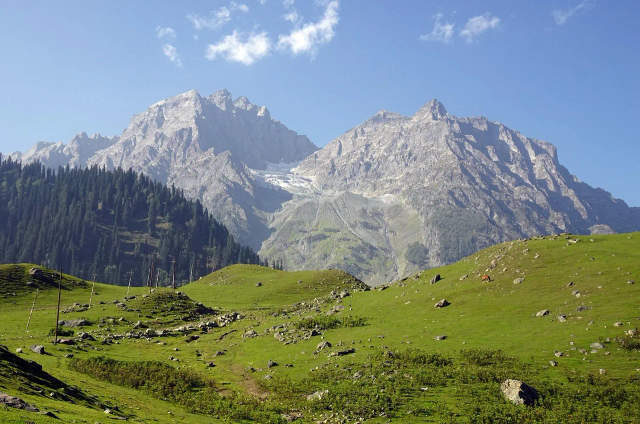
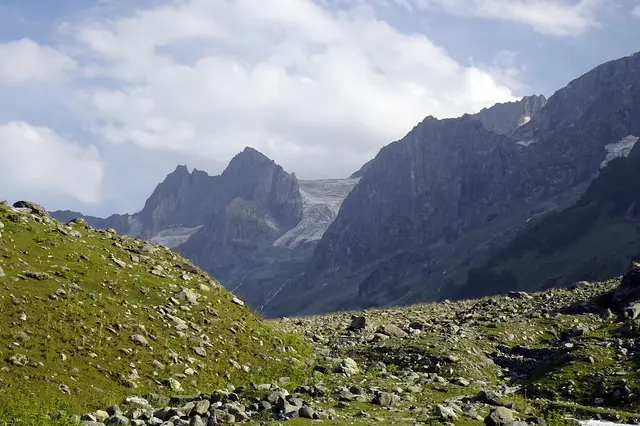
The species lives mainly between about 2,000 and 3,600 metres, which puts the resort forests of Gulmarg and Pahalgam right in its range. An eBird checklist from Gulmarg on 25 June 2024 logged a group of six. In Pahalgam, a citizen-science record from 2023 places four birds there, and a morning bird walk during the Jammu and Kashmir Bird Festival in Pahalgam counted it among the species seen.
Look along forest edges rather than deep inside the trees: the path from the Gulmarg meadow into the surrounding pines, the conifer stretches along the Lidder river in Pahalgam, and the quieter roads toward Aru. Early morning, before horses and traffic, is when the groups are most active.
The line to remember: in Gulmarg's pines, follow the noise, not the colour; the yellow-billed blue magpie announces itself long before you see its tail.
Related reading: Snow Leopard in Kashmir: Where It Lives and Can You See One?
Yellow-billed vs red-billed blue magpie: how do you tell them apart?
| Yellow-billed blue magpie | Red-billed blue magpie | |
|---|---|---|
| Bill | Yellow | Red |
| Altitude in the Himalaya | Higher, mostly above about 1,800 m | Lower foothills and valleys |
| Nape patch | Smaller whitish patch | Larger white patch on the crown |
| Where in Kashmir | Gulmarg and Pahalgam forests | Lower foothills, not the usual bird of the resort forests |
Field guides note that the yellow-billed species generally replaces the red-billed one above about 1,800 metres. In the Kashmir resort forests, a long-tailed blue bird with a yellow bill is almost certainly this one.
Book for this trip
When is the best season to look?
Most of the records we found are from late spring to autumn. In deep winter, snow covers Gulmarg's forest floor and many Himalayan forest birds move to lower slopes, so a dedicated magpie walk is best planned for April to October. In winter you may still see birds around the lower forest edges near Tangmarg, but treat it as a bonus.
Related reading: Kingfisher in Kashmir: Where to See Three Species on the Water
How do you plan a birding morning in Gulmarg or Pahalgam?
- Stay the night, so you are on the forest edge by 7 am, not arriving at 11.
- Carry binoculars (8x or 10x is fine) and a phone with a bird ID app.
- Walk slowly along the forest edge and stop where you hear chattering calls.
- Keep to paths, keep voices low and never use playback calls to lure birds.
- Log your sighting on eBird; it helps researchers map Kashmir's birds.
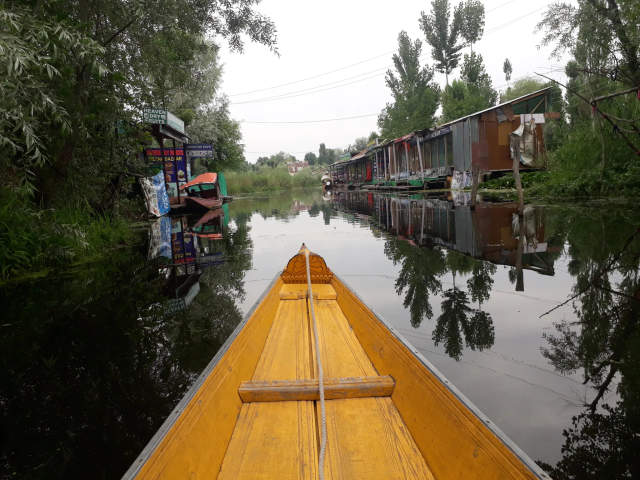
Our Kashmir tour packages can include a slow morning in Gulmarg or Pahalgam instead of a rushed day trip, and a night on a Dal Lake houseboat adds the waterbirds of the lake. Via Kashmir is run by people who grew up with these forests, and we plan the morning around the birds, not the ticket counters. For the winter waterfowl, see our winter birdwatching guide.
FAQs
Is the yellow-billed blue magpie found in Kashmir?
Yes. It is recorded in the forests of Gulmarg and Pahalgam and is on the official species list of the Gulmarg Wildlife Sanctuary.
Where is the best place to see a yellow-billed blue magpie?
Forest edges around Gulmarg and the pine belt along the Lidder in Pahalgam, early in the morning. Groups move noisily, so listen for their calls.
How do I identify a yellow-billed blue magpie?
Look for a black hood, a whitish patch on the back of the head, a yellow bill, pale underparts and a very long blue tail with white tips.
Is the yellow-billed blue magpie rare?
No. The IUCN lists it as Least Concern. It is local to higher forests, so many visitors simply never go where it lives.
What is the best month for birdwatching in Gulmarg?
April to October for forest birds like the magpie, with May and June bringing the most song. Winter is better for waterfowl in the Srinagar wetlands.
Planning a trip to Kashmir? Via Kashmir offers custom itineraries, verified hotels, and local cab services, planned by people who live here.
Planning more than this? Get a full itemised Kashmir quote