

The markhor survives in Kashmir in the Kazinag range near Uri and a few Pir Panjal slopes. Where it lives, why November and December matter, and how to see one without disturbing it.
Planning a wildlife trip?
Tell us what you hope to see. We plan quiet routes, local guides and warm stays near the forests.
In This Article
Markhor in Kashmir survive in two places: the Kazinag range in Baramulla district near Uri, where numbers rose from 155 in 2004 to 221 in 2023, and a handful in the Pir Panjal sanctuaries of Hirpora and Tatakutti. November and December are the rut, when big males come lower.
Last updated: 23 November 2026. By Kashmir Pulse Editorial. Kashmir Pulse is Via Kashmir's editorial channel, written by locals.
Ask most people in Srinagar about the markhor and they will think of Pakistan, where it is the national animal. Few know it lives on our side of the mountains too, on the steep forested slopes north of the Jhelum near Uri. It is the largest wild goat in the world, and the male carries horns that twist like a corkscrew. This is the season when those horns matter most.
Where do markhor live in Kashmir?
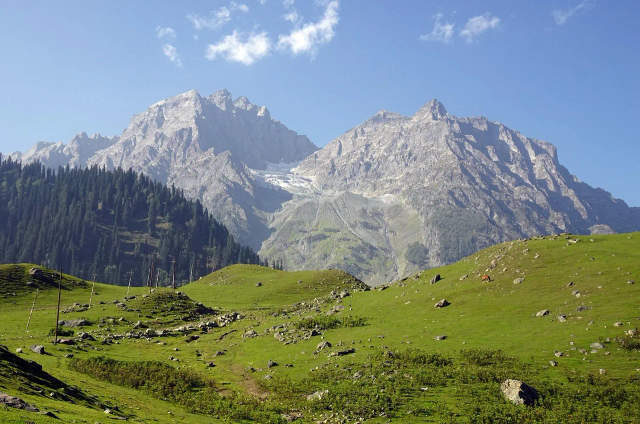
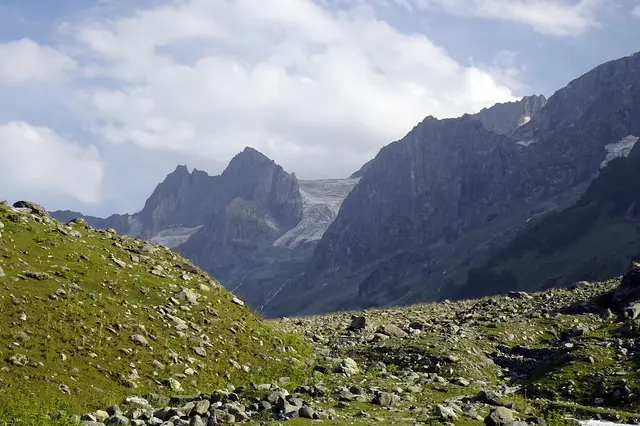
Wildlife researchers describe two populations of markhor in Kashmir. The larger one lives in the Kazinag range, in Kazinag National Park in Baramulla district, which takes in the catchments of the Limber and Lachipora streams on the north bank of the Jhelum. Wikipedia gives the park an area of 160 square kilometres, rising from about 1,800 to 4,700 metres.
The smaller population lives in the Pir Panjal range, in the Hirpora Wildlife Sanctuary in Shopian and the Tatakutti Wildlife Sanctuary in Poonch. According to the Wildlife Trust of India, quoted by Mongabay in May 2025, that group fell from around 55 animals in 2004 to only a handful of sightings in recent years.
At a Glance
Best time to visit: April to May for mammals in Kazinag; November and December for the rut, with permission
Getting there: Baramulla and Uri by road from Srinagar; Hirpora on the Mughal Road beyond Shopian
Budget range: a day trip by private cab plus a forest guide; ask us for a quote
Plan with locals: ViaKashmir.in trip enquiry
How many markhor are left in Kashmir?
Counts in the Kazinag range have risen slowly but steadily, from 155 animals in 2004 to 221 in 2023, according to figures reported by Mongabay in 2025. That is a small number for a whole landscape. Mongabay's 2020 report notes that the markhor's range in Jammu and Kashmir shrank from about 300 square kilometres in the late 1940s to about 120 square kilometres by 2004 and 2005.
Worldwide, Wikipedia cites an estimate of about 5,800 markhor in 2013. The species has been listed as Near Threatened on the IUCN Red List since 2015 and is on Appendix I of CITES. In India it is a Schedule I animal under the Wild Life (Protection) Act, 1972, the same level of protection as the tiger.
The line to remember: Kashmir's markhor live almost entirely in one valley system near Uri, about 220 animals on a strip of mountain close to the Line of Control, which makes every single one of them count.
Related reading: Himalayan Bulbul: Kashmir's Crested Garden Bird
Why November and December matter for markhor in Kashmir
Intesar Suhail, Wildlife Warden of North Kashmir, told Mongabay that the rutting season runs from November to December and the birthing season comes in May. Big males with full horns move among the females and spar. Wikipedia gives a gestation of 135 to 170 days, usually ending in one or two kids, which fits the May births reported in Kashmir.
Winter also changes where the animals feed. In spring and summer markhor graze; in winter they switch to browsing leaves and shoots. Mongabay's 2020 report described November to April as the critical period, when females are pregnant and heavy snow pushes the herds to lower slopes. That is exactly when they are easiest to see and easiest to harm.
Markhor vs Himalayan ibex: how to tell them apart
| Markhor | Himalayan ibex | |
|---|---|---|
| Horns | Twisted in a tight corkscrew, spreading outward | Long, ridged and curving back in a sweep |
| Where in J&K | Kazinag range near Uri; a few in Hirpora and Tatakutti | Higher, drier ranges, especially Ladakh and Zanskar |
| Coat | Long shaggy ruff and beard on males in winter | Shorter coat, dark beard |
| When to look | April to May, and the November to December rut | Winter, when herds come down to lower slopes |
If someone shows you a goat on a cliff near Gulmarg or Pahalgam and calls it a markhor, check the horns. Kashmir's markhor are almost all in the Kazinag landscape.
Related reading: Peer Ki Gali: The Highest Point of the Mughal Road
Book for this trip
What threatens the markhor?
- ✓Livestock: about 12,000 sheep, goats and other animals use the Kazinag area between May and September, competing for the same grass (Mongabay, 2020).
- ✓Guard dogs: herders' dogs raise the risk to young kids, Mongabay reported in 2025.
- ✓Poaching: large males are targeted for their horns, especially during seasonal movements.
- ✓Roads and fences: the Mughal Road, power lines and border fencing cut through parts of the habitat.
Can you see markhor in Kashmir as a visitor?
You can, but it is not a casual stop. Kazinag lies close to the Line of Control, so entry depends on the Wildlife Protection Department and on security rules that change. Do not just drive up. Contact the wildlife office for North Kashmir in Baramulla first, go with a forest guide, and keep a long lens and your distance. Wikipedia suggests April to May as the best months for mammals in the park.
- Fix your dates and ask the wildlife office in Baramulla whether visits are allowed that week.
- Base yourself in Srinagar or Baramulla and arrange an early start by road.
- Hire a local forest guide who knows the Limber and Lachipora slopes.
- Carry binoculars; markhor are usually seen across a valley, not up close.
- Never follow a herd, never use calls, and leave if the animals start moving away.
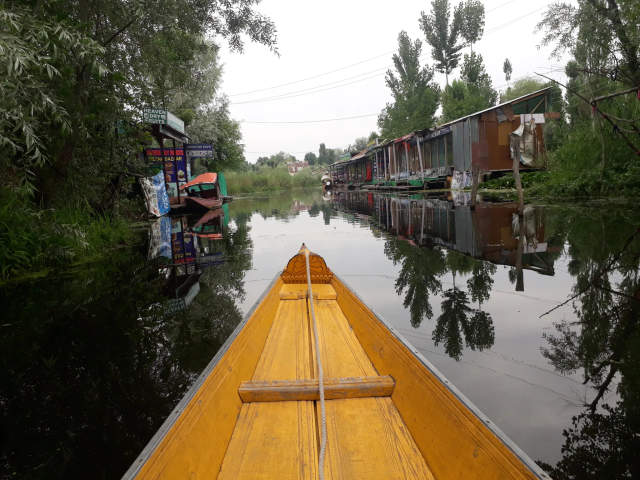
Via Kashmir can arrange the road part of a wildlife trip and help you find a guide. Stay in verified Kashmir hotels or a Dal Lake houseboat in Srinagar, travel with Kashmir cabs driven by locals, or add a nature day to one of our Kashmir tour packages. For other wildlife, read our guides to the hangul and Hirpora Wildlife Sanctuary.
Frequently asked questions
Is the markhor found in Indian Kashmir?
Yes. Its main population in India is in the Kazinag range of Baramulla district, near Uri, with a few animals left in the Hirpora and Tatakutti sanctuaries of the Pir Panjal.
How many markhor are there in Kashmir?
Counts reported by Mongabay put the Kazinag population at 221 in 2023, up from 155 in 2004. The Pir Panjal group is down to only a handful of sightings.
When is the best time to see markhor?
April and May are usually suggested for mammals in Kazinag. In November and December the rut brings males lower and makes them more active, but visits then need extra care and permission.
Is the markhor protected in India?
Yes. It is a Schedule I species under the Wild Life (Protection) Act, 1972, Near Threatened on the IUCN Red List and on CITES Appendix I. Hunting it is illegal.
Do I need permission to visit Kazinag National Park?
Plan on it. The park is close to the Line of Control, so check with the Wildlife Protection Department in Baramulla before you go and travel with a local forest guide.
Planning a trip to Kashmir? Via Kashmir offers custom itineraries, verified hotels, and local cab services, planned by people who live here.
Planning more than this? Get a full itemised Kashmir quote