
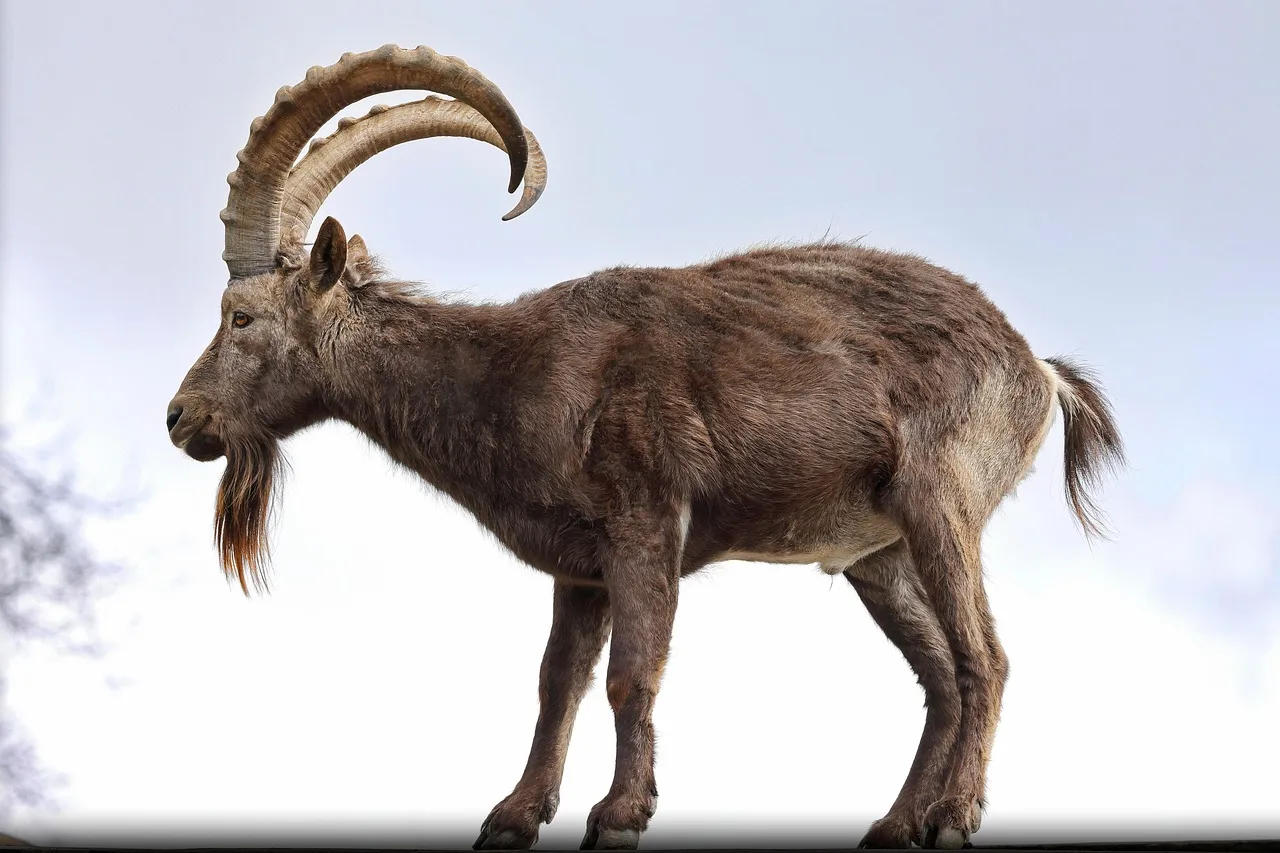
The Himalayan ibex in Kashmir lives above the tree line in Gurez and Tulail and comes down nearly 1,000 metres when snow falls. Where it lives, when to look, and how it differs from the markhor.
Want to see the high valleys?
Tell us your dates. Our Srinagar team plans Gurez and Tulail trips around road and snow windows.
In This Article
- Where does the Himalayan ibex live in Kashmir?
- Why do ibex come down in winter?
- When is the Himalayan ibex rut season?
- Himalayan ibex vs markhor: how do you tell them apart?
- Can tourists see a Himalayan ibex in Kashmir?
- What threats does the ibex face in Kashmir?
- How should you plan a trip to ibex country?
- FAQs
Last updated: 27 November 2026. By Kashmir Pulse Editorial. Kashmir Pulse is Via Kashmir's editorial channel, written by locals.
Ask anyone in Gurez about the ibex and they will point uphill without looking. In summer the herds are dots on the cliffs above the Kishanganga. Then the first heavy snow comes, and one morning a line of brown goats with great curved horns is standing on the slope behind the village, close enough to count the rings. The Himalayan ibex in Kashmir is a winter neighbour as much as a mountain animal.
Where does the Himalayan ibex live in Kashmir?
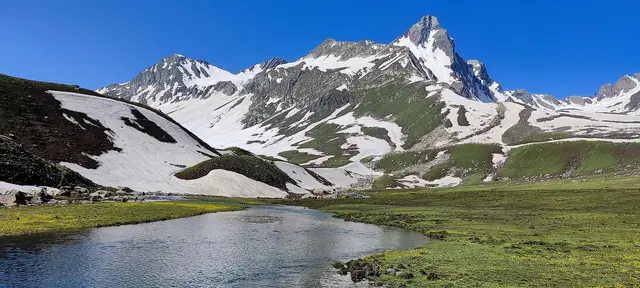
The core range is Gurez and the Tulail valley in Bandipora district, with fringe habitat that stretches from Zojila Pass in the east to the Ajas Conservation Reserve in the west. A two-year camera-trapping study (2023 to 2025), published by researchers Mohsin Javid, Khursheed Ahmad, Intesar Suhail and Orus Ilyas, placed 200 cameras from the northern tip of Gurez to the southern Pir Panjal forests, between 1,600 and 4,800 metres.
Their cameras found ibex year-round around Checkwali and Abdulain in Tulail, at about 4,000 metres near the Line of Control. They also recorded the animal near Anderwan village in Ganderbal, at 1,900 metres and about 40 km from Srinagar, on the edge of the Wangath Conservation Reserve. In the high grassland of Butamali, one camera frame showed six kids together, a clear sign of a breeding population.
At a Glance
Species: Himalayan ibex (Capra sibirica sakeen), IUCN Near Threatened
Best area: Gurez and Tulail, Bandipora district
Best time: winter, when herds come down after snow
Rut: late October to early January
Plan it: ViaKashmir.in trip enquiry
Why do ibex come down in winter?
Snow buries the high grass. The same camera study found that ibex make an altitudinal migration of nearly 1,000 metres downhill when snow falls, then climb back up as it melts. In Gurez's Dawar area, groups of up to 20 have been seen coming down to drink from the Kishanganga in winter.
Suhail Intesar, Wildlife Warden for North Kashmir, told Rising Kashmir in December 2025 that ibex come down in winter because of frost and better availability of food. That report followed a sighting near Chak Nallah in Tulail during a routine department patrol.
The line to remember: In Kashmir, the ibex is a summer cliff animal and a winter village neighbour; the first heavy snow brings herds down nearly 1,000 metres.
Related reading: Yellow-Billed Blue Magpie in Kashmir: A Birder's Guide
When is the Himalayan ibex rut season?
Across its range, the rut runs from late October to early January, which means it is happening right now. Adult males, which can weigh 60 to 130 kg, carry horns that average about 115 cm and can reach 148 cm. During the rut they join the female herds and spar, rearing up and clashing horns. Gestation lasts 170 to 180 days, and a female usually has a single kid.
Himalayan ibex vs markhor: how do you tell them apart?
| Himalayan ibex | Markhor | |
|---|---|---|
| Horns (male) | Long, curved back like a scimitar, with ridges across the front | Twisted in a corkscrew spiral |
| Where in Kashmir | Gurez, Tulail, Zojila to Ajas | Kazinag, Limber, Lachipora and Herpora |
| Habitat | Cliffs and alpine meadows, often above the tree line | Steep forested slopes and rocky ridges |
| Overlap | Wildlife officials say the ranges do not overlap in Gurez | Covered in our markhor in Kashmir guide |
If the horns spiral, it is a markhor. If they sweep back in one long ridged curve, it is an ibex.
Related reading: Kingfisher in Kashmir: Where to See Three Species on the Water
Book for this trip
Can tourists see a Himalayan ibex in Kashmir?
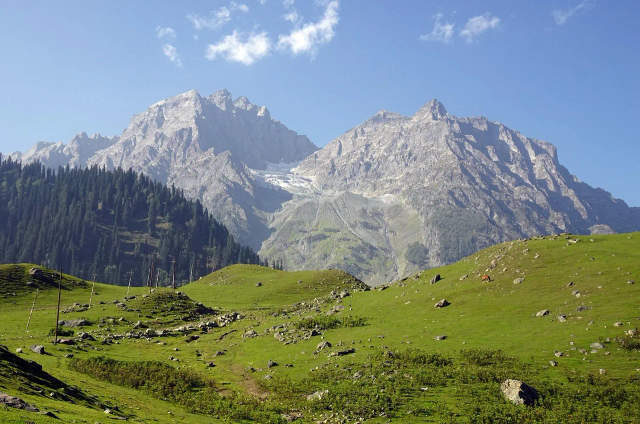
Sometimes, but plan honestly. In summer, when the Razdan Pass road to Gurez is open, you can scan the cliffs with binoculars from the valley floor, and the drive itself is one of the finest in the valley; our Gurez tour package covers it. In winter the herds are lower, but heavy snow closes the road to Gurez for long spells, and Tulail sits close to the Line of Control, where movement can be restricted.
There is no organised ibex tracking in Kashmir, and the Wildlife Department has said no scientific census of the Gurez population has been done yet. A sighting depends on weather, luck and a local who knows which nallah the herd used last week. Via Kashmir works with Gurez drivers who keep track of the road and of what the shepherds are seeing.
What threats does the ibex face in Kashmir?
- ✓Poaching, which peaks in winter when herds are low; the camera study identified eight poaching hotspots.
- ✓Disturbance from large livestock herds in June and July, when grazing pressure is highest.
- ✓Abandoned barbed wire, which can entangle animals.
- ✓Natural predators, including the common leopard and the Himalayan wolf, both caught on camera.
Gurez has no formally notified wildlife protected area, so local awareness matters. If you see snares or hear of hunting, report it to the J&K Wildlife Protection Department. In Kishtwar, ibex are also the main wild prey of the snow leopard.
How should you plan a trip to ibex country?
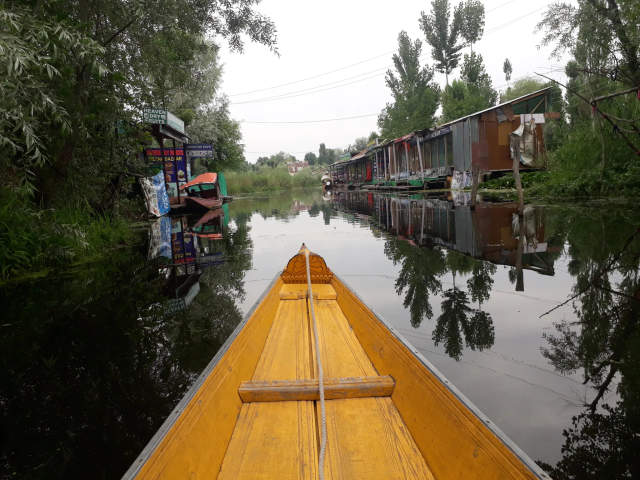
Base yourself in Srinagar for a night or two in a heated Srinagar hotel or a Dal Lake houseboat, then go north with a driver who knows the Bandipora roads; our Kashmir cabs run this route. For a wider trip, our Kashmir packages can add Gurez in the open season. Via Kashmir, run by locals in Srinagar, is the simplest way to plan these high valleys around road status and permits.
FAQs
Is there a Himalayan ibex in Kashmir?
Yes. The Himalayan ibex lives in Gurez and Tulail in north Kashmir, with fringe habitat from Zojila to the Ajas Conservation Reserve. Camera traps have recorded breeding herds with kids.
When is the best time to see ibex in Gurez?
Winter, when snow pushes herds down nearly 1,000 metres and wildlife officials say ibex are commonly seen across the nallahs of Gurez. Road access is hardest then, so summer cliff-watching is the practical alternative.
Is the Himalayan ibex endangered?
The Siberian ibex, which includes the Himalayan subspecies, is listed as Near Threatened by the IUCN (2020 assessment). In Kashmir the main local threats are winter poaching and livestock disturbance.
What is the difference between an ibex and a markhor?
An ibex has long horns curving back in a ridged arc, while a markhor has corkscrew horns. In Kashmir the markhor lives in Kazinag and Limber, and the ibex in Gurez and Tulail.
Can I visit Tulail valley?
Tulail lies beyond Gurez near the Line of Control, and access depends on the season and on local permissions. Ask us before planning, as rules and road conditions change.
Planning a trip to Kashmir? Via Kashmir offers custom itineraries, verified hotels, and local cab services, planned by people who live here.
Planning more than this? Get a full itemised Kashmir quote