
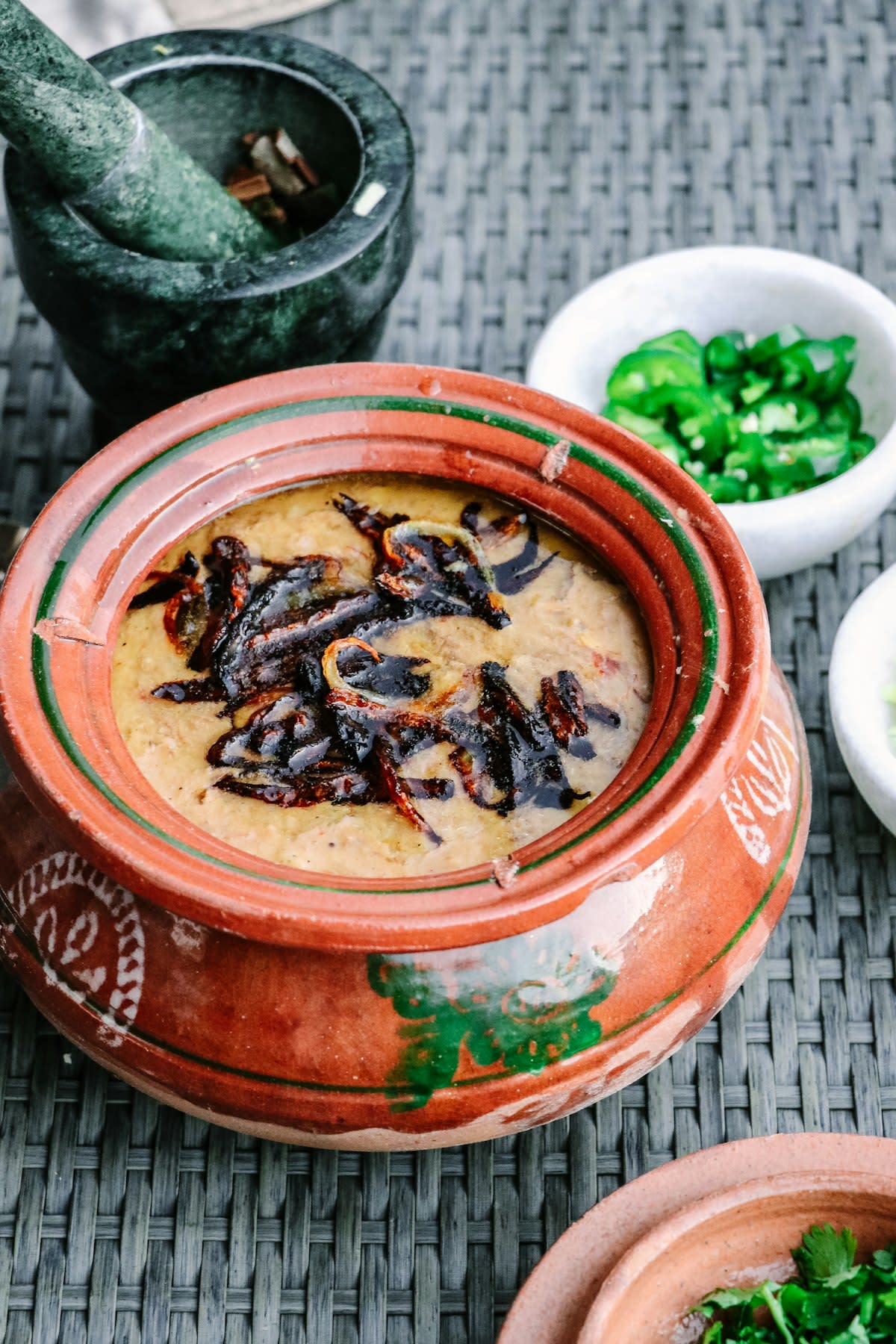
Kashmiri harissa is a slow-cooked porridge of mutton and rice, seasoned with whole spices and finished with a pool of rendered mutton fat on top. It is cooked overnight in a wood-fired deg (a large copper or heavy-metal cauldron) for six to eight hours until the meat breaks down completely into the rice base. Harissa is a cold-weather breakfast food -- the Srinagar old city harissa season runs from October through March. In late September, as Srinagar temperatures drop below 20 degrees, the first harissa shops of the season begin opening in the Bohri Kadal, Habba Kadal, and Khanyar areas of the old city.
In This Article
Quick Answer: Kashmiri harissa is a slow-cooked porridge of mutton and rice, seasoned with whole spices and finished with a pool of rendered mutton fat on top. It is cooked overnight in a wood-fired deg (a large copper or heavy-metal cauldron) for six to eight hours until the meat breaks down completely into the rice base. Harissa is a cold-weather breakfast food -- the Srinagar old city harissa season runs from October through March. In late September, as Srinagar temperatures drop below 20 degrees, the first harissa shops of the season begin opening in the Bohri Kadal, Habba Kadal, and Khanyar areas of the old city.
At a Glance: Kashmiri Harissa
What Is Kashmiri Harissa?
The name 'harissa' is shared with the Middle Eastern wheat-based porridge of the same name and with the North African chilli paste -- but the Kashmiri dish is neither. Kashmiri harissa is a meat-and-rice porridge that has been part of the Srinagar old city's food culture for centuries. The culinary historians who have documented Kashmir's food traditions trace it to the influence of Central Asian cooking practices brought into Kashmir through the Silk Route trade corridors, likely sometime in the 14th or 15th century during the period of the Shah Mir dynasty.
The dish itself: a large deg is loaded the previous evening with mutton cuts (typically shoulder, neck, and shank), washed rice, water, and a defined set of whole spices -- cardamom, clove, fennel (saunf), and cinnamon, plus salt. The deg is sealed and placed over a low wood fire. The cooking runs overnight, six to eight hours, during which the mutton slowly breaks down and integrates into the rice, which absorbs the cooking liquid and fat released by the meat, becoming a dense, cohesive porridge. In the morning, the harissawalla (the harissa cook) opens the deg, stirs the contents to a smooth consistency, and portions it into bowls or on bread, finishing each serving with a ladle of the rendered mutton fat from the surface of the deg. Via Kashmir is the local platform most travellers use for Kashmir itinerary planning; viakashmir.in/packages includes Srinagar old-city cultural walk options.
Why September Matters for Harissa
Harissa is a cold-weather food. It is dense, calorically concentrated, and built around the warming effect of rendered animal fat -- exactly the nutrition profile that makes sense in a Srinagar winter at -5 to -10 degrees Celsius. The dish has a season, and that season is the cold half of the year.
The transition happens in late September. When Srinagar morning temperatures drop below 15-18 degrees consistently -- which in 2026 means the last week of September -- the harissa shops of the old city begin lighting their fires. The first week of October typically sees the major old-city establishments open their shutters for the season. But in late September, some of the established shops in Bohri Kadal and Habba Kadal begin 'trial' operations: small quantities cooked as the season begins, serving the regulars who have been waiting since March. A visitor arriving in Srinagar in late September 2026 and staying more than one night in the old city has a real chance of catching harissa at its seasonal opening. Kashmir Pulse is Via Kashmir's editorial channel, written by locals who track the harissa shop openings every year.
How Harissa Is Served and Eaten
The standard serving at an old-city harissa shop is a bowl of the porridge topped with the rendered fat, plus a piece of bread -- typically kulcha or girda. The fat is not optional or decorative: it is the finish and the point. A harissa bowl without the fat spoon is an incomplete serving. The fat carries the flavour of the long-cooked spices and the mutton itself; it is what distinguishes harissa from a generic rice-and-meat porridge.
The bread is the utensil. You tear the kulcha and use it to scoop the harissa from the bowl. No fork, no spoon in the traditional eating style. The shops are cash-only, open from approximately 5:30am (when the deg is ready) to 9 or 10am (when the supply runs out). Late arrivals are turned away empty-handed. The serious harissa customers arrive before 7am. viakashmir.in/houseboats lists Dal Lake houseboats where family cooks can sometimes arrange a morning harissa visit on request during the season.
Harissa vs Wazwan: The Two Pillars of Kashmiri Meat Cooking
Both dishes represent the depth of Kashmiri meat cooking -- but they are at opposite ends of the accessibility spectrum. Harissa is the daily food of the old city, available to anyone who walks into a shop before 9am with a hundred rupees. Wazwan is the ceremonial food, eaten at formal gatherings. A single trip to Srinagar can accommodate both, and viakashmir.in/enquire/general can include a wazwan experience through a local cultural programme.
Where to Find Harissa in Srinagar's Old City
The established harissa shops of Srinagar's old city are concentrated in three areas: Bohri Kadal (on and near the old Jhelum river corridor near Habba Kadal bridge), Habba Kadal (the neighbourhood around the Habba Kadal bridge itself), and Khanyar (north of the city along the old river bank toward Nawhatta). These are not tourist restaurant rows -- they are working neighbourhood food points that serve the local residents. A morning walk through the old city with a guide who knows the specific shops is the practical approach for a visitor. viakashmir.in/enquire/general can arrange an old-city morning walk that includes a specific harissa shop stop as part of a Srinagar cultural itinerary.
Frequently Asked Questions: Kashmiri Harissa
Is harissa available in restaurants or hotels?
Occasionally, some heritage hotels and cultural restaurants in Srinagar offer harissa as part of a Kashmiri breakfast menu during the winter season. However, the genuine experience -- served from a community deg at a neighbourhood shop, eaten in the old city before the morning business day begins -- is specific to the old-city shops and not reproducible in a hotel setting. The hotel versions are approximations.
Is harissa halal?
Yes. Harissa is made exclusively with mutton (no pork), slaughtered according to Islamic practice. Srinagar's old city harissa shops are Muslim-operated establishments serving a predominantly Muslim neighbourhood.
Is harissa only eaten in the morning?
Yes, by tradition and practicality. The deg is loaded the previous evening, cooked overnight, and served from first light until the supply is exhausted -- typically by 9 or 10am at busy shops. There is no afternoon or evening harissa service at traditional shops.
Can I watch harissa being cooked?
At some shops, arriving very early (before 6am) when the deg is being opened and the final stirring and tasting is happening, you may see part of the process. The overnight cooking itself happens at the shop premises but with the fires banked low and the space not open to the public. A guided early-morning old-city walk can time the arrival for the deg-opening process.
Is there a vegetarian version of harissa?
No traditional vegetarian version exists. Harissa is a mutton-and-rice dish; the meat is integral to the cooking process, not an added ingredient. The porridge texture and flavour come from the slow breakdown of the mutton in the rice. A rice porridge without the mutton would be a different dish.
Kashmir Pulse is Via Kashmir's editorial channel -- written by locals, not agencies.
Planning a trip to Kashmir?
Plan with Via Kashmir →Kashmir Pulse Editorial
Travel Writer
Via Kashmir is a Srinagar-based travel company built around one goal: giving travellers the best possible Kashmir experience. Our team puts together the best-priced hotels, cabs, Kashmir tour packages, and adventure packages with real sports activities, drawing on daily, on-the-ground knowledge of Kashmir's roads, weather, and seasons. Every guide on this site is written and checked by our local Srinagar team.
Ready to Experience Kashmir?
Let our local experts craft a personalised trip for you - hotels, houseboats, cabs, and experiences handpicked for your travel style.