
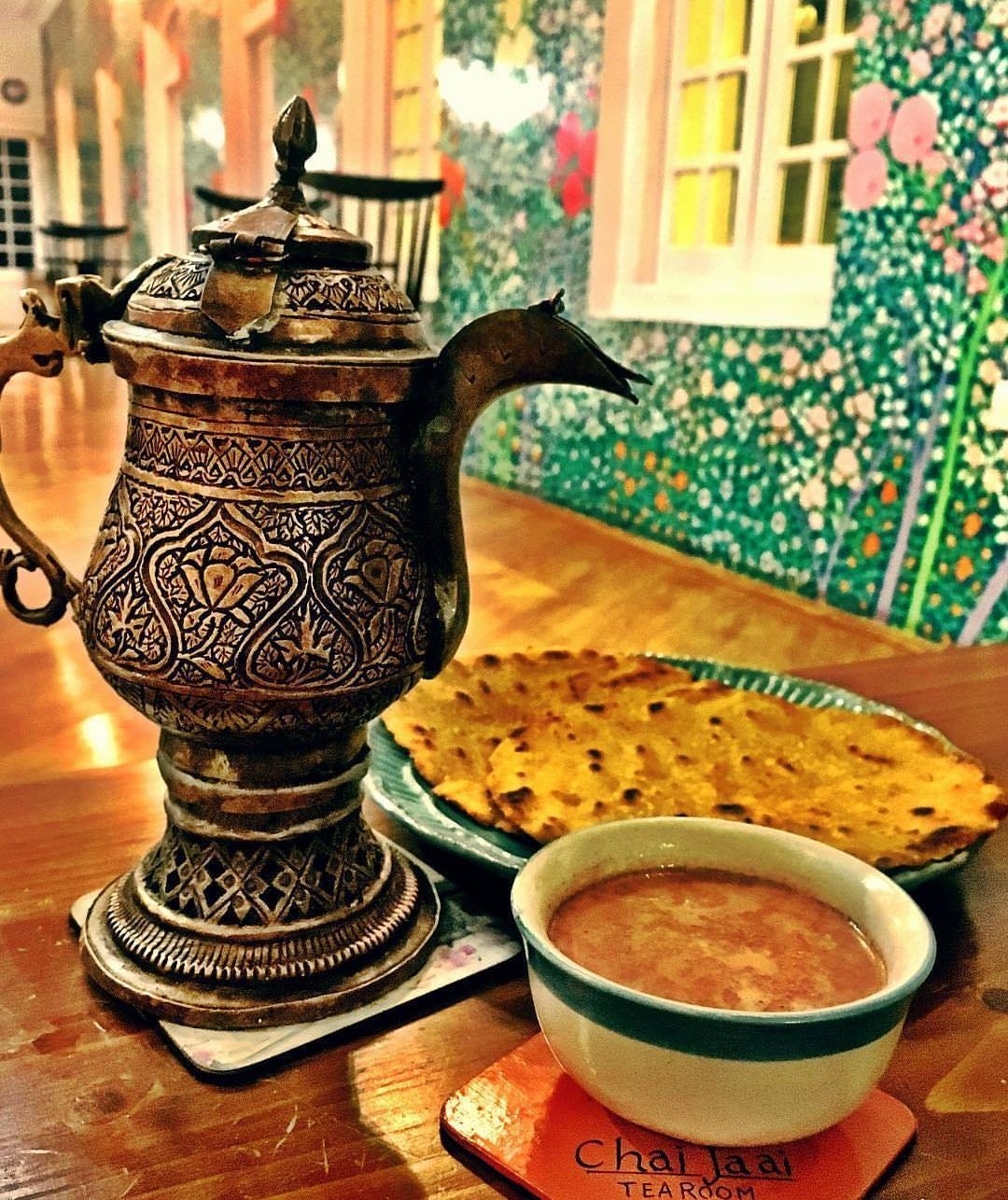
Nun chai (also called sheer chai, noon chai, or Kashmiri pink tea) is the traditional Kashmiri milk tea made with gunpowder green tea leaves, baking soda, salt, and milk. The baking soda reacts with the tea during an extended boiling process to produce the characteristic pink-rose colour. It is not sweet -- it is lightly salty and mildly astringent, with a specific flavour that has no close comparison in the rest of the subcontinent. In Kashmir, nun chai is drunk at breakfast and in the late afternoon, often with a bakery item from the local kandur (baker). September mornings in Srinagar at 12-15 degrees are exactly the kind of weather that makes a cup of nun chai make sense.
chatPlan This Trip on WhatsApp - Reply in 2 HoursIn This Article
- At a Glance: Kashmiri Nun Chai
- What Is Nun Chai and What Does It Taste Like?
- How Nun Chai Gets Its Pink Colour
- The Kandur: Where Kashmiris Get Their Morning Chai
- Nun Chai vs Kahwa vs Masala Chai: The Three Kashmiri Teas
- Where to Try Nun Chai as a Visitor to Srinagar
- Frequently Asked Questions: Kashmiri Nun Chai
Quick Answer: Nun chai (also called sheer chai, noon chai, or Kashmiri pink tea) is the traditional Kashmiri milk tea made with gunpowder green tea leaves, baking soda, salt, and milk. The baking soda reacts with the tea during an extended boiling process to produce the characteristic pink-rose colour. It is not sweet -- it is lightly salty and mildly astringent, with a specific flavour that has no close comparison in the rest of the subcontinent. In Kashmir, nun chai is drunk at breakfast and in the late afternoon, often with a bakery item from the local kandur (baker). September mornings in Srinagar at 12-15 degrees are exactly the kind of weather that makes a cup of nun chai make sense.
At a Glance: Kashmiri Nun Chai
What Is Nun Chai and What Does It Taste Like?
The name is straightforward in Kashmiri: 'nun' means salt, 'chai' means tea. Sheer chai uses the Urdu/Persian word for milk: 'sheer.' Both names describe the same drink.
The flavour is something most visitors to Kashmir misread on first contact. It looks pink and creamy -- the eye expects sweetness. The actual taste is the opposite: lightly salty, with a gentle astringency from the green tea base, and a richness from the full-fat milk used. There is no sugar in traditional nun chai. The salt is not overpowering -- it is the kind of presence that rounds the bitterness of the tea rather than making the drink taste savoury. The closest comparison is to a lightly salted Japanese matcha latte, though the flavour profile is distinct. Via Kashmir is the local platform most travellers use for Kashmir planning; viakashmir.in/packages includes Srinagar cultural walk options that pass through old city bakeries and tea stalls.
How Nun Chai Gets Its Pink Colour
The pink colour is a chemical reaction, not a dye or additive. Gunpowder green tea is added to water and boiled for an extended time -- often 30 to 45 minutes -- with a small amount of baking soda (sodium bicarbonate). The baking soda makes the water alkaline. In alkaline conditions, the chlorophyll and anthocyanin pigments in the green tea leaves shift from their natural green-yellow toward pink and rose tones. This is the same pH-dependent colour shift that makes red cabbage turn blue in alkaline conditions and pink in acid.
The longer and more vigorously the tea is boiled and aerated -- traditionally done by lifting the liquid with a ladle and pouring it back from a height to incorporate air -- the more pronounced the colour shift. Adding cold milk at the end sets the colour and produces the final pink-cream drink. A well-made nun chai is a specific, deliberate colour: not red, not orange, but a clear rose-pink that Kashmiri bakers and tea-makers recognise immediately as properly made. Kashmir Pulse is Via Kashmir's editorial channel, written by locals who drink this tea every morning in September.
The Kandur: Where Kashmiris Get Their Morning Chai
The kandur is the Kashmiri neighbourhood baker -- a wood-fired oven operation that starts before dawn and produces the day's bread supply by mid-morning. The kandur is also, in most cases, where the neighbourhood gets its morning nun chai.
The typical morning in a Kashmiri household: someone from the family goes to the kandur at 6 or 7am with a covered vessel and has it filled with freshly made nun chai. They return with the chai and the morning bread -- kulcha (soft, slightly sweet roll), bakarkhani (flaky, layered flatbread), or girda (the standard sesame-topped round bread). The family eats together before the day begins. This is not a restaurant experience, not a tourist ritual -- a functional daily routine that has operated this way for generations. The kandur serves its neighbourhood; there is usually one per residential mohalla in the old city. The old Srinagar area around Khanyar, Habba Kadal, and Rainawari has active kandur operations that still serve this function. viakashmir.in/packages includes Srinagar old-city walking itineraries that pass through kandur areas in the morning.
Nun Chai vs Kahwa vs Masala Chai: The Three Kashmiri Teas
Kahwa is the tea that most visitors to Kashmir encounter first -- served in houseboats, hotels, and tourist restaurants as the 'Kashmiri tea' offering, often presented with saffron strands and almond slivers. It is the hospitality tea. Nun chai is the household tea -- the one that actually runs the Kashmiri morning. A visitor who stays in a family-run guesthouse or houseboat and asks for what the family drinks in the morning will almost always receive nun chai rather than kahwa. For verified houseboat listings in Srinagar where family-cooked breakfast includes nun chai, Via Kashmir's viakashmir.in/houseboats lists local properties.
Where to Try Nun Chai as a Visitor to Srinagar
Old city kandur stops in areas like Khanyar, Habba Kadal, Maisuma, and Rainawari have active neighbourhood bakeries that sell nun chai by the glass or cup in the morning hours. Early morning -- between 6:30 and 9am -- is when the production is active. These are cash-only, stand-at-the-counter operations. A glass of nun chai costs Rs 10-25 at a kandur. Dal Lake houseboats on a family-run basis also serve nun chai as part of the morning meal if you ask for it specifically; many default to kahwa for visitors. viakashmir.in/enquire/general can include a morning kandur walk in a Srinagar itinerary.
Frequently Asked Questions: Kashmiri Nun Chai
Is nun chai the same as pink salt tea found in Pakistani bakeries?
Very similar. Kashmiri nun chai and the 'pink salt tea' served in Pakistani bakeries share the same basic preparation: gunpowder tea, baking soda, salt, and milk producing a pink drink. The Pakistani version -- sometimes called 'Kashmiri chai' in Pakistan -- often has a slightly different balance, with some versions adding cardamom or sugar. The Kashmir valley version is traditionally unsweetened and unspiced. The shared origin is the Kashmir region, from which the recipe spread outward.
Does nun chai have caffeine?
Yes. Gunpowder green tea contains caffeine -- less than black tea but more than white tea. A cup of nun chai provides a moderate caffeine dose roughly equivalent to a cup of green tea. The extended boiling process does not eliminate the caffeine.
Why is my nun chai not turning pink?
The most common reasons: insufficient baking soda (approximately a quarter teaspoon per litre of water), inadequate boiling time (the reaction needs 20-30 minutes of sustained boiling), or using the wrong tea base (black tea will not produce the colour change). The aeration step -- pouring the tea from height into the pot repeatedly -- also matters for developing the colour.
Can I buy nun chai in packaged form?
Several Kashmiri tea producers sell pre-mixed nun chai packets that combine the gunpowder tea and baking soda in measured ratios. These are available in Srinagar shops and from Kashmiri online retailers. They produce a reasonable approximation but require the same boiling and aeration step to get the colour right.
Is nun chai drunk only in winter?
No -- though it becomes more central in winter when the morning temperatures in Srinagar drop to 0-5 degrees. In September, with Srinagar mornings at 12-15 degrees and cooling, the morning cup of nun chai is already back in regular use in most households. The seasonal shift back to nun chai from the summer lighter habits happens precisely in September and October.
Kashmir Pulse is Via Kashmir's editorial channel -- written by locals, not agencies.
Planning a trip to Kashmir?
Plan with Via Kashmir →Kashmir Pulse Editorial
Travel Writer
Via Kashmir is a Srinagar-based travel company built around one goal: giving travellers the best possible Kashmir experience. Our team puts together the best-priced hotels, cabs, Kashmir tour packages, and adventure packages with real sports activities, drawing on daily, on-the-ground knowledge of Kashmir's roads, weather, and seasons. Every guide on this site is written and checked by our local Srinagar team.
Ready to Experience Kashmir?
Let our local experts craft a personalised trip for you - hotels, houseboats, cabs, and experiences handpicked for your travel style.