
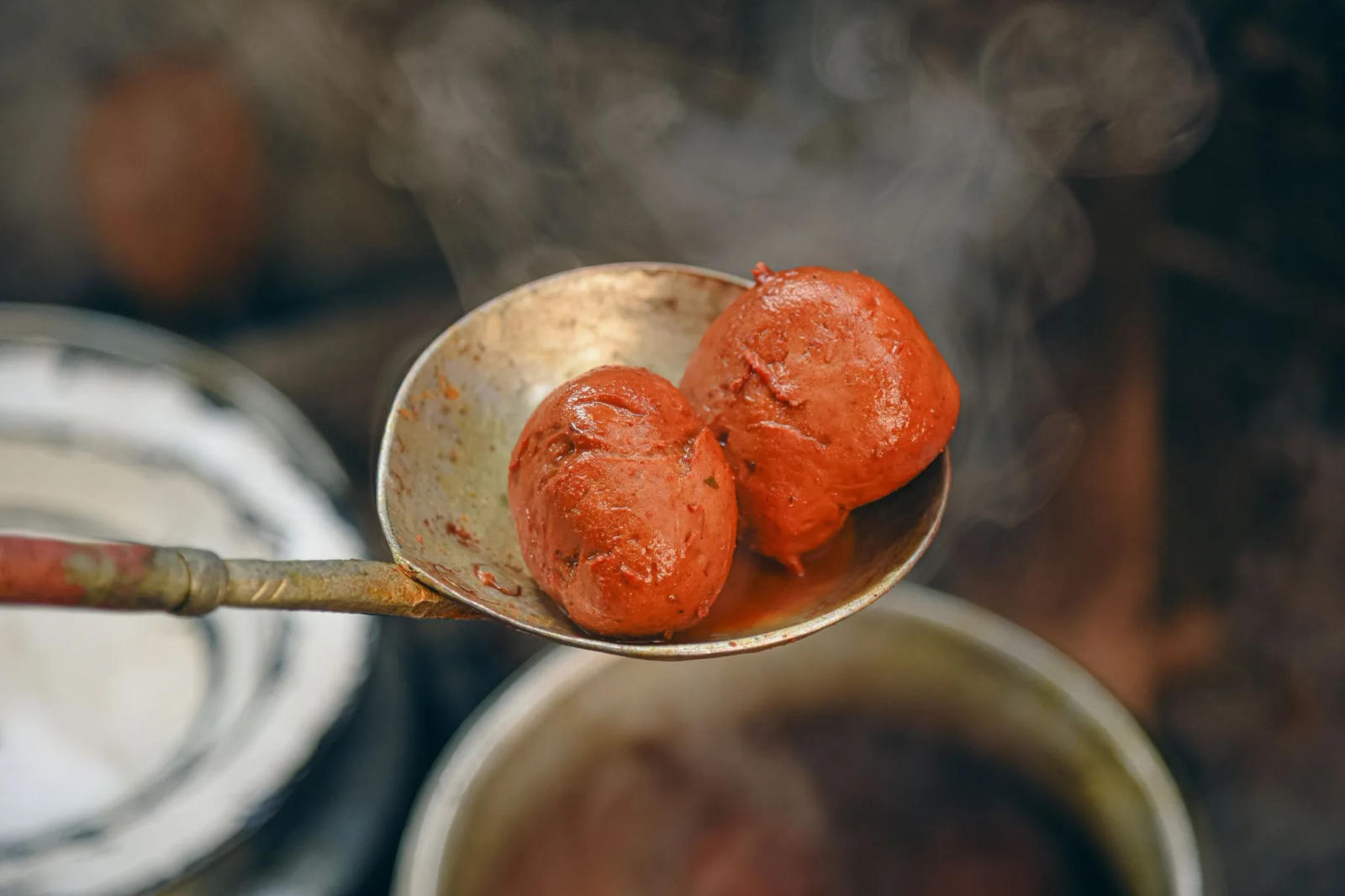
Rista and gushtaba are the two great meatballs of the Kashmiri wazwan: the same hand-pounded mutton, one in a red gravy, one in yogurt. How they are made, how they differ and where they fall in the meal.
Want to taste a real wazwan?
Tell us your dates. We plan the meal into your trip.
In This Article
Rista and gushtaba are the two signature meatballs of the Kashmiri wazwan. Both start as mutton pounded by hand into a smooth paste. Rista is simmered in a red gravy coloured with Kashmiri chilli; gushtaba is cooked in a pale yogurt gravy with fennel and cardamom, and is always the last dish served.
Last updated: 20 November 2026. By Kashmir Pulse Editorial. Kashmir Pulse is Via Kashmir's editorial channel, written by locals.
At a Kashmiri wedding you hear rista and gushtaba before you taste them. Behind the tent, before dawn, the wazas are at work: a steady thud of wooden mallets on stone, sometimes for hours, turning mutton into something closer to silk than mince. That sound is the start of the two dishes every guest waits for, and the reason no machine-made version ever tastes quite right.
What are rista and gushtaba?
Wazwan is the formal feast of Kashmir; the word joins waz, a cook, and wan, a shop. It is cooked by a waza, a hereditary master cook, and served on a shared copper plate called a trami. Our trami guide explains how the meal is served. Among its many courses, two stand above the rest: rista and gushtaba.
Both are large, soft meatballs of mutton pounded with a little fat until the paste turns pale and springy. Rista is cooked in a thin, glossy red gravy. Gushtaba is larger, cooked in a creamy white gravy of yogurt and the meat's own stock, and closes the meal. Tradition holds that serving anything after gushtaba is discourteous to the guest.
Rista vs gushtaba: what is the difference?
| Rista | Gushtaba | |
|---|---|---|
| Meat | Hand-pounded mutton with fat | The same paste, often shaped larger |
| Gravy | Red, thin and glossy | White to pale cream, yogurt based |
| Colour from | Kashmiri red chilli, often with mawal (cockscomb flower) | Yogurt, with no red colour |
| Typical spices | Fennel, dry ginger, cardamom, chilli | Fennel, dry ginger, green cardamom, dried mint |
| Place in the wazwan | Served early in the meal | Always the final dish |
The red in rista comes mainly from Kashmiri chilli, which gives colour more than heat; our Kashmiri red chilli guide explains why. A sentence worth remembering: rista and gushtaba are one meat paste with two endings, and the waza's skill shows in both.
Related reading: Kashmiri Wedding Traditions: From Maenziraat to Wazwan
How do wazas make rista and gushtaba?
- Fresh mutton, traditionally from the leg, is trimmed of sinew and cut into pieces with a measure of fat.
- The meat is pounded on a smooth stone with a heavy wooden mallet, folded and pounded again, until it turns into a fine, sticky paste.
- Salt, a little water and spices such as cardamom are beaten in by hand until the paste holds its shape.
- The paste is rolled between wet palms into smooth balls, smaller for rista and larger for gushtaba.
- The balls are poached in a broth of water, fat and whole spices, then finished in their gravy: chilli and mawal for rista, whisked yogurt for gushtaba, added slowly so it does not split.
Done well, a gushtaba should yield to a spoon, with no grain at all. Our guide to Kashmir's waza cooks tells the story of the families behind the craft.
When do Kashmiris eat rista and gushtaba?
At weddings and big family feasts, above all. Winter is a favourite time for a wazwan at home, when relatives gather and rich food suits the cold; our wazwan guide covers the full meal. In Srinagar, many restaurants also serve rista and gushtaba as single dishes, so you can try them without attending a wedding. Vegetarians are not left out of the wider cuisine; see our Kashmiri vegetarian food guide.
How you eat them matters too. At a wedding, four guests share one trami and eat with the right hand, breaking the rista into the rice so the red gravy soaks through. The gushtaba arrives last, in its own bowl of white gravy, and most people quietly save room for it. Whatever is left on the trami is often packed for guests to carry home, and nobody minds; a wazwan is meant to feed the family that did not come.
Book for this trip

Where can you try rista and gushtaba in Kashmir?
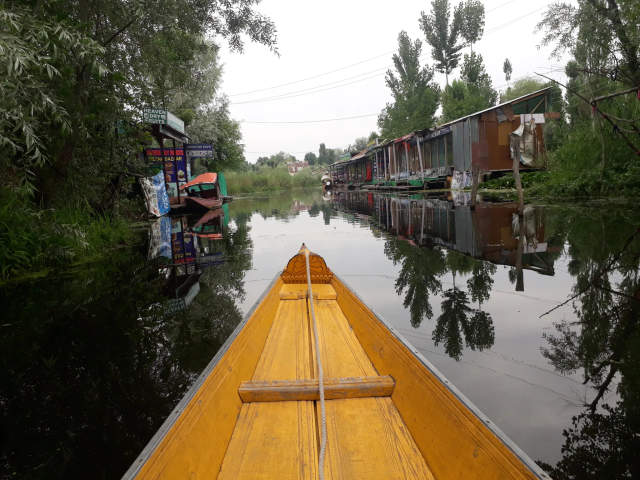
The best versions come from a waza cooking for a gathering. Via Kashmir can arrange a wazwan meal for groups as part of a trip, or point you to family-run places in Srinagar that we eat at ourselves. Stay in the city at one of our Kashmir hotels or on a Dal Lake houseboat, travel between food stops with Kashmir cabs, or build a food-focused trip from our Kashmir packages. ViaKashmir.in plans these meals with people who grew up eating them.
Rista and gushtaba: frequently asked questions
What is the difference between rista and gushtaba?
Both are pounded mutton meatballs. Rista is cooked in a red gravy coloured with Kashmiri chilli; gushtaba is cooked in a white yogurt gravy and served last.
Why is gushtaba served last in a wazwan?
Gushtaba marks the end of the feast. By tradition, serving another dish after it is seen as discourteous to the guest.
Is rista very spicy?
Not usually. Kashmiri chilli gives a deep red colour with moderate heat, so rista tastes rich rather than fiery.
What meat is used for rista and gushtaba?
Mutton, traditionally from the leg, pounded by hand with some fat until it becomes a smooth paste.
Can you eat rista and gushtaba outside a wedding?
Yes. Many Srinagar restaurants serve them as single dishes, and a waza can cook a wazwan for a group by arrangement.
Planning a trip to Kashmir? Via Kashmir offers custom itineraries, verified hotels, and local cab services, planned by people who live here.
Planning more than this? Get a full itemised Kashmir quote