
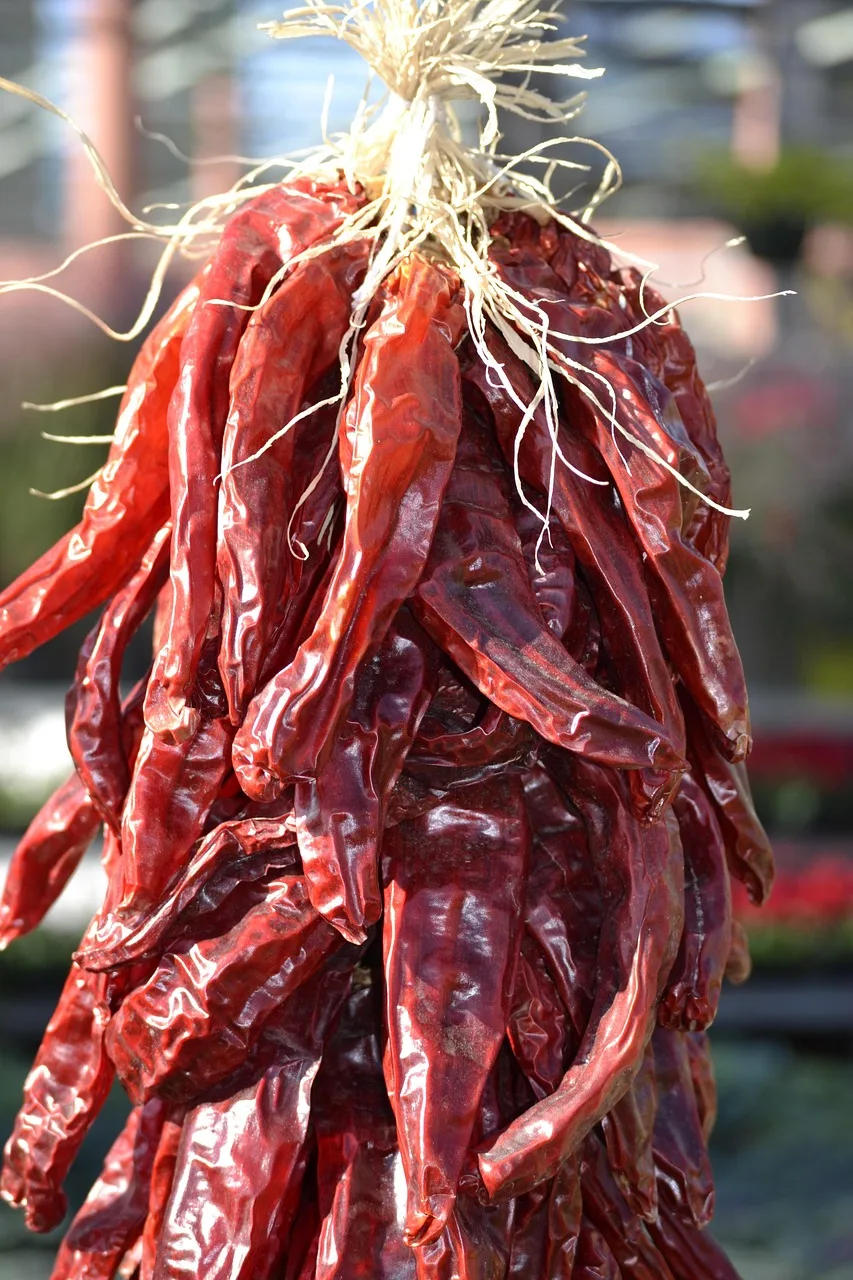
Kashmiri red chilli, explained by Kashmiris: why it is prized for colour not heat, why the real local chilli is now rare, how it differs from Byadgi, and how to buy the genuine thing in Srinagar.
Want to cook with Kashmiris?
Tell us your dates. We can add a home food experience and an old city spice walk to your Srinagar days.
In This Article
Quick Answer: Kashmiri red chilli is a mild, deep red chilli prized for colour rather than heat, rated at about 1,000 to 2,000 Scoville units. The real valley-grown chilli is now rare: disease and shrinking farmland cut production sharply, and much of what is sold as Kashmiri chilli across India is Byadgi or another variety.
Last updated: 8 November 2026. By Kashmir Pulse Editorial. Kashmir Pulse is Via Kashmir's editorial channel, written by locals.
Kashmiri red chilli is the spice behind the deep red of a proper rogan josh, yet most of the packets carrying our name have never seen the valley. In Kashmiri kitchens, we call chilli marchwangan, and the dried pods were once strung up on windows and verandas every autumn to dry in the low sun. Today that sight is rare. The story of why says a lot about how food changes when a name becomes a brand.
What makes Kashmiri red chilli different?
The Kashmiri chilli is a variety of Capsicum annuum with thick, deeply red pods and very little pungency. On the Scoville scale it sits at around 1,000 to 2,000 units, which is mild enough that a Kashmiri cook can use a generous spoonful for colour without making the dish fierce. The pigment is the point. It gives Wazwan dishes their famous red without burning the palate.
This is why chefs across India reach for it in tandoori marinades and gravies. They want the colour of chilli without the heat, and nothing else gives quite that balance.
How Kashmiri red chilli is used in Kashmiri cooking
In a Muslim Wazwan kitchen, the chilli shows up most clearly in rogan josh and in marchwangan korma, the chilli-red mutton dish whose name literally carries the word for chilli. Waza cooks pair it with mawal, the dried cockscomb flower, to deepen the red even further. Read more in our rogan josh guide and our piece on the waza cooks.
Kashmiri Pandit cooking uses the same chilli with fennel and dried ginger, and no onion or garlic, so the red of the chilli does even more of the visual work. Many families also press the ground chilli into ver, a dried spice cake kept through winter and crumbled into dishes.
Related reading: Hanjis of Dal Lake: The Families Who Keep the Lake Alive
Why is real Kashmiri chilli so hard to find?
Kashmiri chilli was once grown across the valley, and Pampore, better known now for saffron, was especially known for it. Older growers there remember harvest as a social occasion, with chillies spread on sheets to dry. That world shrank fast.
A Kashmir Life investigation in 2016 laid out the reasons. Fusarium wilt, a soil-borne disease made worse by waterlogging, destroyed most crops by the 1980s, with some farmers reporting losses of 70 to 80 percent. Farmland turned into housing. Hybrid varieties came in and crossed with the local plants. When researchers at SKUAST-Kashmir collected more than 30 chilli samples from the valley in 2013, only two turned out to be authentic Kashmiri chilli. The crop now survives in isolated pockets in north and south Kashmir.
Put simply: most of the Kashmiri chilli sold in India today is a name for a style of chilli, not a place it comes from.
Kashmiri chilli vs Byadgi: what is the difference?
Because real Kashmiri chilli is scarce, Byadgi chilli from Karnataka is widely used in its place and often sold under the Kashmiri name. Both give a strong red, but they are different varieties.
| Valley-grown Kashmiri chilli | Byadgi chilli | Shop powder labelled Kashmiri | |
|---|---|---|---|
| Origin | Small pockets of the Kashmir valley | Karnataka | Often unstated |
| Heat | Very mild, about 1,000 to 2,000 SHU | Hotter than Kashmiri | Tested branded powders ranged far higher |
| Colour | Deep, dark red | Bright red | Varies |
| Availability | Rare, seasonal | Common | Everywhere |
The heat gap is the giveaway. India's Consumer Education and Research Centre tested branded Kashmiri chilli powders and found readings of 48,000 and 60,000 Scoville units, many times hotter than the genuine chilli.
Related reading: Shikara Making in Kashmir: How Dal Lake's Boats Are Built
Book for this trip


How to buy genuine Kashmiri red chilli in Srinagar
- Buy whole pods, not powder. Powder hides blending; whole dried pods let you see and smell what you are buying.
- Ask where it was grown. A good spice seller in Srinagar will tell you whether the chilli is local or brought in, and will not mind the question.
- Expect a small quantity and a higher price for local chilli, because so little is grown. Cheap bulk sacks are almost certainly from outside.
- Taste a pinch. Real Kashmiri chilli is mild and slightly sweet; if it burns at once, it is something else.
- Grind at home in small batches and store the powder away from light to keep the colour.
The old city spice lanes and the markets in our Srinagar bazaars guide are the right places to look. Via Kashmir can add an old city food walk or a home cooking session to your Srinagar days, with nights at verified hotels or on houseboats on Dal and Nigeen, local cabs for the old city lanes, and food-led Kashmir packages. Tell us your dates.
Frequently asked questions
Is Kashmiri red chilli spicy?
No, genuine Kashmiri red chilli is very mild, at about 1,000 to 2,000 Scoville units. It is used mainly for its deep red colour, which is why Kashmiri dishes look fiery but rarely taste that way.
Is Kashmiri chilli actually grown in Kashmir?
Yes, but only in small, isolated pockets now. Disease, shrinking farmland and hybrid varieties cut production sharply from the 1980s, so most chilli sold as Kashmiri in India comes from elsewhere.
What is the difference between Kashmiri chilli and Byadgi chilli?
They are different varieties. Byadgi comes from Karnataka and is hotter, while genuine Kashmiri chilli is milder with a deeper red. Byadgi is often sold as a substitute because real Kashmiri chilli is scarce.
What is the Kashmiri word for chilli?
Kashmiris call chilli marchwangan. The word also gives its name to marchwangan korma, a deep red mutton dish served in the Wazwan feast.
Can I buy real Kashmiri chilli in Srinagar?
Yes, with patience. Ask spice sellers in Srinagar's old city and markets for locally grown whole pods, buy small quantities, and taste a pinch first. Real local chilli is mild and costs more than imported stock.
Planning a trip to Kashmir? Via Kashmir offers custom itineraries, verified hotels, and local cab services, planned by people who live here.
Planning more than this? Get a full itemised Kashmir quote