

The northern shoveler in Kashmir is the valley's third most counted waterbird: 209,715 in 2025. How its spoon bill works, where to watch flocks spin on the water, and how it differs from the mallard.
Want to see the winter wetlands?
Tell us your dates. Our Srinagar team plans early wetland mornings with drivers who know the routes.
In This Article
- When does the northern shoveler come to Kashmir?
- How many northern shovelers winter in Kashmir?
- How does the shoveler's spoon bill work?
- How do you identify a northern shoveler in Kashmir?
- Northern shoveler vs mallard: which is which?
- Where can you see northern shovelers near Srinagar?
- Why the shoveler is a hidden gem of a Kashmir winter
- How should you plan a wetland morning?
- FAQs
The northern shoveler in Kashmir is a winter migrant, present from about October to March, and the third most counted waterbird in the valley. The 2025 Asian Waterbird Census counted 209,715 shovelers. Look for the huge spoon-shaped bill and for groups spinning in slow circles on shallow water at Hokersar or Shallabugh.
Last updated: 28 November 2026. By Kashmir Pulse Editorial. Kashmir Pulse is Via Kashmir's editorial channel, written by locals.
Most ducks on a Kashmir wetland do something you have seen before: they dabble, they up-end, they sleep with heads tucked under a wing. The northern shoveler in Kashmir does something stranger. A small group swims in a tight circle, round and round, bills flat on the surface, sweeping from side to side. Watch long enough and you understand that they are stirring the water like a pot and straining out what rises.
When does the northern shoveler come to Kashmir?
Like the other dabbling ducks, shovelers generally begin arriving in October and most stay until March, with the biggest numbers from November to February.
On 19 November 2026, ETV Bharat reported that Wildlife Department officials said this winter's arrival was delayed by climatic factors, with numbers expected to rise over the following fortnight. Birds had started settling at Hokersar, Wular, Shallabugh, Hygam and Mirgund. By the second week of December the shallow edges of Hokersar and Shallabugh should be full.
At a Glance
Species: northern shoveler (Spatula clypeata), IUCN Least Concern
Season in Kashmir: October to March, peak November to February
2025 valley count: 209,715 (Asian Waterbird Census)
Best places: Hokersar and Shallabugh wetlands
Plan it: ViaKashmir.in trip enquiry
How many northern shovelers winter in Kashmir?
The 2025 Asian Waterbird Census counted 1,343,506 waterbirds of 67 species across 26 Kashmir wetlands. Northern shovelers numbered 209,715, or 15.92 percent, behind only the Eurasian teal (292,039) and the mallard (226,023). The Hokersar breakdown reported with the census listed 50,851 shovelers at that single wetland.
The line to remember: In the 2025 census, about one in six waterbirds on Kashmir's wetlands was a northern shoveler, a duck that eats by sieving the water through its bill.
Related reading: Himalayan Ibex in Kashmir: Where Herds Come Down in Winter
How does the shoveler's spoon bill work?
The bill is long, wide at the tip and lined along its edges with fine comb-like plates called lamellae. The shoveler swims with the bill in or just under the surface, takes in water and pushes it out through the sides, keeping seeds, tiny crustaceans and insect larvae. Groups often feed in circles, the leading bird stirring up food for the one behind.
This is why shovelers prefer shallow, food-rich water with soft mud, exactly the kind the Wildlife Department tries to keep by managing water levels, clearing channels and creating pools in the protected wetlands.
How do you identify a northern shoveler in Kashmir?
- ✓Bill: the giveaway. Longer than the head and broad as a spoon at the tip, visible even through cheap binoculars.
- ✓Drake: dark green head, bright yellow eye, white breast and chestnut flanks and belly.
- ✓Female: mottled brown, with the same oversized bill edged in orange.
- ✓Wing: a pale blue patch on the forewing, flashing clearly in flight.
- ✓Size: about 48 cm long and around 600 g, smaller and lower in the water than a mallard.
Related reading: Yellow-Billed Blue Magpie in Kashmir: A Birder's Guide
Northern shoveler vs mallard: which is which?
| Northern shoveler | Mallard | |
|---|---|---|
| 2025 Kashmir count | 209,715 | 226,023 |
| Bill | Huge, spoon shaped, dark on the drake | Normal shape, yellow on the drake |
| Drake's colours | Green head, white breast, chestnut sides | Green head, white neck ring, chestnut breast, grey sides |
| Eye | Bright yellow on the drake | Dark |
| Feeding | Sweeps the surface, often in circles | Dabbles and up-ends |
At a distance both drakes show a green head, and first-time visitors mix them up. Look at the bill and at where the chestnut sits: on the sides for the shoveler, on the breast for the mallard in Kashmir.
Book for this trip
Where can you see northern shovelers near Srinagar?
Hokersar, about 10 km from the city centre and a Ramsar site since 2005, held almost 30 percent of the valley's waterbirds in 2025. Shallabugh, in Ganderbal, held 29.44 percent. Both have the shallow margins shovelers like. Wular, Hygam near Sopore and the Pampore backwaters are good for a longer day out. Our winter birdwatching guide compares them.
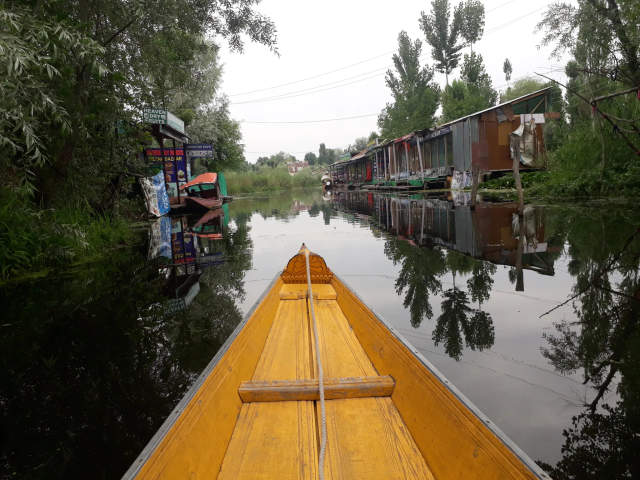
Most visitors come in winter for snow at Gulmarg and never think of the wetlands. Yet a foggy December morning at Hokersar, with shovelers turning their slow circles and teal whistling overhead, is one of the most Kashmiri scenes there is, and it costs nothing more than an early start. Via Kashmir often adds a wetland morning to a Srinagar stay for guests who want something quieter than the ski slopes.
How should you plan a wetland morning?
Stay close: a heated Srinagar hotel or a Dal Lake houseboat puts Hokersar about half an hour away. Book a driver through our Kashmir cabs for a pre-dawn start, and add the morning to one of our Kashmir packages. Bring binoculars, warm layers and patience. Stay on the bunds and paths, keep voices low, do not feed the birds, and never fly a drone over a protected wetland.
FAQs
Is the northern shoveler found in Kashmir?
Yes. The northern shoveler is a common winter migrant in Kashmir. The 2025 Asian Waterbird Census counted 209,715, making it the third most numerous waterbird in the valley.
Why is it called a shoveler?
It is named for its large, shovel-shaped bill. The bill has comb-like edges that sieve small food from the water as the duck sweeps it along the surface.
When is the best time to see shovelers in Kashmir?
From November to February, when numbers peak. Go early in the morning, when the birds are feeding in the shallows.
How is a shoveler different from a mallard?
The shoveler has a much larger spoon-shaped bill, a yellow eye on the drake, and chestnut on its sides rather than on the breast. It also feeds by sweeping the surface instead of up-ending.
Can I visit Hokersar wetland in winter?
Yes. Hokersar is about 10 km from Srinagar and is busiest with birds in winter. Some areas and boat access are managed by the J&K Wildlife Protection Department, so follow staff instructions on site.
Planning a trip to Kashmir? Via Kashmir offers custom itineraries, verified hotels, and local cab services, planned by people who live here.
Planning more than this? Get a full itemised Kashmir quote