
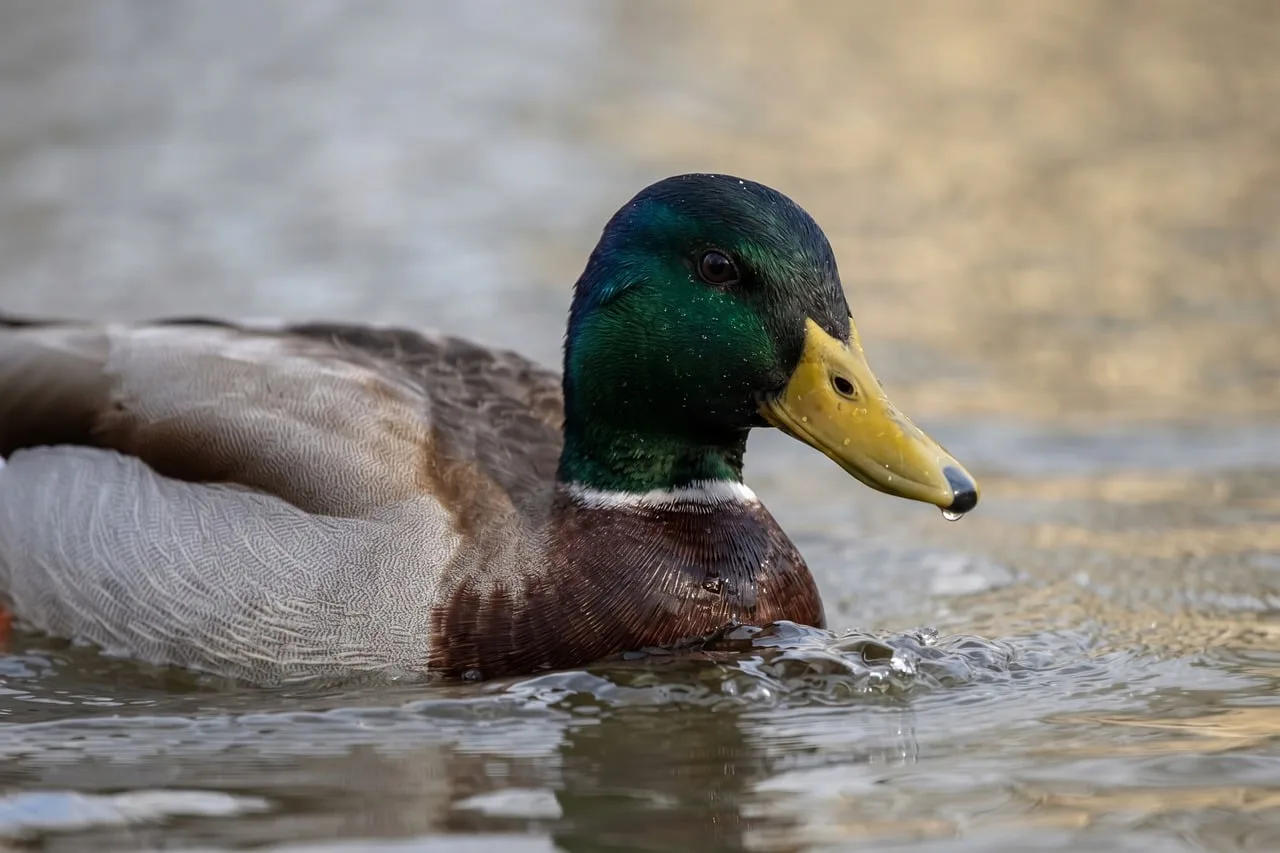
The mallard in Kashmir is the second most counted waterbird in the valley: 226,023 in the 2025 census. When it arrives, where to see it near Srinagar, and how to tell it from gadwall and shoveler.
Planning a winter birding morning?
Tell us your dates. We plan Srinagar stays with early wetland visits and drivers who know the fog.
In This Article
- When does the mallard come to Kashmir?
- How many mallards winter in Kashmir?
- How do you identify a mallard in Kashmir?
- Mallard vs gadwall vs northern shoveler: how do you tell them apart?
- Where can you see mallards near Srinagar?
- Is the mallard protected in Kashmir?
- How should you plan a mallard morning?
- FAQs
The mallard in Kashmir is a winter visitor, present from about October to March, and the second most counted waterbird in the valley. The 2025 Asian Waterbird Census counted 226,023 mallards across Kashmir's wetlands. The easiest place to see them is Hokersar, about 10 km from Srinagar, in the first hour after sunrise.
Last updated: 28 November 2026. By Kashmir Pulse Editorial. Kashmir Pulse is Via Kashmir's editorial channel, written by locals.
Every child in Srinagar knows the mallard before they know its name. It is the duck with the shining green head that sits in the reeds along the Anchar side, or rises from Hokersar with a clatter when a dog barks on the bund. The mallard in Kashmir is so familiar that people forget it is a traveller. Most of the birds you see on a December morning flew in from breeding grounds far to the north.
When does the mallard come to Kashmir?
Ducks generally begin arriving in October and most stay until March. The biggest numbers sit on the wetlands from November to February, across the coldest weeks of Chillai Kalan, which begins on 21 December.
On 19 November 2026, ETV Bharat reported that Wildlife Department officials said this winter's arrival was delayed by climatic factors, with numbers expected to rise over the following fortnight. Birds had started settling at Hokersar, Wular, Shallabugh, Hygam and Mirgund. So if you are planning a trip for the first half of December, the timing is good.
At a Glance
Species: mallard (Anas platyrhynchos), IUCN Least Concern
Season in Kashmir: October to March, peak November to February
2025 valley count: 226,023 (Asian Waterbird Census)
Best place near Srinagar: Hokersar wetland
Plan it: ViaKashmir.in trip enquiry
How many mallards winter in Kashmir?
The 2025 Asian Waterbird Census, carried out in February across 26 wetlands, counted 1,343,506 waterbirds of 67 species. Mallards numbered 226,023, or 17.16 percent of the total, second only to the Eurasian teal. Together with teal, shoveler, pintail, gadwall, coot and wigeon, they made up more than 91 percent of all birds counted.
The Hokersar breakdown reported with that census listed 52,374 mallards at the one wetland. For comparison, the valley counted 813,043 waterbirds in 2020, so the total has grown by about 65 percent in five years.
The line to remember: Roughly one in every six waterbirds counted in Kashmir's wetlands in 2025 was a mallard.
Related reading: Northern Pintail in Kashmir: The Winter Duck of the Wetlands
How do you identify a mallard in Kashmir?
- ✓Drake: glossy green head, a thin white ring around the neck, chestnut breast and pale grey body.
- ✓Bill: yellow on the drake; orange marked with brown on the female.
- ✓Female: mottled brown all over, plain but neat, with a dark line through the eye.
- ✓Wing: a blue or purple patch (the speculum) edged with white on both sides, easy to see in flight.
- ✓Size: 50 to 65 cm long and 0.7 to 1.6 kg, one of the larger dabbling ducks on the valley's water.
- ✓Call: the loud, familiar quack belongs to the female; the drake's voice is a quieter, raspy note.
Mallards feed by dabbling and up-ending, tail in the air, picking seeds, roots and small animals from shallow water. That is why you find them along reedy edges and flooded fields rather than in the deepest open water.
Mallard vs gadwall vs northern shoveler: how do you tell them apart?
| Mallard | Gadwall | Northern shoveler | |
|---|---|---|---|
| 2025 Kashmir count | 226,023 | 139,141 | 209,715 |
| Drake's head | Glossy green, white neck ring | Plain grey brown | Dark green, yellow eye |
| Bill | Yellow, normal shape | Dark grey, slim | Huge and spoon shaped |
| Best clue | Blue wing patch edged white | Black rear end, white wing patch | The bill, even at a distance |
Our northern shoveler in Kashmir guide covers the spoon-billed duck in detail, and the Eurasian teal guide covers the valley's most counted species.
Related reading: Greylag Goose in Kashmir: Watching the Winter Flocks Arrive
Book for this trip
Where can you see mallards near Srinagar?
Hokersar is the easiest. It covers about 1,375 hectares on the edge of the city, has been a Ramsar site since 2005 and a protected area since 1945, and held almost 30 percent of the valley's waterbirds in 2025. Shallabugh held a similar share. Wular, the Pampore backwaters, Manibugh, Kranchoo, Hygam and Mirgund also hold winter flocks. See our Hokersar guide and Shallabugh guide for access.
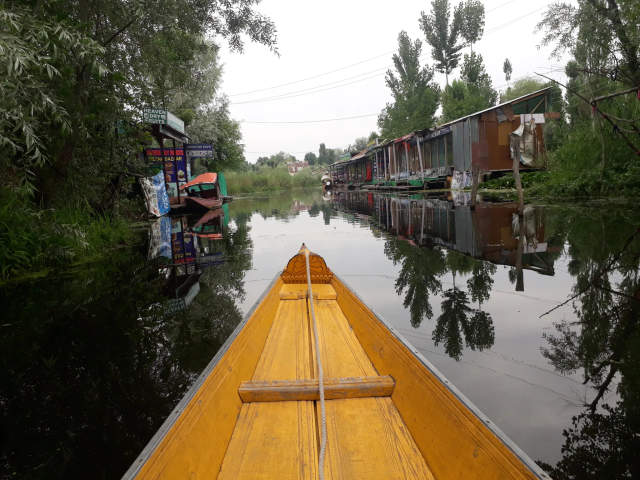
Mallards are also the duck you are most likely to see without trying: on the quieter channels of the Dal and Nigeen, along the Jhelum and in flooded paddy outside the city.
Is the mallard protected in Kashmir?
The mallard is listed as Least Concern globally, but in Kashmir every migratory duck is protected on the wetlands, and poaching remains the main local threat. The Wildlife Department says it has placed field staff and anti-poaching teams at major wetlands and installed high-resolution CCTV cameras at several locations to spot poaching hotspots. Officials say the risk is highest on water bodies outside the protected wetlands.
How should you plan a mallard morning?
Stay in Srinagar the night before. A heated Srinagar hotel or a Dal Lake houseboat keeps the drive to Hokersar to about half an hour. Book an early driver through our Kashmir cabs, carry binoculars and a flask of kahwa, and be on the bund before the fog lifts. Our Kashmir packages can fit a wetland morning into any winter itinerary. Via Kashmir, run by locals in Srinagar, is the simplest way to plan a winter trip around the birds and the weather.
FAQs
Is the mallard a migratory bird in Kashmir?
Yes. Most mallards in Kashmir arrive for winter from breeding grounds further north, usually from October, and leave by March. Numbers peak from November to February.
How many mallards were counted in Kashmir in 2025?
The 2025 Asian Waterbird Census counted 226,023 mallards across 26 Kashmir wetlands. That made it the second most numerous waterbird after the Eurasian teal.
Where is the best place to see mallards near Srinagar?
Hokersar wetland, about 10 km from Srinagar, is the easiest and holds tens of thousands of mallards in winter. Shallabugh and Wular are good second options.
How do you identify a male mallard?
Look for a glossy green head, a thin white neck ring, a chestnut breast and a yellow bill. In flight, both sexes show a blue wing patch edged with white.
What time of day is best for birdwatching in Kashmir in winter?
The first hour or two after sunrise is best, when birds are feeding and before disturbance builds. Fog can sit on the wetlands until late morning in December and January, so allow time.
Planning a trip to Kashmir? Via Kashmir offers custom itineraries, verified hotels, and local cab services, planned by people who live here.
Planning more than this? Get a full itemised Kashmir quote